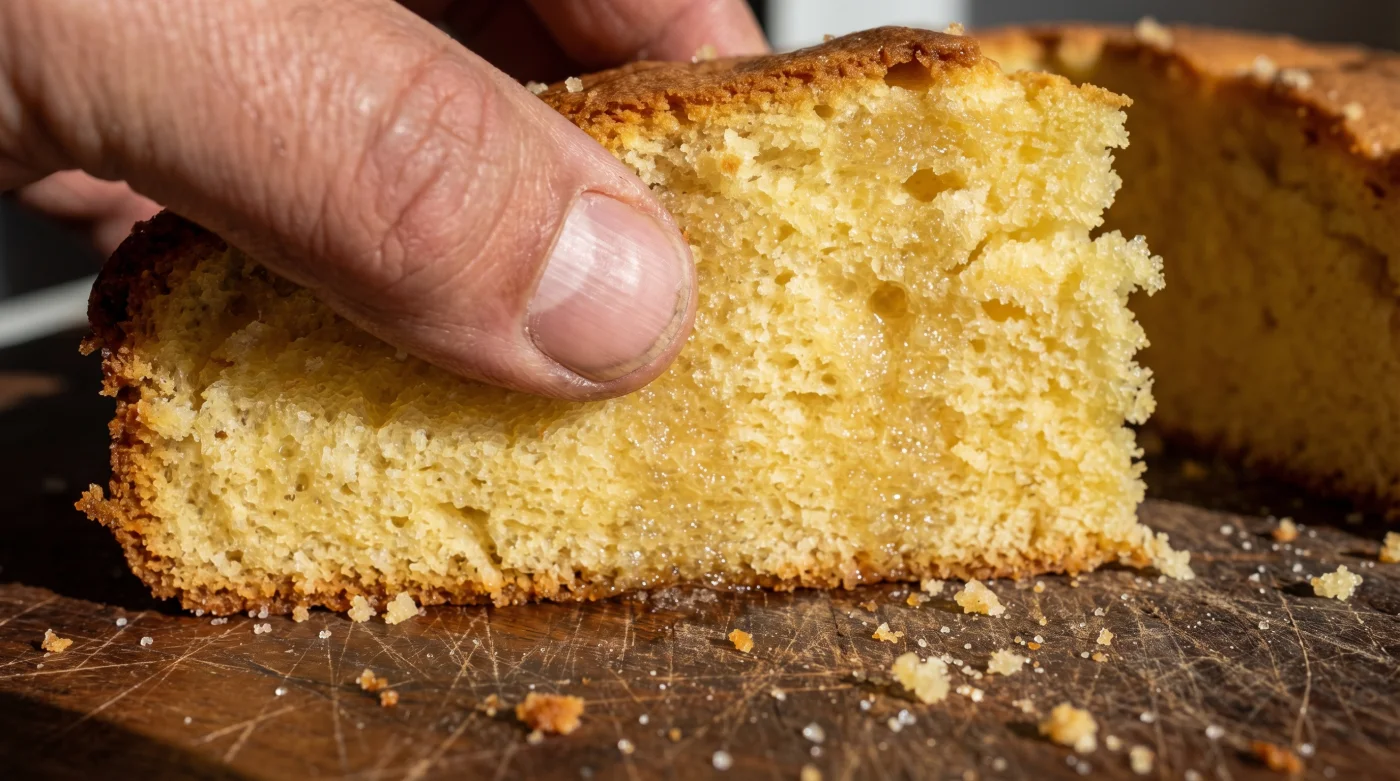
The familiar rhythm of a weekend bake usually begins the exact same way. You pull a cold block of butter from the fridge, willing it to soften on the kitchen worktop, anticipating the moment it yields to the sugar. We have been taught that this pale, aerated paste is the foundation of baking royalty.
Yet, when you slice into that freshly cooled Victoria sponge on a Tuesday afternoon, reality often bites back. Instead of yielding softly under your fork, it shatters into a dry, crumbly wedge that demands a generous pour of custard just to be swallowed.
Walk through the metallic swing doors of a professional bakery, and the scene is starkly different. The expensive blocks of cultured dairy are zealously guarded, reserved almost entirely for laminating pastry or whipping into delicate icings. For the sponges, chefs reach for something far less romantic.
When Josie Gibson casually shared her habit of swapping butter for standard cooking oil on morning television, it sounded like a frugal compromise for a cost-of-living crisis. In truth, she was broadcasting a closely guarded professional secret that transforms the humble home bake into something matching the sharp, glossy slices found in high-end shop windows.
The Architecture of Moisture
To understand why this cheap swap yields such an incredible crumb, you must look at how fats behave when left to their own devices. Butter is a fickle friend. It is solid at room temperature, containing roughly twenty percent water and milk solids. When a butter cake cools, the fat within it reverts to its natural, solid state, leaving the sponge feeling heavy and firm.
Oil, conversely, remains perfectly fluid at room temperature. It coats the flour proteins seamlessly, breathing through the crumb like a soft pillow. This prevents gluten from over-developing and guarantees a perpetually trembling, tender slice that refuses to dry out on the kitchen side.
Clara Hemmings, a 42-year-old development pastry chef in East London, built her entire bespoke wedding cake business around this exact principle. ‘People pay for luxury, and they assume that means mounds of organic butter in the sponge,’ she explains, dusting a worktop with cocoa. ‘But a butter cake dries out under a summer marquee within hours. Swapping to a neutral rapeseed oil is the only way I can guarantee my cakes slice with the razor-sharp, pristine edges my clients demand for their photographs.’
Tailoring the Pour
Not all batters are created equal, and knowing how to pair your liquid fat with your dry ingredients is what separates a hasty substitution from a deliberate, masterful technique.
For the chocolate purist, cocoa powder is notoriously thirsty. It absorbs moisture relentlessly, which is why butter-based chocolate cakes often taste like dusty cardboard by day two. A light sunflower oil not only provides the necessary fat but encourages the cocoa to bloom, resulting in a dark, fudgy crumb that mirrors an expensive truffle.
Lemon and orange drizzles rely on bright, sharp notes. Here, a mild olive oil steps in beautifully. It offers a faint, grassy pepperiness that cuts through the intense sweetness of the sugar crust, creating a complex, sophisticated flavour profile that feels distinctly European.
Carrot cakes, ginger loaves, and parsnip bakes require a quiet backdrop so the cinnamon and nutmeg can speak. A standard, inexpensive vegetable oil or rapeseed oil works tirelessly in the background, offering maximum moisture without ever competing for attention.
Mixing with Intention
Leaving the creaming method behind requires a slight adjustment to your muscle memory. Without the friction of sugar tearing through solid fat to create air bubbles, you must build structure through gentle, methodical wet-to-dry folding.
Your physical approach should be mindful and minimalist. You are no longer beating a batter into submission; you are simply encouraging ingredients to introduce themselves.
Follow a calm, four-step routine to ensure the batter emulsifies perfectly, resulting in a pale, cohesive liquid structure before it even reaches the baking tin.
- The Wet Whisk: Combine your oil, eggs, milk, and vanilla in a large jug, beating vigorously until fully emulsified.
- The Dry Sift: Aerate your flour, sugar, and raising agents through a fine sieve into a wide bowl to replace the air usually created by creaming.
- The Folding Phase: Pour the wet ingredients into the dry in one continuous stream, sweeping a metal spoon around the bowl until just combined.
- The Rest: Allow the batter to sit in the tin for five minutes before placing it in the oven to activate the baking powder.
Your tactical toolkit requires just a few precise adjustments. Use 80ml of oil for every 100g of butter called for in a traditional recipe, and bake at 160 degrees Celsius for an even, flat top, leaving the sponge in its tin for exactly fifteen minutes before turning it out onto a wire rack.
Beyond the Tin
Mastering this liquid swap does more than just save you a few Pounds Sterling at the supermarket till. It removes the stress from baking, ending the need to wait for dairy to reach the perfect ambient room temperature.
There is a quiet joy in knowing you can produce a bakery-standard loaf on a whim, using the most ordinary bottle from your pantry door. You are liberated from the fear of a dry crumb, armed with the knowledge that your cakes will remain soft, glossy, and beautifully presented until the very last slice is swept from the plate.
‘The hallmark of a truly great baker is knowing when to abandon tradition in favour of texture; oil does not just substitute butter, it actively outsmarts it.’
| Key Point | Detail | Added Value for the Plate |
|---|---|---|
| Solid Fats (Butter) | Re-solidifies at room temperature. | Ideal for sharp, pipeable icings but creates a firm, dry sponge when cooled. |
| Liquid Fats (Rapeseed/Vegetable) | Remains fluid regardless of ambient kitchen temperature. | Guarantees a soft, glossy crumb that looks freshly baked for days. |
| Olive Oil | Adds grassy, pepper notes to the batter. | Pairs beautifully with citrus, offering a high-end, patisserie aesthetic. |
Frequently Asked Questions
Can I use any type of cooking oil for this swap?
For chocolate or spiced batters, stick to neutral options like standard vegetable, sunflower, or rapeseed oil to allow the other flavours to shine. Reserve olive oil exclusively for lemon or orange bakes.Do I use the exact same amount of oil as butter?
No, you need slightly less. A reliable rule is to use roughly 80ml of oil for every 100g of solid butter listed in your original recipe.Will my cake lack that rich, traditional flavour?
While you lose the heavy dairy notes in the sponge, you gain an incredibly tender texture. You can always introduce a butter-based icing on top to balance the palate beautifully.How long will an oil-based sponge keep fresh?
Stored in an airtight container at room temperature, it will maintain its soft, trembling crumb for up to five days, vastly outperforming its dairy counterpart.Does this method change the baking time?
The baking time remains largely identical, though the top will bake slightly flatter and more evenly, which is brilliant for stacking and decorating professional-looking tiers.