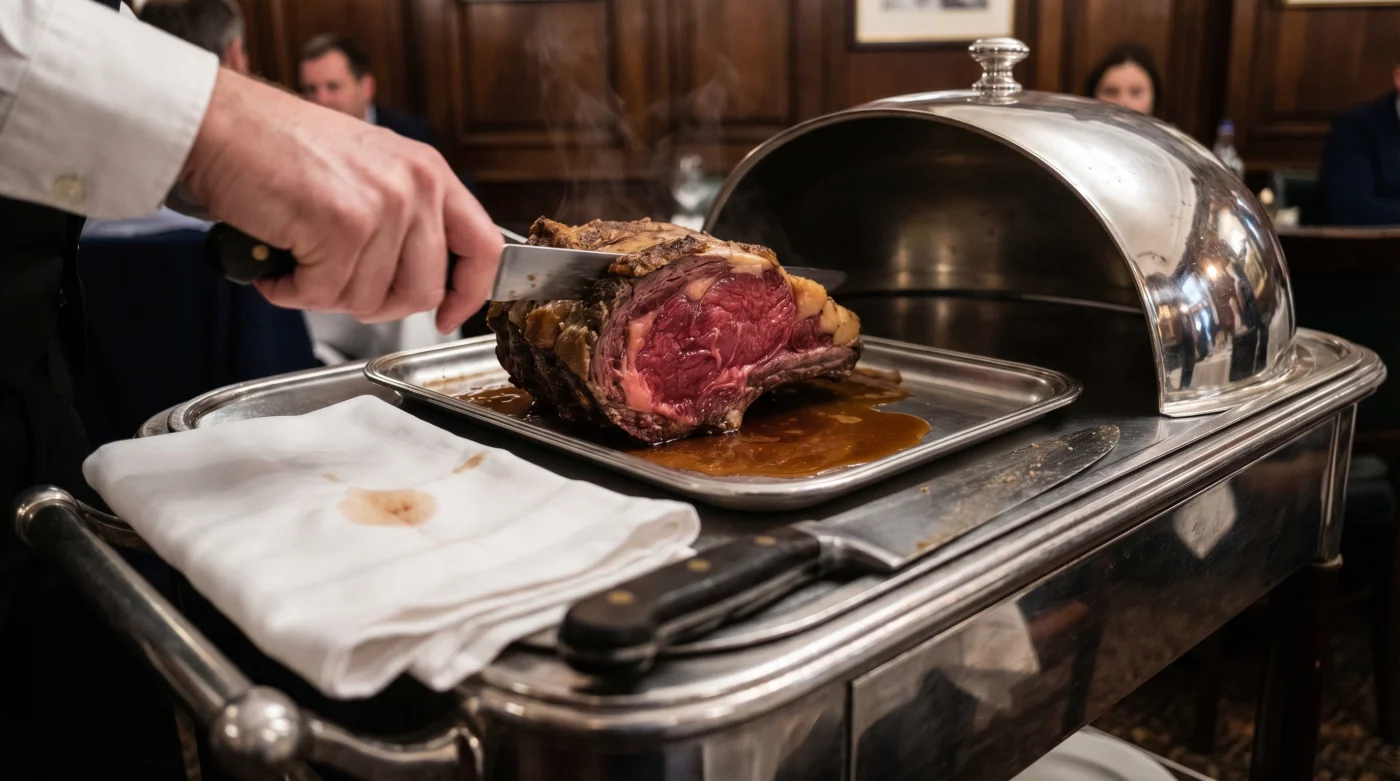
Picture the hushed hum of a dining room where time seems to stand still. There is a specific, resonant squeak of a silver-domed carving trolley rolling across thick carpet—a sound that, for over a century, promised the arrival of the finest roast beef at Simpsons in the Strand. You can almost smell the sharp, intoxicating tang of fresh horseradish cutting through the rich warmth of rendered beef fat.
With the quiet announcement that this London institution is shedding its classic roast beef menu, a specific type of culinary theatre feels suddenly distant. We are losing the grand spectacle of tableside carving, replacing the monumental silver cloches with minimalist sharing plates and scattered garnishes. The loss of the classic leaves a peculiar void for those who appreciate the gravity of a proper Sunday service.
But this shift in the capital’s dining scene offers an unexpected opportunity. The grandeur of the silver trolley was never really about the metal itself; it was about the intention behind the serving. When you bring that same deliberate care into your own home, you realise that creating an expensive, restaurant-quality plating experience doesn’t require a maître d’ or a brigade of chefs.
In fact, the quiet privacy of your own dining table becomes your greatest asset. You control the exact moment the knife meets the crust, ensuring the meat remains entirely uncompromised from kitchen to plate. Your own dining room becomes the new stage for the classics they left behind, allowing you to recreate that exact feeling of anticipation without ever needing a reservation.
The Architecture of the Slice
When trying to recreate the majesty of a high-end carvery, most people focus entirely on the recipe—obsessing over oven temperatures, resting times, and the precise smoking point of beef dripping. But the true secret to making your home meals look staggeringly expensive lies in the architecture of the plate. Think of plating a traditional roast not as merely serving food, but as dressing a very specific, edible stage.
The most common mistake is crowding the porcelain. We instinctively want to pile a Sunday roast high, burying the beef under an avalanche of roast potatoes and drowning it all in a thick, floury gravy. Instead, consider the negative space approach. Leaving the plate half-empty turns a chaotic family dinner into a visual masterpiece, forcing the eye directly to the blushing pink centre of the beef and the crisp, golden edge of the fat.
To understand this visual hierarchy, you only need to speak with someone like Alistair, a sixty-two-year-old retired master carver who spent three decades navigating the mahogany floors of Mayfair’s grandest dining rooms. Alistair always treated the long, slender carving knife like a sculptor’s chisel. He insisted that the fat should yield under the blade like a soft intake of breath, never tearing or pulling at the delicate muscle structure below.
You do not just cut meat, he once explained while adjusting his immaculate white apron, you read the grain to reveal its temper. He taught his apprentices that a single, perfectly carved three-millimetre slice, laid softly over a spoonful of glossy, reduced jus, commands far more respect than a clumsy, jagged slab. Reading the meat’s natural grain is the difference between a rustic pub lunch and a fifty-pound-per-head dining experience.
Tailoring the Grandeur: Adjustment Layers for Your Table
The beauty of taking over the carving duties at home is that you are no longer bound by a rigid restaurant format. You can adapt the visual weight of your presentation depending on the atmosphere you want to cultivate in your home, adjusting the formality to suit your guests.
Not every meal calls for the exact same level of starch and silver. Sometimes you want the towering impressiveness of a traditional feast, and other times you need a sleeker, more contemporary aesthetic. Understanding these visual nuances allows you to pivot smoothly from a relaxed family gathering to an intimidatingly sophisticated supper club.
For the Purist: The Structural Roast
If you are mourning the exact aesthetic of the missing Strand classics, focus your efforts on height and structural integrity. Place a single, majestic Yorkshire pudding slightly off-centre on a large, warm plate. Do not hide the beef inside the pastry basin; it makes the meat look like an afterthought and ruins the crispness of the batter.
Instead, drape two long, thin slices of sirloin across the outer edge of the pudding. The meat should visually lean against the pastry, creating a sense of movement. Cascading gently toward the diner, the beef becomes the undisputed star of the plate, while the potatoes sit neatly to the opposite side, lightly crushed to absorb the imminent sauce.
For the Modern Host: The Minimalist Carve
Perhaps you prefer the clean lines of contemporary fine dining, moving away from the heavy trimmings of the Victorian era. Here, you discard the heavy side dishes entirely for the main presentation. Serve a single, thick-cut medallion of fillet or neatly trimmed rib, entirely free of fat and sinew.
Pool a dark, mirror-like reduction of beef stock at the absolute centre of a wide, flat white plate. Place the meat directly into the centre of the dark pool, ensuring the sauce does not wash over the top edge of the cut. A single sprig of thyme or a micro-dusting of flaky sea salt is the only garnish required to communicate absolute culinary confidence.
The Carvery Toolkit: Mindful Application
Achieving this level of plating authority requires a few deliberate, mindful actions. Rushing the final minutes of preparation is exactly where the illusion of luxury shatters. When the meat comes out of the oven, the kitchen often descends into a chaotic rush of whisking gravy and burning vegetables.
Instead, force yourself to step back. Breathe, slow your hands down, and recognise that the meat is perfectly safe. Treating it as a ritual rather than a race ensures that when the food finally hits the dining room table, it looks like it was plated by a professional with all the time in the world.
- The Aluminium Rest: Never carve a hot joint. Wrap the beef loosely in foil and let it rest for at least forty minutes. The juices must fully settle and thicken, otherwise they will bleed rapidly across your pristine white plates and ruin the presentation.
- The Warm Canvas: A cold plate kills a refined sauce instantly, turning a glossy jus into a dull, gelatinous puddle. Keep your plates in a low oven set to sixty degrees Celsius until the exact second you begin plating.
- The Bias Cut: Always slice across the grain at a slight forty-five-degree angle. This severs the tough muscle fibres, making the meat appear softer visually and ensuring it yields instantly to a butter knife.
- The Jug Protocol: Serve the bulk of your gravy or jus in a pre-warmed silver or porcelain jug on the side. The diner should control their own pouring, which preserves the initial plating aesthetics when the dish is served.
Preserving the Theatre at Home
When an iconic menu changes and a piece of culinary history slips quietly into the past, it is easy to feel a profound sense of loss. We rely on these grand dining rooms to anchor us to tradition, to remind us of a time when dinner was an event rather than a mere transaction squeezed between the demands of modern life.
But the disappearance of the classic roast from a famous venue does not mean the tradition itself is dead. By mastering the art of plating and understanding the quiet authority of presentation, you simply relocate the magic from the restaurant floor to your own home. You become the active curator of those memories, keeping the standards alive for the next generation.
It turns out that true culinary luxury is not about paying a premium for a man in a suit to slice your dinner. It is about the care, the patience, and the visual respect you give to the ingredients you have chosen. You ensure that the reverence for a beautifully cooked, perfectly presented cut of British beef survives, right there at your own dining table.
The silver trolley may have stopped rolling down the Strand, but the spirit of the perfect slice remains entirely within your grasp. Anchoring us to historical traditions is no longer the sole responsibility of ancient hotels; it is an art form you can perfect every single Sunday.
A beautifully carved slice of beef is a quiet act of respect—both to the animal it came from and the guest who is about to eat it.
| Key Point | Detail | Added Value for the Reader |
|---|---|---|
| Negative Space | Leaving a third of the plate empty rather than piling food to the edges. | Draws immediate attention to the quality of the beef, mimicking high-end restaurant aesthetics. |
| The 40-Minute Rest | Allowing the beef to sit off the heat, wrapped in foil, before carving. | Prevents juices from bleeding onto the plate, keeping the presentation immaculate and clean. |
| Side-Serving Gravy | Using a pre-warmed porcelain or silver jug for the majority of the sauce. | Empowers your guests to control their meal while preserving the crispness of the Yorkshire puddings. |
Frequently Asked Questions
Do I need a special carving knife to achieve a restaurant-quality slice?
While a professional slicing knife helps, a long, freshly sharpened bread knife with gentle serrations often works better than a blunt chef’s knife for achieving impossibly thin slices.How do I keep the meat warm if it rests for forty minutes?
Resting in a warm, draught-free spot under a loose tent of kitchen foil will retain the internal heat perfectly. The piping hot gravy will provide the final burst of temperature.What is the best cut of beef to replicate the Simpsons experience?
A rolled sirloin or a rib of beef on the bone offers the best balance of visual grandeur, rendered fat, and deep, traditional flavour.Can I plate roast potatoes in advance without them going soggy?
Always plate the potatoes last. Sit them gently on top of the meat or on a dry section of the plate, entirely away from any pre-poured jus.How do I practice negative space when my family expects large portions?
Serve a beautiful, minimalist initial plate, and place all the extra trimmings, vegetables, and additional meat slices in warm, attractive serving dishes in the centre of the table.