You pull the plastic takeaway tub from the fridge. Inside, the basmati rice that was perfectly fluffy on Friday night has settled into a rigid, unforgiving block. It looks less like dinner and more like white gravel.
You know the usual drill. You spoon it onto a plate, perhaps splash a careless bit of tap water over it, and blast it for two minutes. The result is always tragic: the edges turn to bullets, whilst the centre remains suspiciously cold. You eat it anyway, chasing the dry grains around the bowl, feeling thoroughly disappointed by the entire experience.
It is a distinctly modern culinary misery. We rely heavily on the microwave to sustain us through a busy week of meal planning, yet we fundamentally misunderstand how it interacts with starch. When rice chills overnight in the fridge, it undergoes a process called retrogradation. The gelatinised starches that made it soft when freshly boiled begin to crystallise, pulling tight like a clenched fist and forcing the natural water content out. Interestingly, this retrograded starch acts as a resilient prebiotic fibre, which is highly beneficial for your digestion, but utterly miserable for your palate if eaten straight from the cold tub.
Heat alone will not persuade it to relax. What it desperately craves is moisture, delivered at the exact right pace. This requires gentle coaxing, not aggressive radiation. If you blast it dry, the microwave simply evaporates whatever tiny bit of moisture is left, turning your supper into shrapnel.
The Miniature Steam Room
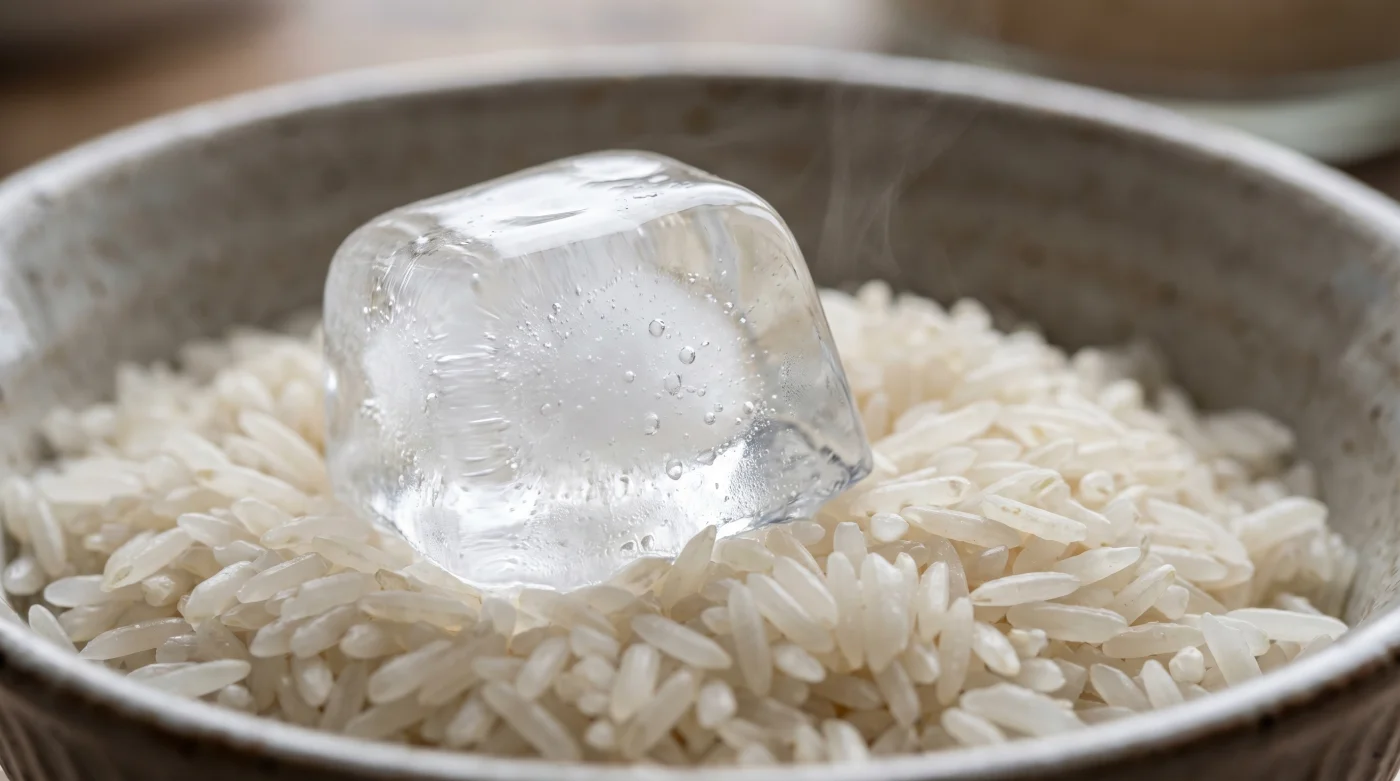
Place a single, solid ice cube right in the centre of that cold mound of rice. It sounds entirely counterintuitive, almost like a childish prank played on your own food. Surely, you are just going to end up with a puddle of tepid water at the bottom of your bowl, rendering the base a soggy mess whilst the top remains brittle?
But the science of the microwave changes the rules. The appliance heats the water molecules already trapped inside the food. Because the ice cube is a solid block of frozen water, the microwave struggles to agitate those molecules immediately. It melts fiercely slowly, effectively buying you precious time.
As the rice itself gets hot, the ice cube begins to weep just enough moisture to create a steady, continuous stream of vapour. You are not boiling the rice; you are building a timed-release steam room right on your dinner plate. The moisture wraps around the hard grains, allowing those tight starches to relax and bloom once again.
Julian, a 42-year-old development chef based in Leeds, spent years watching perfectly good grains hit the bin in professional kitchens. The financial waste frustrated him, but the culinary disrespect bothered him more. ‘People treat the microwave like a hair dryer,’ he notes over a cup of black tea. ‘But it works like a steamer if you give it the right tools.’ Julian started placing a single ice cube and a damp sheet of baking parchment over his family’s leftover jasmine rice at home. The resulting texture rivalled the exact moment it was first cooked, saving pounds on wasted groceries each month.
Tailoring the Frost
Not all grains react to cold storage in the same way. The rigidness of leftover rice depends entirely on its starch structure, specifically the ratio of amylose to amylopectin. You must adjust your approach accordingly depending on what sits in your fridge.
For the batch-cooker: If you rely on brown rice or wild grains to get you through the working week, these are sturdy beasts. They possess thick bran layers that stubbornly resist water penetration. You might need two cubes, spaced slightly apart, to generate enough steam to soften that robust exterior without drying out the interior. Give them a bit more time to breathe in the heat.
For the sticky rice lover: Short-grain varieties, like those used for sushi or Korean bowls, clump together fiercely. They need a gentler touch. A single, slightly smaller ice cube placed lightly on top is ample, as these grains already retain a higher level of moisture than their long-grain cousins. The goal here is just to loosen the clump, not drown it.
For the Friday takeaway: Long-grain basmati or pilau from the local Indian restaurant is often coated in a very light layer of ghee or cooking oil. This fat actually assists the steaming process. The ice cube provides moisture, whilst the residual fat traps it, creating a glossy finish on the revived grains. You are essentially re-steaming the rice in its own fragrant oils.
The Restorative Method
To execute this properly, you must abandon the habit of just pressing the start button and walking away to check your phone. Think of this as a restorative process, a brief moment of tending to your food before it nourishes you. The microwave is a blunt instrument, but with a small modification, it can operate with startling finesse.
The physical setup requires a tiny bit of precision. Grab a shallow pasta bowl, rather than a steep-sided tub, to allow the heat to distribute evenly across the surface area. High walls trap the heat unevenly, leaving the bottom cold.
- Spread the cold grains out evenly, breaking up the largest clumps gently with the back of a wooden spoon.
- Nestle one standard-sized ice cube squarely in the centre of the dish.
- Cover the bowl with a piece of baking parchment or an upside-down ceramic plate. Do not use cling film, as the steam needs a tiny avenue to escape so the rice avoids turning to mush.
- Microwave on a medium setting, roughly 600W, for 60 to 90 seconds depending on the portion size.
- Remove the cover carefully to avoid the sudden rush of hot steam, pluck out the unmelted remnants of the ice cube, and fluff the grains with a fork.
The remaining sliver of ice simply goes into the sink. The rice on your plate will be entirely transformed, fragrant and yielding, breathing softly like it just came off the hob.
The Quiet Economy of Care
We throw away a staggering amount of staple foods in the UK simply because we don’t know how to revive them properly. A bowl of dry, unpleasant leftover rice feels like a chore to eat, making the kitchen bin seem like the only reasonable option at the end of a long, tiring day.
Yet, when you understand the mechanics of moisture and heat, you reclaim a small victory over household waste. It costs absolutely nothing to freeze tap water. It takes merely three seconds to place that cold cube atop yesterday’s dinner.
In doing so, you change your relationship with the food sitting in your fridge. You move away from treating leftovers as disappointing, second-rate meals. They become deliberate daily choices, capable of offering the exact same comfort and warmth as the moment they were brought home or pulled from the pan.
Leftovers are not an afterthought; they are simply ingredients waiting for the correct application of heat and respect.
| Key Point | Detail | Added Value for the Reader |
|---|---|---|
| The Retrogradation Flaw | Cold rice starches crystallise and expel natural water. | Understand why your rice turns hard, making the cure obvious. |
| The Ice Cube Shield | Ice absorbs microwave energy slowly, releasing timed steam. | Prevents scorching and restores the original fluffy texture. |
| The Parchment Lid | Traps the steam while allowing excess pressure to escape. | Stops the grains from turning into a soggy, unappetising mush. |
Common Queries Resolved
Will the ice cube melt completely and ruin the rice? No. The microwave heats the water inside the rice faster than the solid ice. You simply remove the leftover piece of ice before eating.
Does this work for pasta or noodles? It works brilliantly for noodles, especially thick udon. Pasta is better revived with a splash of milk or water, as it requires a bit more liquid to emulsify its sauces.
Is it safe to reheat rice in the microwave? Yes, provided it was cooled quickly after cooking and stored properly in the fridge. Reheat it until it is steaming hot throughout.
Why avoid using cling film as a cover? Cling film traps too much moisture, turning the steam room into a swamp. Baking parchment breathes just enough to maintain the perfect humidity.
Can I use crushed ice instead? Avoid crushed ice. It melts far too rapidly and will simply soak the bottom layer of your meal before the top has a chance to warm through.