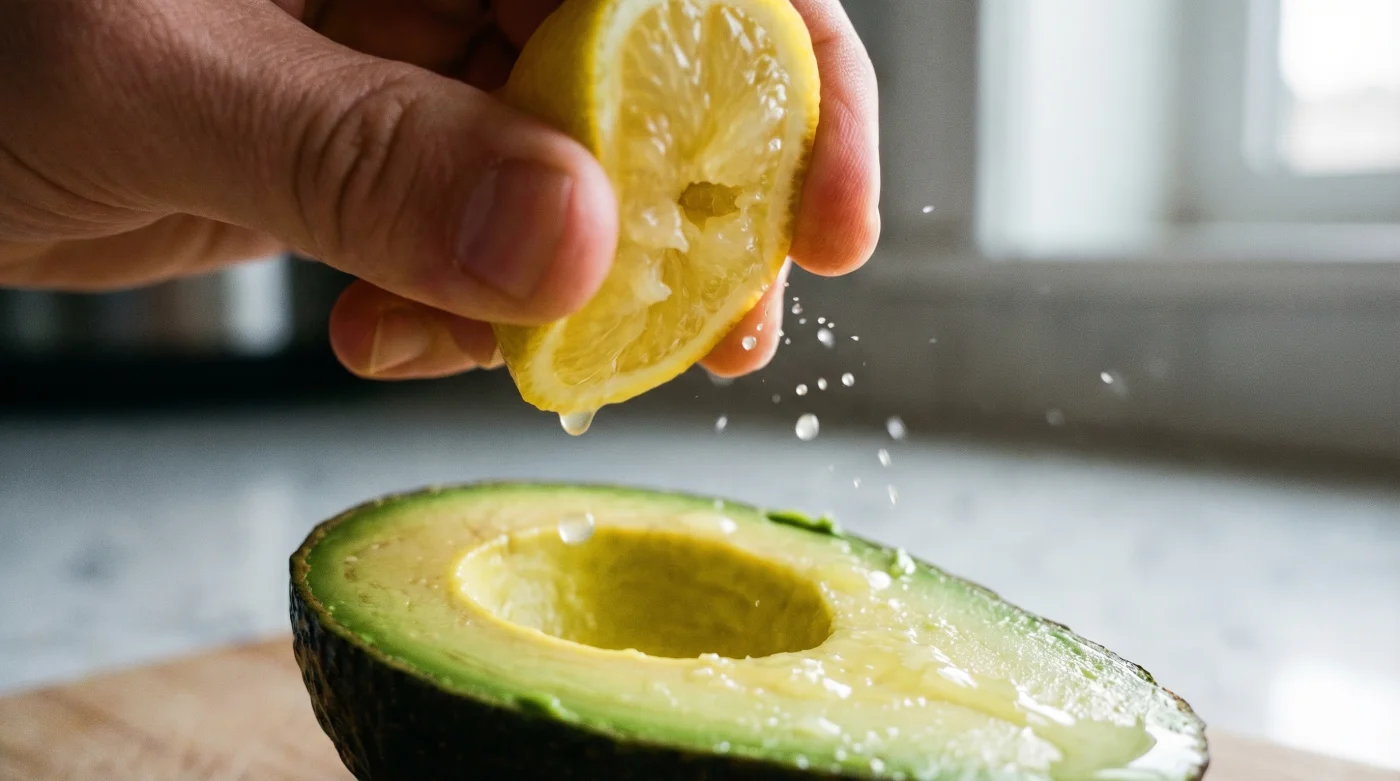
Picture the scene. It is a quiet Tuesday morning, the kettle is just beginning its low rumble, and you slice open a perfectly yielding Hass avocado. The flesh is a vivid, flawless pale green—the colour of early spring leaves. You plate half alongside your sourdough, wrap the rest in cling film, and slide it into the fridge.
By Wednesday lunchtime, that pristine half has transformed. What was once vibrant and appetising now wears a bruised, murky brown shadow. It tastes fine, but the visual appeal has entirely collapsed, leaving you scraping away the top layer just to make it palatable.
We accept this rapid decay as a stubborn fact of nature, a tax we pay for enjoying such a delicate fruit. Yet, sitting right next to the fruit bowl is the humble lemon. A basic staple, often relegated to pancake toppings or gin garnishes, holds the acidic power to halt time in its tracks.
Instead of viewing the avocado’s delicate constitution as a flaw, you can see it as a blank canvas for preservation. A sharp squeeze of citrus is not merely a flavour enhancer; it is an invisible, protective shield.
The Acidic Armour: Changing How We Preserve
Think of the avocado’s flesh as an iron gate left out in the British rain. Without protection, it oxidises, reacting to the air by developing a dull rust. When an avocado meets oxygen, an enzyme called polyphenol oxidase reacts, creating that unappetising brown pigment.
Most of us try to smother the fruit, suffocating it in tight plastic to block out the air. But plastic merely delays the inevitable. By introducing a barrier of fresh lemon juice, you are changing the chemical environment itself. The ascorbic acid in the lemon reacts with the oxygen before the avocado’s enzymes can, effectively throwing itself on the grenade.
Consider the daily reality of Sarah Jenkins, a 42-year-old prep chef running the morning service at a relentlessly busy brunch spot in Brighton. She doesn’t have the luxury of slicing avocados to order when fifty covers demand their toast simultaneously. Her kitchen secret is startlingly simple: a dedicated citrus wash. By lightly brushing every exposed avocado half with fresh, undiluted lemon juice before they hit the fridge, she secures hours of bright, vibrant green flesh. It is a pantry secret that costs pennies but saves pounds in wasted produce.
Tailoring the Citrus Strategy
Not every avocado requires the exact same treatment. How you apply this acidic shield depends entirely on when you plan to eat.
For the Weekend Meal Prepper
If you are batch-preparing salads or lunchboxes for the week ahead, you need maximum longevity. Here, a direct rub is your best approach. Cut a wedge of fresh lemon and physically rub the exposed flesh of the avocado, ensuring the juice pools slightly in the hollow left by the stone. Keep the stone in place if possible, as it naturally blocks oxygen from the centre.
For the Texture Purist
Perhaps you detest the idea of a sharp, lemony tang overpowering your delicate evening meal. In this case, dilution is your quiet ally. Mix one part lemon juice with two parts cold water in a small spray bottle. A light misting over the avocado provides the acidic barrier without heavily altering the flavour profile.
The Five-Minute Freshness Ritual
Preserving your food should not feel like an arduous chore. It is a quiet moment of care, a brief interaction with your ingredients that ensures nothing goes to waste. Approach this method with a gentle precision.
You do not need to drown the fruit. A light, even coating works best, allowing the natural oils of the avocado to breathe while the acid does its protective work.
- Slice the avocado cleanly with a sharp knife to minimise cellular damage.
- Squeeze a teaspoon of fresh lemon juice directly onto the exposed flesh.
- Use a pastry brush or clean fingers to spread the juice edge-to-edge.
- Place the avocado half face-down in an airtight container to double the protection.
The Tactical Toolkit:
- Optimal Acid: Freshly squeezed lemon (bottled juice lacks the same active ascorbic acid bite).
- Wait Time: Apply immediately after slicing; oxidation begins within seconds.
- Storage Temperature: Keep sealed in the fridge at around 4°C.
A Greener Approach to the Kitchen Bowl
Mastering this small, almost imperceptible detail does more than just keep your breakfast looking beautiful. It changes how you interact with the food you buy.
When we stop throwing away bruised, browned halves of expensive produce, we step away from a culture of disposable consumption. The humble lemon, resting quietly in your pantry, becomes a tool of quiet rebellion against food waste. It reminds us that our kitchens are not just places where we consume, but spaces where we can care for the resources we have been given.
The sharpest tools in a kitchen are rarely made of steel; they are the simple, acidic staples we take for granted.
| Key Point | Detail | Added Value for the Reader |
|---|---|---|
| Direct Rub | Applying undiluted lemon juice directly to the flesh. | Maximum preservation for long-term fridge storage. |
| Diluted Mist | Spraying a 1:2 ratio of lemon juice to water. | Prevents browning without altering the delicate flavour. |
| Stone Retention | Leaving the central pit inside the saved half. | Creates a natural physical barrier against oxygen. |
Frequently Asked Questions
Does bottled lemon juice work just as well? Fresh lemon juice contains higher, more active levels of ascorbic acid, making it significantly more effective than pasteurised bottled versions.
Will my avocado taste entirely like lemon? Only if applied too heavily. A light brush or a diluted mist preserves the green colour without overpowering the avocado’s natural mildness.
Can I use lime juice instead? Absolutely. Lime juice possesses a similar acidic profile and works wonderfully, especially if you plan to use the avocado for guacamole.
How long will the avocado stay green in the fridge? With a proper citrus coating and airtight storage, an exposed half will retain its vibrant colour for up to 48 hours.
Should I still wrap the avocado in cling film? It is highly recommended. The lemon juice stops chemical oxidation, while wrapping stops fresh oxygen from continuously hitting the surface.