The kitchen is quiet, save for the hum of the fridge and the faint drumming of a typical British drizzle against the glass. You have the scales out, the butter resting on the worktop to soften, and a quiet, persistent craving for warm soda bread. Then, you read the next line of the recipe. It asks for buttermilk.
You find yourself staring at ordinary milk, wondering if you can just tip it in and hope for the best. You already know the answer. Without that thick, acidic tang, the bicarbonate of soda will remain entirely dormant, and your morning bake will emerge from the oven flat, dense, and thoroughly lifeless.
The immediate instinct is to abandon the plan, grab your coat, and trudge down to the corner shop in the rain. Yet, if you look behind the scenes of high-end bakeries, you will find that a missing carton is rarely a cause for panic. They do not pause service for a missing ingredient; they manufacture it on the bench.
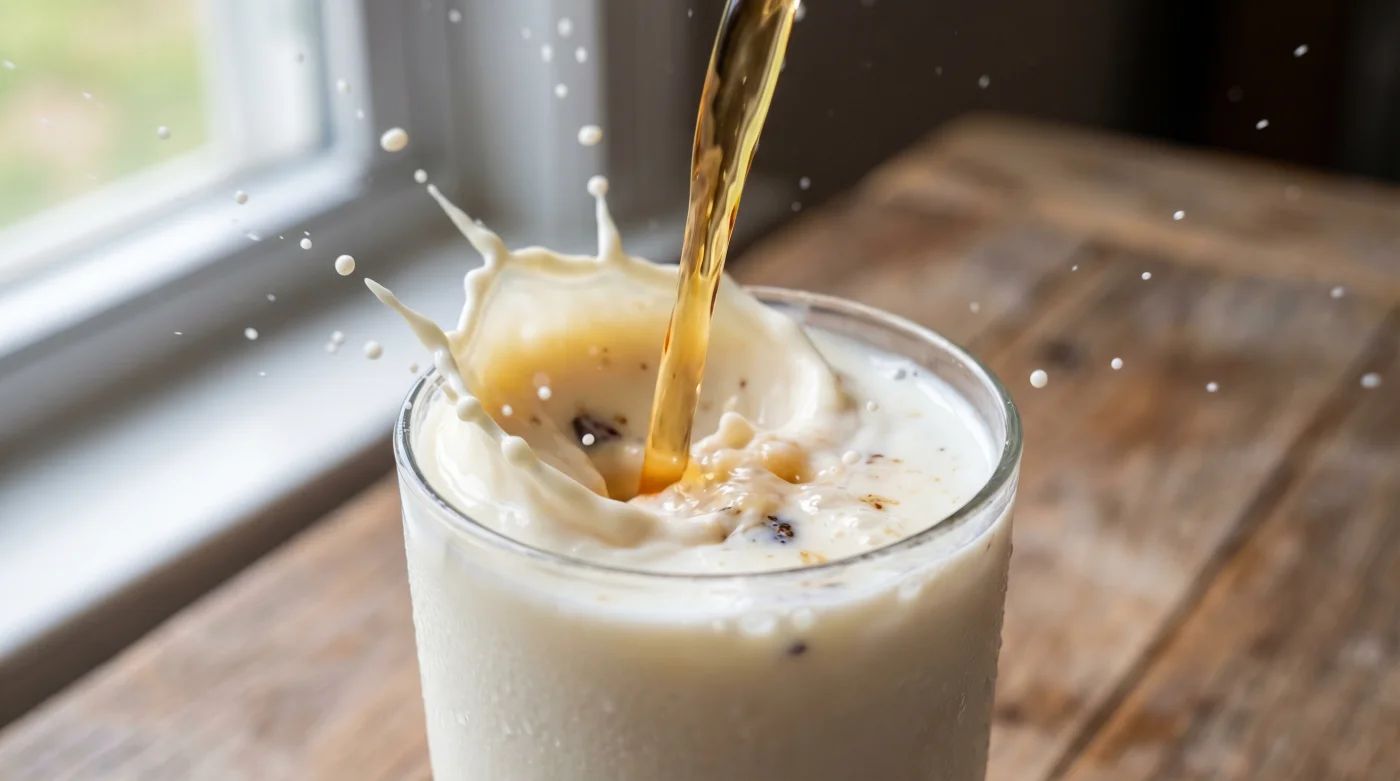
By marrying standard dairy with the fruity, fermented bite of apple cider vinegar, you trigger a rapid chemical pivot. This simple two-ingredient modification creates an instant buttermilk that performs identically to the shop-bought version, securing a professional rise and a tender crumb without leaving the house.
The Perspective Shift: The Acidification Equation
We tend to view kitchen substitutions as a compromise—a slightly disappointing backup plan when things go wrong. But making buttermilk from scratch requires a shift in how you view your ingredients. You are not faking anything; you are executing a rapid, controlled acidification.
When you introduce a precise acid to dairy, you are actively tightening the milk proteins. The vinegar causes the casein in the milk to clump together, lowering the pH and thickening the liquid into a tart, viscous base. Think of it like tuning a guitar string; you are adjusting the tension of the liquid until it hits the exact note your recipe requires.
The perceived flaw—that you are merely making do with a pantry hack—vanishes when you realise this gives you ultimate control. Commercial buttermilk often sits on supermarket shelves for days, its acidity flattening out. By mixing your own, you guarantee an active, vibrant acidic charge right at the moment your flour needs it most.
Take Eleanor Davies, a 42-year-old pastry chef running a brisk morning service at an independent Bristol bakery. She actively avoids buying commercial buttermilk for her highly sought-after morning scones. Instead, she mixes whole milk and raw apple cider vinegar fresh for each batch. The ambient temperature of her bakery fluctuates wildly between November draughts and August heatwaves. By mixing her own liquid, she can manipulate the temperature and the acidic bite on demand, guaranteeing a consistent, towering rise every single morning, regardless of the weather.
Tailoring Your Dairy Foundation
Not all milk reacts to acid in the exact same manner. To replicate a restaurant-level result at home, you must understand how your base liquid will respond to the apple cider vinegar.
For the Traditionalist: If you are chasing the perfect Sunday pancake or a classic Irish soda bread, use whole milk. The richer, heavier fat content provides a robust structure for the vinegar to grip onto, resulting in a thick, luxurious curd that mimics traditional cultured dairy perfectly.
For the Plant-Based Pantry: You can absolutely execute this pivot without cow’s milk, but you must choose your alternative wisely. Soya milk is your greatest ally here, as its protein structure closely mirrors that of dairy. Almond or oat milks will sour, but they lack the protein density to thicken properly.
The Emergency Scone Rescue: If a half-empty plastic bottle of semi-skimmed is all you have in the fridge door, do not despair. It will still work. You will get a slightly sharper, thinner yield, but the crucial chemical reaction—the acidity required to activate your raising agents—will be entirely present and correct.
The Five-Minute Transformation
Executing this pivot requires almost no effort, but it does demand a few moments of mindful stillness. The goal is not a violent mixing of ingredients, but a gentle introduction.
Once you combine the two liquids, you must leave it completely undisturbed. The cream should tremble slightly as the proteins begin to seize. It won’t look perfectly smooth; it should appear slightly fractured, like breathing through a pillow—soft, aerated, and gently resistant.
- Measure out your milk into a wide-brimmed jug to allow room for the reaction.
- Pour the apple cider vinegar gently over the surface of the milk.
- Stir exactly once, using a slow, folding motion with a metal spoon.
- Leave the jug at room temperature. Do not put it back in the fridge.
The Tactical Toolkit:
- Ratio: 1 tablespoon (15ml) of apple cider vinegar to every 250ml of milk.
- Temperature: Room temperature milk (around 20°C) reacts far better than fridge-cold milk.
- Resting Time: Exactly 5 to 10 minutes. Wait until you see visible curdling on the surface before pouring.
A Reclaimed Independence
Mastering this tiny, two-ingredient reaction does more than just save a Sunday morning baking project. It shifts your relationship with your pantry. You are no longer reliant on the supermarket for a highly specific, niche ingredient.
You can buy standard milk, knowing it holds infinite potential. You bypass the frustration of wasting half a carton of shop-bought buttermilk that inevitably goes mouldy at the back of the fridge. Instead, you provision smartly, scaling your ingredients exactly to your needs, and turning a simple splash of vinegar into a cornerstone of exceptional home cooking.
“True kitchen authority isn’t about hoarding every possible ingredient; it is about understanding how to bend the humble staples you already have to your absolute will.”
| Component | The Scientific Detail | Added Value for the Reader |
|---|---|---|
| Apple Cider Vinegar | Introduces a mild, fruity acetic acid (approx 5% acidity). | Provides a softer, more complex tang than harsh white vinegar, mimicking real fermentation. |
| Whole Milk | Contains dense casein proteins and ample butterfat. | Ensures the final liquid is thick and holds moisture, keeping baked goods tender for longer. |
| The 10-Minute Rest | Allows time for protein coagulation and pH lowering. | Guarantees maximum activation of bicarbonate of soda for a professional-grade rise. |
Frequently Asked Questions
Can I use standard white vinegar instead of apple cider vinegar?
You can, but white vinegar has a very sharp, sterile acidity. Apple cider vinegar offers a subtle, fruity undertone that much more closely replicates the complex flavour of genuine cultured dairy.Why did my milk not thicken after ten minutes?
If your milk was straight out of a very cold fridge, the reaction slows down significantly. It will still be acidic enough to bake with, but for that thick, traditional texture, let the milk lose its chill before adding the vinegar.Will my cake taste like vinegar?
Not at all. The acid in the vinegar is entirely neutralised when it reacts with the alkaline raising agents (like bicarbonate of soda) in your recipe. It leaves behind only a tender crumb and a gentle lift.Can I keep this instant buttermilk in the fridge for later?
It is best used immediately. Because it is a rapid chemical reaction rather than a true slow fermentation, the proteins can separate unpleasantly if left sitting for hours. Mix exactly what you need, when you need it.Does this trick work for savoury marinades, like fried chicken?
Absolutely. The lactic-acid simulation tenderises poultry brilliantly. Just ensure you use whole milk to give the marinade enough body to cling to the meat.