You are standing at the chopping board on a damp Tuesday evening, staring at a bulb of fresh garlic. The papery skins shed all over the worktop, clinging stubbornly to your damp fingers. When you mince it raw, the defensive enzymes snap to attention, releasing a sharp, almost metallic odour that lingers on your skin for days. Throw those tiny, jagged pieces into a hot frying pan, and you risk a bitter, acrid disaster within thirty seconds. It feels like walking a frustrating tightrope between under-flavoured blandness and thoroughly ruined dinner.
There is a quieter, softer approach that changes the entire atmosphere of your kitchen. By stepping away from the aggressive heat, you can turn a notoriously stubborn root into something entirely forgiving. The frantic stirring is replaced by a gentle, enclosed steam, achieved simply by wrapping the whole bulb in a silver parcel of aluminium foil and abandoning it to the oven.
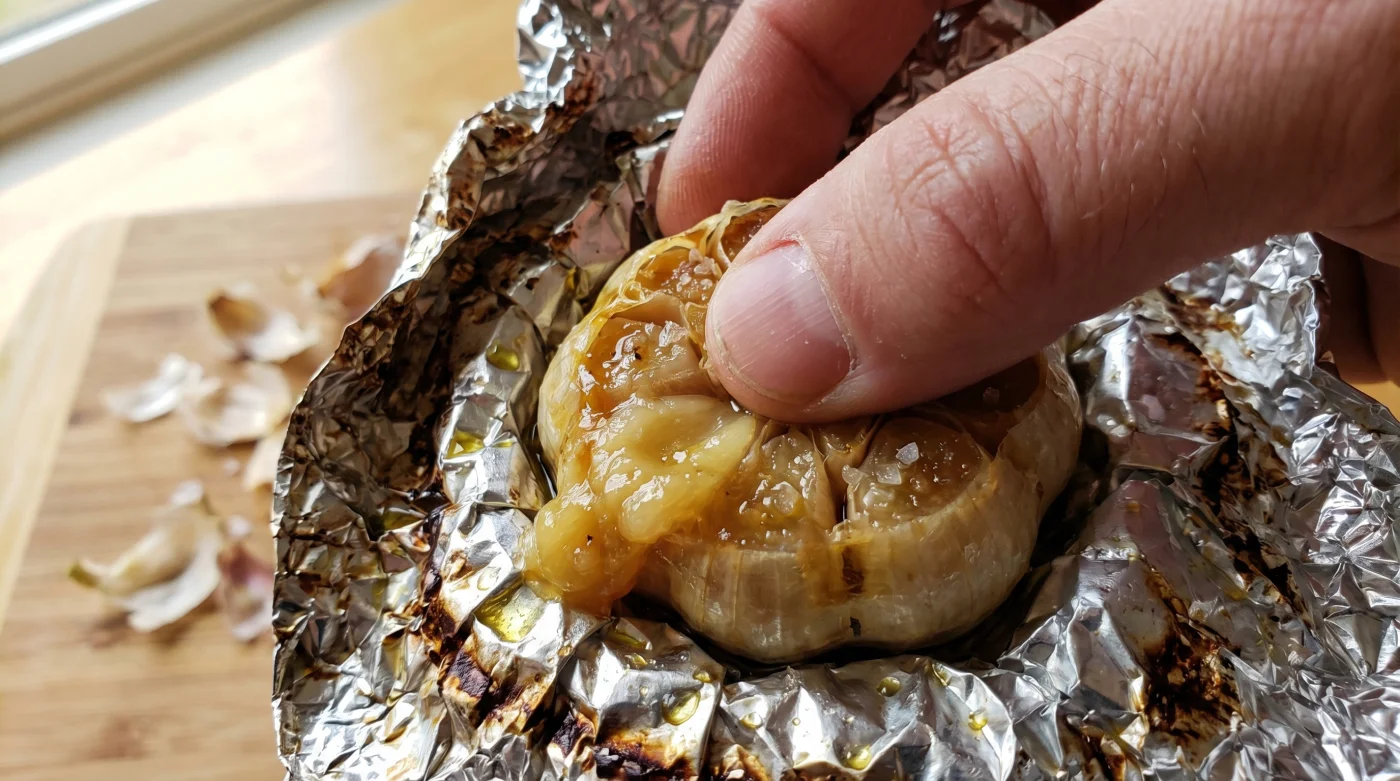
Within forty minutes, the sharp sting of sulphur transforms into the deep, sweet scent of caramelised sugar. The kitchen fills with a warmth that feels less like urgent cooking and more like quiet alchemy. The garlic stops fighting back, yielding into a mellow paste that trembles like thick clotted cream when you finally squeeze it from the papery skin.
The Anatomy of the Silver Steam Room
Think of a fresh garlic clove as a tightly wound spring of defence mechanisms. Its sharp bite is an evolutionary tactic, designed to deter creatures from eating it in the damp earth. When you smash it with a heavy knife or drop it into sputtering hot oil, you trigger those defences almost instantly, resulting in the harsh, bitter notes that easily overpower a delicate dish and repeat on you for hours.
The foil parcel fundamentally changes this biological relationship. It creates a miniature, forgiving sauna, trapping the natural moisture of the bulb alongside a brief splash of olive oil. The foil acts as a buffer, allowing the harsh oven heat to soften as if breathing through a pillow. Rather than shocking the exterior while leaving the centre raw, the ambient steam coaxes the entire cellular structure to relax. You are no longer forcing flavour out; you are simply giving it a safe space to sweeten.
Consider the quiet revelation of Thomas, a forty-two-year-old head chef running a busy coastal pub in Cornwall. For years, he followed the traditional, laborious route of slowly poaching kilos of peeled garlic cloves in expensive rapeseed oil. It was messy, required constant supervision to prevent burning, and wasted litres of fat. One frantic Sunday, critically short on stove space, he chopped the tops off a dozen whole bulbs, wrapped them tightly in kitchen foil with a pinch of Cornish sea salt, and left them in the back of the roasting oven. It was the ultimate lazy fix, yet it yielded a vastly purer sweetness. The paste required zero attention, involved no washing up, and produced a much deeper, richer flavour for his service.
Tailoring the Sweetness to Your Table
This humble foil parcel adapts beautifully to the rhythm of your week, offering different benefits depending on what you are trying to achieve on the plate. The true value lies in how easily it slips into your existing routine, fixing the common disaster of burnt garlic before it even happens.
For the rushed mid-week dinner, this soft paste becomes an instant sauce base. Mashed into salted butter or folded through a simple spoonful of mayonnaise, it brings an immediate, complex richness to a jacket potato or a piece of grilled chicken, entirely bypassing the simmering pan of sauce you simply do not have the energy to make.
For the weekend baker, the applications are deeply rewarding. Squeezing the cooled, sweet cloves directly into your sourdough base or smearing them across a sheet of proved focaccia introduces pockets of gentle umami that taste highly professional. Even a humble tray of Sunday roast vegetables is transformed when you toss them through a spoonful of this sticky, golden purée just before serving.
For the mindful batch-cooker, it eliminates the risk of waste. If you have bulbs sprouting green shoots in the pantry, roasting them entirely removes the bitter core. You can process three or four bulbs at once, squeezing the resulting paste into a small glass jar, covering it with a thin layer of olive oil, and keeping it in the fridge as a ready-made flavour foundation for the week ahead.
Constructing the Forgiving Parcel
Preparing this requires almost no active skill, just a mindful approach to the initial knife work. You want to expose the flesh without losing the structural integrity of the bulb. Keep the flat root completely intact so it holds the cloves together like a little wooden cup.
Take a sharp knife and slice roughly one centimetre off the pointed top. You need to just reveal the pale individual faces of the cloves hiding inside. Place the whole bulb squarely in the centre of a square of thick aluminium foil.
Drizzle generously with olive oil, ensuring it seeps down into the exposed cracks between the cloves, and finish with a heavy pinch of flaky sea salt. Bring the four corners of the foil together, scrunching them tightly at the top to seal in every single drop of steam.
- The Tactical Toolkit:
- Temperature: 200°C (180°C Fan) or Gas Mark 6.
- Time: 40 to 45 minutes, completely undisturbed.
- The Tell: Squeeze the silver parcel lightly with oven gloves; it should yield like a soft sponge.
- Storage: Keep the squeezed paste in an airtight jar in the fridge for up to four days.
The Quiet Confidence of Preparation
Mastering this incredibly simple technique does more than just rescue your palate from the sharp sting of raw alliums. It entirely shifts how you perceive meal preparation. When you know there is a small jar of intensely sweet, roasted garlic waiting in your fridge, the prospect of throwing together a meal after a long day suddenly feels manageable.
It represents a move away from frantic, reactive cooking at the stove. You learn to trust ambient heat rather than constant stirring, shifting how you perceive preparation. By allowing the foil to do the heavy lifting, you buy yourself genuine peace of mind, knowing that a rich, complex flavour profile is waiting quietly in the wings, ready to rescue the blandest of ingredients with just a gentle squeeze.
The mark of a confident cook is knowing when to stop fighting the ingredient and start giving it the environment it needs to soften.
| Key Point | Detail | Added Value for the Reader |
|---|---|---|
| The Foil Buffer | Creates an enclosed steam room using natural moisture. | Prevents the harsh bitterness caused by burning raw garlic in hot oil. |
| Zero-Waste Prep | Roasts the entire bulb, softening even sprouting green cores. | Saves money and rescues older pantry stock from the bin. |
| The ‘Lazy Fix’ | Requires one cut, a splash of oil, and zero monitoring. | Frees up your time and stove space while delivering restaurant-quality flavour. |
Frequently Asked Questions
Can I roast individual cloves instead of the whole bulb?
You can, but they dry out much faster. Keeping the bulb whole and attached to the root protects the delicate flesh, ensuring that creamy, trembling texture.
Do I need to peel the garlic before roasting?
Absolutely not. The papery skin acts as an essential second layer of protection inside the foil. You only squeeze the flesh out once it is entirely cooked and cooled.
Why does my roasted garlic still taste slightly bitter?
It likely needed more time, or the foil was not sealed tightly enough, allowing the steam to escape and the tops to burn. Ensure a tight scrunch at the peak of the parcel.
What is the best oil to use inside the parcel?
A standard olive oil works beautifully. Avoid highly expensive extra virgin oils here, as the high oven heat will destroy their delicate, grassy notes anyway.
Can I freeze the roasted paste?
Yes. Squeeze the cooled paste into an ice cube tray, freeze until solid, and pop the cubes into a bag. They melt perfectly into warm sauces and soups straight from the freezer.