You know that frantic ten minutes before Sunday dinner is served. The roasting tin is perched perilously on the hob, the meat is resting under a tent of foil, and you are staring into a pale, uninspiring puddle of liquid. It smells faintly of warm paste, a far cry from the mahogany brilliance you were picturing when you pulled the joint from the oven. The damp chill of a British Sunday afternoon demands a plate swimming in comfort, yet you are left whisking a dull, greyish broth that threatens to ruin the entire plate.
Most home cooks accept this pale, slightly chalky sauce as an inevitable compromise of domestic cooking. You whisk furiously, praying for a miracle, hoping the few leftover meat juices will somehow carry the weight of an entire roast dinner on their shoulders. You might even reach for a commercial granule to artificially stain the water, sacrificing depth for a quick fix.
But in professional kitchens, gravy is never left to chance or desperate, last-minute whisking. The secret to that glossy, pub-style richness does not require days of simmering veal bones or buying expensive commercial bases. It rests quietly in the most humble, overlooked ingredient sitting right there in your pantry.
The trick is treating your thickening agent with respect rather than treating it as an afterthought. By simply heating plain flour first, you alter its entire chemical identity, turning a mundane white powder into a powerful foundation for deeply savoury, visually stunning sauces.
The Alchemy of the Dry Pan
Think of raw plain flour as a dormant ingredient. Straight from the bag, it carries a raw, cereal-like dampness that aggressively coats the palate. When you tip it directly into hot fat or whisk it straight into a bubbling roasting tin, it thickens the liquid immediately, but it also permanently traps that raw, pasty taste inside the sauce.
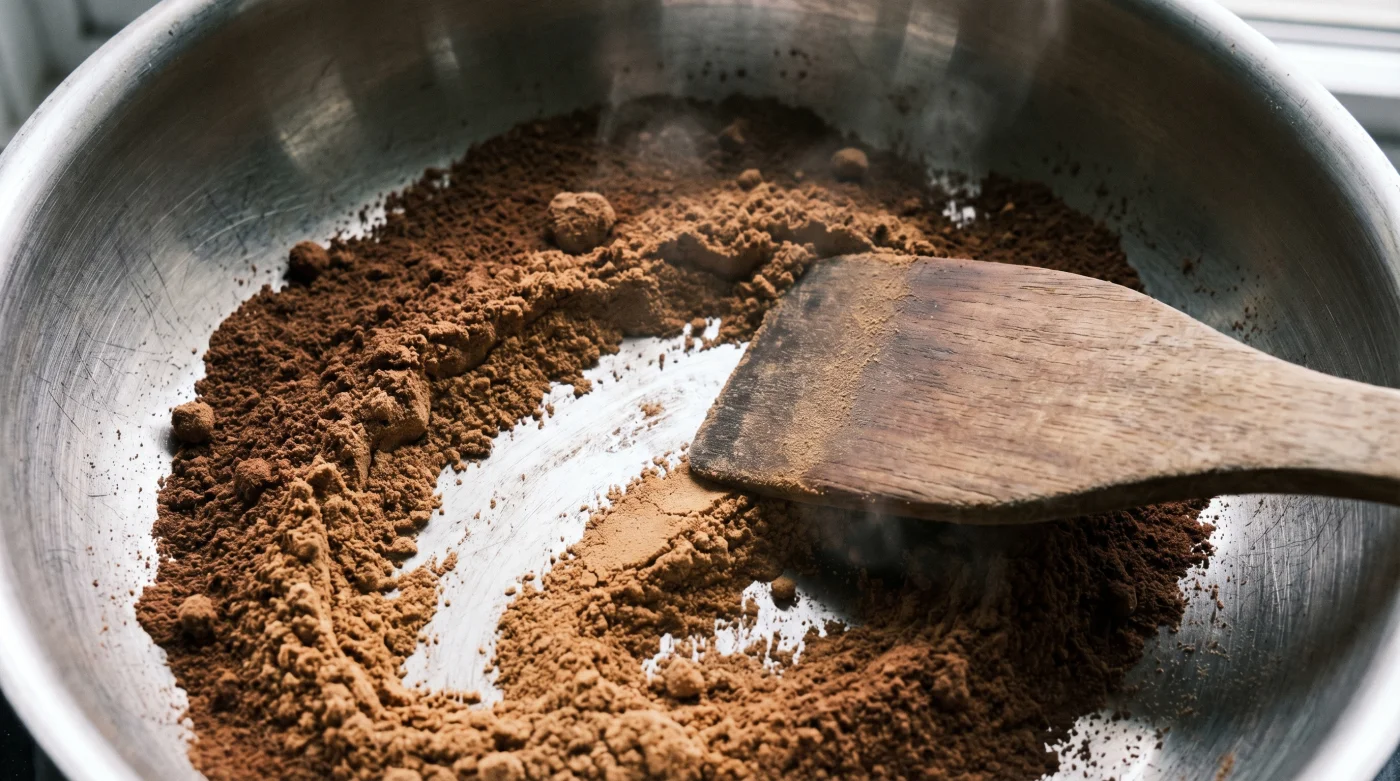
This is where the magic of the simple swap comes in to rescue your Sunday roast. The moment you introduce plain flour to a dry, medium-hot frying pan, a profound transformation begins. The dry heat toasts the raw starches, shifting the flour from stark white to the colour of warm sand, and finally down to a rich, nutty brown.
This pre-browning process is the professional pivot that separates a good cook from an exceptional one. By toasting the flour before it ever touches liquid or fat, you are actively neutralising the raw starch flavour and building a deep, dark colour into the very bones of your gravy.
Arthur, a 58-year-old head chef from Yorkshire, learned this technique decades ago while feeding hundreds of hungry pub-goers. Amidst the clatter of plates and the smell of roasted meats, he keeps a large, airtight glass jar of deeply browned plain flour on his prep bench at all times. For Arthur, toasting flour is not an extra step; it is the absolute only way to ensure every jug of gravy leaving his kitchen possesses that unmistakable, rich mahogany depth, regardless of how much natural meat juice is left in the pan.
Adapting the Roast: Three Ways to Win
Not every dinner demands the same rigid approach. You might be staring down a magnificent rib of beef on a special occasion, or perhaps you are throwing together a quick Wednesday supper after a long commute. The beauty of toasted plain flour lies in its total adaptability across your weekly meal plans.
For the Sunday Purist, time is generally on your side. You can gently toast the flour in a heavy cast-iron skillet while the potatoes are parboiling on the back ring. Take it to a deep peanut-butter shade, letting it cool slightly before whisking into hot dripping. This creates a roux so intensely savoury and dark, it practically guarantees silence at the dining table.
For the Busy Parent, keep a dedicated batch of browned flour permanently stored in your cupboard. Spend twenty minutes on a quiet Tuesday evening toasting an entire bag of plain flour in a large aluminium roasting tin. Let it cool entirely, sieve it into a sealed container, and you instantly have a magical, instant thickener for mid-week sausages that will never leave pale lumps in the pan.
For the Plant-Based Pioneer, creating a dark, meaty gravy without relying on animal fats is notoriously difficult. By relying on deeply browned plain flour, you build an instant savoury backbone that vegetable stock or mushroom liquor alone simply cannot provide. It gives onion gravies a visually striking, restaurant-quality finish that commands attention.
The Mindful Application: Securing the Colour
Heating flour first is a surprisingly gentle, grounding process. It requires undivided attention, a heavy-based frying pan, and the willingness to let your nose guide you through the subtle changes in the kitchen.
Do not let the humble nature of the ingredient fool you; this is a technique of patience and sensory awareness. You are not boiling potatoes; you are carefully coaxing out dormant natural oils and sugars hidden within the grain.
To execute this flawlessly, simply follow these precise physical steps:
- Place a clean, perfectly dry frying pan (preferably aluminium or cast iron) over a steady medium-low heat.
- Scatter an even, thin layer of plain flour across the base of the pan.
- Stir continuously using a wooden spoon or a heat-resistant silicone spatula, scraping the bottom clean with every pass.
- Watch closely for the subtle colour shift: moving from white to cream, then beige, and finally a rich milk-chocolate brown.
- Remove the pan from the heat immediately when you smell a warm, nutty, popcorn-like aroma, and tip the flour into a cool ceramic bowl to halt the toasting process.
The Tactical Toolkit for this technique is intentionally minimal but strictly precise. Maintain medium-low heat throughout the entire duration. Expect the process to take anywhere from eight to twelve minutes depending on your hob. The only tool you truly need is a flat-edged spatula to keep the flour moving constantly, preventing any isolated scorched patches from ruining the whole batch.
Peace of Mind in the Kitchen
Mastering this one minor detail shifts the entire dynamic of serving a hot meal to your family. Gravy is always the final act of a roast, the crucial liquid element that ties every separate component together on the plate. When you know your gravy is going to be visually flawless and deeply flavoured, the typical panic of those final ten minutes completely evaporates.
You are no longer crossing your fingers and stressing over a spluttering roasting tin. You have successfully taken control of the outcome, replacing mere hope with a reliable, repeatable technique that guarantees a deep dark colour every single time you cook.
It is a quiet, personal victory. The simple swap of heating plain flour first turns a frantic, messy kitchen chore into a calm, deliberate act of flavour building. You can pour that steaming, dark liquid over the plates with immense pride.
You finally serve your Sunday roast knowing the meal is anchored by a true, professional culinary warmth that feels entirely your own.
The difference between a sauce that merely coats the food and a gravy that comforts the soul is entirely down to the respect you show your flour.
| Key Point | Detail | Added Value for the Reader |
|---|---|---|
| The Simple Swap | Dry-toasting plain flour before mixing with fats or liquids. | Eliminates the raw, pasty taste that ruins standard home gravies. |
| Visual Transformation | Heating the flour brings it to a deep, nutty brown. | Produces a restaurant-quality, dark mahogany colour naturally. |
| Batch Preparation | Browned flour can be cooled and stored in an airtight jar. | Saves crucial minutes during mid-week meals or Sunday panics. |
Common Queries Addressed
Can I use self-raising flour instead of plain flour? Avoid self-raising flour, as the added raising agents will create an unpleasant, frothy texture when introduced to hot liquids.
Does toasted flour lose its thickening power? Yes, the darker you toast the flour, the less thickening ability it retains. You may need to use roughly twenty percent more browned flour than raw flour to achieve your desired consistency.
How long can I store pre-browned plain flour? Once completely cooled, you can keep it in an airtight container in a dark cupboard for up to three months without any loss of flavour.
Can I toast the flour in the oven instead of a pan? Absolutely. Spread it thinly on a baking tray at 180 degrees Celsius, stirring every five minutes until golden brown, which is ideal for larger batches.
Why does my toasted flour smell burnt? Plain flour can catch very quickly if left unattended or if the heat is too high. If it smells like burnt toast rather than roasted nuts, discard it and start fresh.