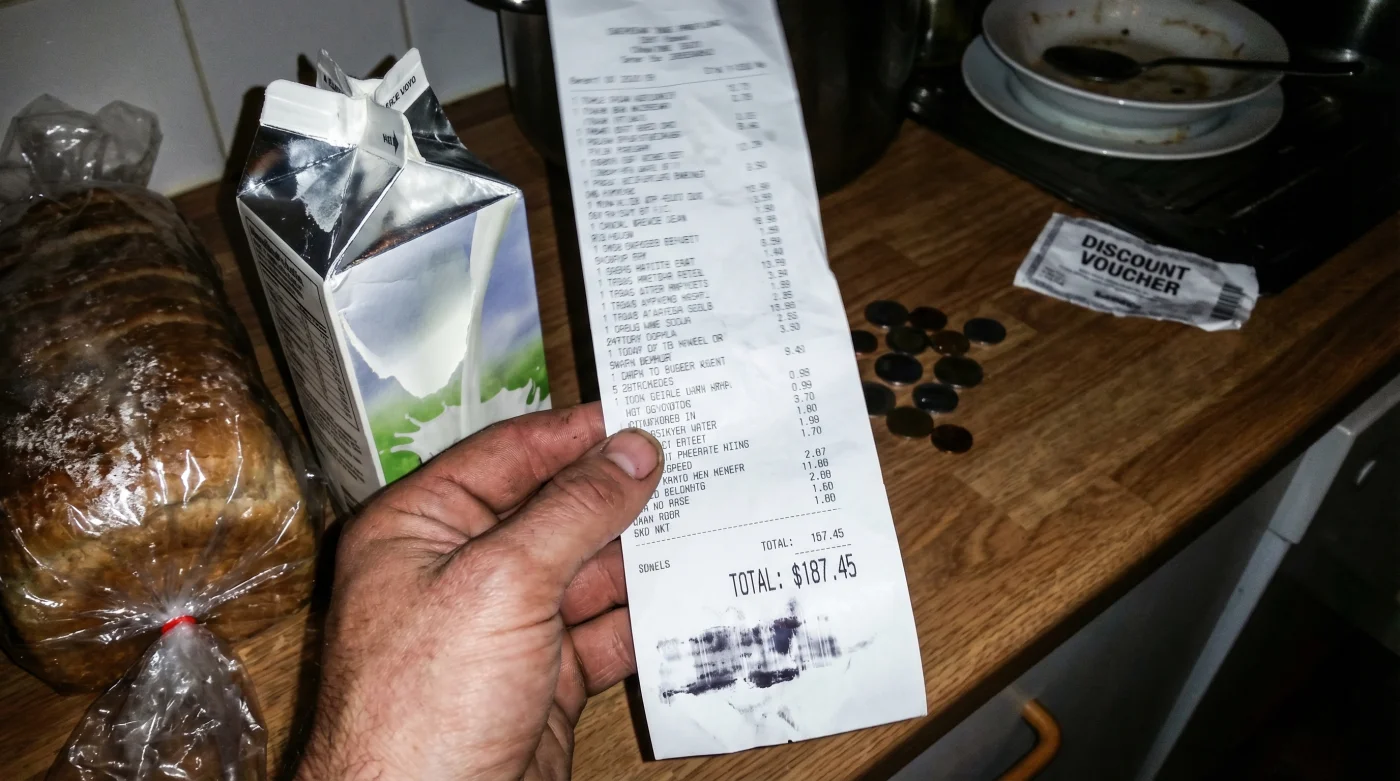
The strip lighting of a local supermarket on a damp November evening has a specific, clinical hum. You push a trolley with a slightly erratic front wheel down the familiar aisles, reaching for the same butter, the same coffee, and the same weekly staples you always do. It feels like an autopilot routine, a domestic chore squeezed between finishing work and putting the kettle on.
But lately, the till receipt tells a different story. The numbers suddenly shift upward without any obvious explanation. A recent warning from television presenter Josie Gibson has dragged a quiet, uncomfortable truth into the stark fluorescent light: the cost of our weekly shop is shifting, not always through bold price hikes, but through invisible, creeping adjustments that catch us entirely off guard.
The standard response is to simply sigh, tap your card, and absorb the sting of inflation. Yet, treating your grocery run as a passive experience is exactly what modern retail pricing relies upon. When you stop looking at the shelves as a helpful larder and start seeing them as an engineered space, the dynamic shifts entirely.
You begin to realise that what seems like a standard layout is actually a carefully calibrated psychological environment. Decoding the true cost of your food is not about obsessive penny-pinching; it is about reclaiming control over your household resources and refusing to pay a premium for clever marketing.
The Anatomy of a Price Tag
Think of a modern supermarket not as a grocery store, but as a casino. The house always has an edge, and the layout is designed to keep you playing the game. The bright yellow promotion stickers, the alluring end-of-aisle displays, and the ambient smell of the in-store bakery are all orchestrated to bypass your logical brain and appeal directly to your senses.
Josie Gibson’s recent frustrations resonated so widely because they validated a widespread consumer suspicion. She pointed out the hidden costs, specifically the subtle shrinking of package sizes while the price tag remains entirely static, a phenomenon known quietly in the trade as shrinkflation. You are paying the exact same amount of Pounds Sterling, but taking home two fewer biscuits or fifty grams less pasta.
To navigate this environment successfully, you must pivot your perspective. The brightly coloured cardboard box is the marketing department’s playground, designed to distract you. The small, white, often-ignored label on the shelf edge is where the unvarnished truth lives.
The Architect of the Aisle
David Thorne, a 48-year-old former pricing strategist for one of the UK’s Big Four grocers, spent a decade designing the very traps we fall into. Sitting in a quiet café in Leeds, stirring a black coffee, he explains the mechanics of modern retail margins with a heavy sigh. “We never want you to notice the price going up,” he notes, tapping the table. “We just want you to notice the packaging looking a bit more premium.”
Thorne’s job was to manipulate how shoppers interact with shelves, constantly testing what a busy consumer will accept without checking the details. He confirms that the most expensive real estate in any supermarket is exactly at adult eye level, where convenience overrides scrutiny.
He reveals that by shifting a popular staple to the bottom shelf and replacing it with a new formulation premium alternative at eye height, the store alters the perceived value equation entirely. You grab what is easiest, completely missing the fact that the cost per 100g has just doubled simply because you did not look down.
Tactical Provisioning: Identifying Your Vulnerability
Not everyone falls into the same pricing traps. Your specific vulnerability depends entirely on how you approach the weekly shop. By identifying your default behaviour, you can systematically patch the silent leaks in your household budget.
For the time-poor parent, the greatest vulnerability is the convenience markup trap. Pre-grated cheese, pre-chopped onions, and bagged salads often carry a markup of up to three hundred percent compared to their whole counterparts. The trade-off for saving four minutes of chopping is a vastly inflated till receipt. The professional pivot here is to buy whole ingredients but invest a single hour on a Sunday afternoon to prep them yourself, storing them in airtight containers.
For the brand loyalist, the trap is emotional attachment. You reach for the familiar logo because it represents guaranteed quality, a specific taste you grew up with. Yet, many supermarket own-brand products are manufactured in the exact same regional factories, sometimes literally rolling off the same production line before being wrapped in distinctly different plastic.
The tactical move is to test the private-label alternatives one by one. If you genuinely notice a drop in quality, switch back. But more often than not, the taste difference is negligible, while the price difference is staggering over the course of a year.
For the solo shopper, the penalty for cooking for one is severe. Single portion packaging is disproportionately expensive, meaning a solitary chicken breast wrapped in black plastic will cost significantly more per kilogram than a family-sized pack. The solution is strategic provisioning and freezing. Buy the bulk pack, separate the portions as soon as you get home, and freeze them flat in reusable bags to protect your budget.
Mindful Application: The Trolley Toolkit
Protecting yourself from these hidden price shifts does not require a complex spreadsheet or hours of aggressive coupon clipping. It simply requires you to adopt deliberate and mindful shopping protocols during the thirty minutes you spend walking the aisles.
To arm yourself against these invisible adjustments, treat your trolley as a tactical toolkit and implement these non-negotiable rules before you add a single item to your basket:
- The Unit Price Rule: Ignore the large, bold promotional price entirely. Look exclusively at the tiny text detailing the cost per 100g or 100ml.
- The Perimeter Route: Shop the outer edges of the store first, where the whole, unprocessed foods live, avoiding the highly marked-up inner aisles.
- The Bottom Shelf Sweep: Force your eyes downward. Supermarkets place the highest-margin items at adult eye level; the genuinely good value staples rest near your ankles.
- The Promotional Pause: When confronted with a yellow Buy One Get One Half Price sign, ask yourself if you actually need two. If it goes off before you eat it, it is an orchestrated waste of money.
The Bigger Picture: Peace of Mind at the Till
Mastering the art of the supermarket shop is about far more than keeping a few extra pounds in your bank account. It is about actively refusing to be passively manipulated by an environment designed to drain your resources without you noticing.
When you start reading the aisles like a seasoned professional, the anxiety of the final till tally begins to dissipate. You no longer cross your fingers as the items slide down the conveyor belt; you know exactly what you have successfully avoided, turning a weekly chore into a quiet, immensely satisfying tactical victory.
“True supermarket savings do not come from a loyalty card; they come from looking exactly where the retailer hopes you won’t.” – David Thorne, Retail Pricing Analyst
| Key Point | Detail | Added Value for the Reader |
|---|---|---|
| Unit Pricing | Evaluating cost per 100g rather than retail price. | Instantly identifies shrinkflation and true value. |
| Shelf Geography | Looking at the bottom shelves instead of eye level. | Bypasses premium markups placed directly in your eyeline. |
| Whole vs. Pre-prepped | Buying whole vegetables and grating your own cheese. | Eliminates convenience taxes that inflate your receipt. |
Frequently Asked Questions
Why do supermarkets shrink package sizes instead of raising prices?
Retailers know that consumers are highly sensitive to a change in the final price, but far less likely to notice a reduction in weight. It maintains the illusion of affordability.
Are own-brand products really the same as branded ones?
In many cases, yes. Regional factories frequently supply both branded and private-label products from the same production line, merely changing the packaging at the end of the process.
Is shopping late in the evening genuinely cheaper?
It can be. Many supermarkets apply their final yellow sticker reductions in the hours just before closing, allowing you to secure fresh items to freeze immediately.
How can I avoid spending more on promotional offers?
Always calculate the unit price of the promotion against the store’s budget brand. Often, a Buy One Get One Half Price premium item still costs more per 100g than the standard alternative.
Does a loyalty card actually save me money?
While loyalty cards offer specific discounts, they are primarily data-gathering tools designed to encourage routine spending. Treat the discounts as a bonus, not a reason to deviate from your list.