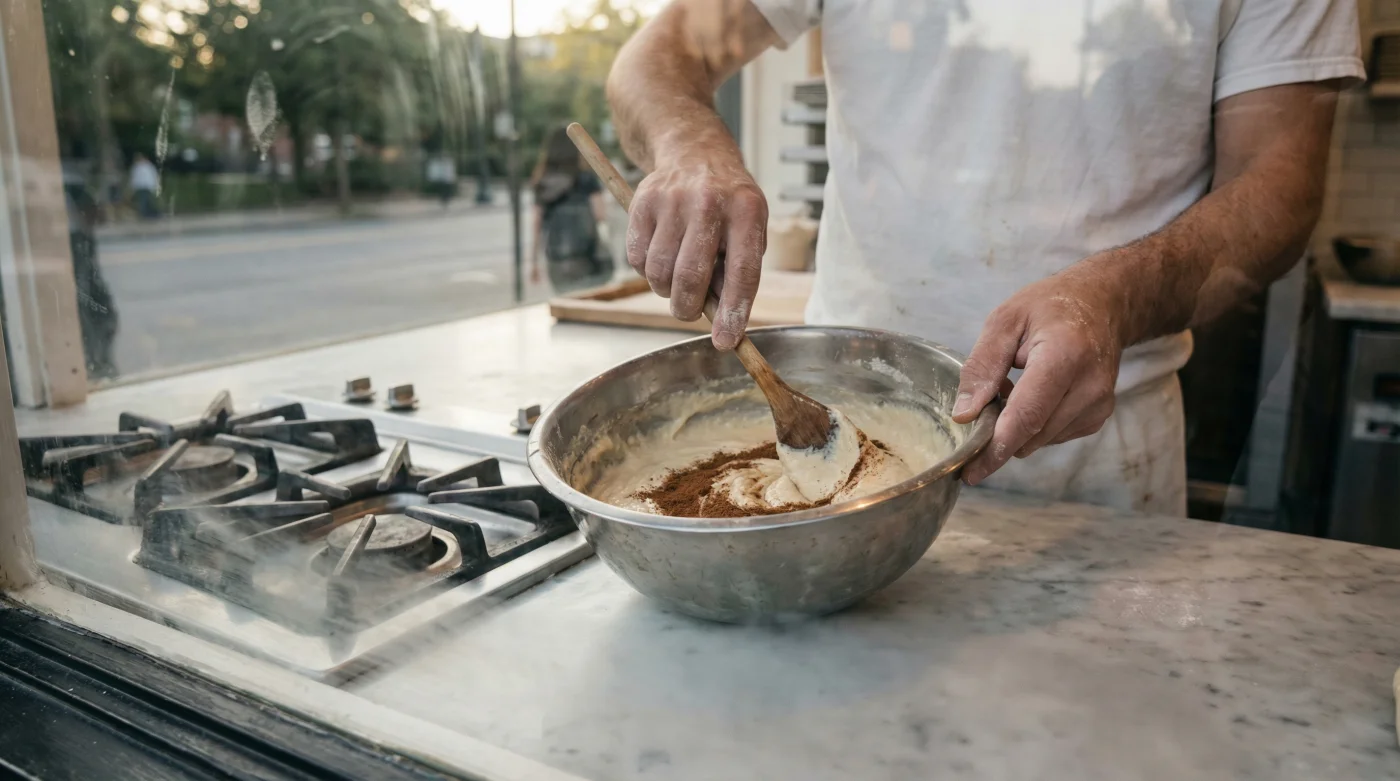
You stand by the hob on a damp Sunday afternoon, stirring a heavy pan of stewing apples. The air should be thick with that familiar, warming scent of sweet wood and nostalgia. You lean over, breathing in the steam, and take a quick taste. Instead of comfort, a sharp, almost metallic bitterness catches the back of your throat. It tastes like ash and burnt toast. Instantly, you wonder if your jar has sat in the cupboard too long. You check the date, but it is perfectly fine. The fault does not lie with the age of the powder, but with how you introduced it to the pan.
We are routinely taught that all spices must be bloomed early in hot butter or oil to release their flavour. It is a golden rule hammered into every home cook. Yet, this aggressive technique is precisely what destroys delicate ground cinnamon. Throwing this fine dust into sizzling fat does not wake it up; it scorches it beyond repair, leaving you with an acrid ruined dish.
The Weight of the Dust
Think of ground cinnamon like a delicate silk scarf, whereas whole spices are like a heavy wool coat. If you hold a wool coat near a roaring fire, it absorbs the heat safely. If you throw a silk scarf into the flames, it vanishes into ash. Whole cumin seeds or cinnamon quills can withstand the fierce temperatures of a frying pan. They need that intense friction to crack open their woody exteriors. Ground cinnamon, however, has already been pulverised. Its surface area is entirely exposed, meaning its volatile oils are sitting right on the edge, waiting to burn.
I learned this the hard way during a miserable shift working alongside Julian, a veteran pastry chef in a small Bath bakery. I was making a large batch of spiced plum jam and tossed a hefty tablespoon of ground cinnamon directly into the bubbling, molten fruit. Julian immediately pulled the heavy copper pan off the flame. ‘You are throwing dust into a furnace,’ he muttered, shaking his head. He explained that when you expose an already powdered spice to boiling temperatures, the essential oils vaporise in seconds, leaving behind nothing but burnt plant matter. The bitterness you taste is literally the charcoal of the spice.
| The Cook | The Frustration | The Result of the Late Addition |
|---|---|---|
| The Sunday Baker | Apple crumbles tasting strangely metallic. | A naturally sweet, warming aroma without harshness. |
| The Batch Cooker | Chillis and curries developing an acrid aftertaste. | Balanced, deep background notes that complement rather than overpower. |
| The Breakfast Maker | Porridge smelling burnt despite stirring constantly. | A fragrant, dessert-like breakfast bowl. |
Stepping Away from the Flame
The physical fix is remarkably simple, but it requires you to break a deeply ingrained habit. You must separate the act of cooking the food from the act of flavouring it with this specific ingredient. When you are making a curry, a stew, or a compote, let the wet ingredients simmer and reduce exactly as you normally would. Do not touch your spice rack during this violent, bubbling phase.
Once the food is cooked, turn off the hob entirely. Slide the pan onto a cool ring or a trivet on the worktop. Wait for the active boiling to subside. You want the liquid to settle into a gentle, steaming quiet. This is the exact moment to fold in your ground cinnamon. The residual warmth of the pan is more than enough to coax out the sweet, woody oils without pushing them past their smoking point. Stir it through gently, and you will immediately notice the scent changes from a sharp attack to a mellow, enveloping hug.
| Spice Format | Heat Tolerance | Ideal Cooking Phase | Oil Release Speed |
|---|---|---|---|
| Whole Cinnamon Quill | High (Up to 180C in hot oil) | Early. Bloom in hot fat to crack the bark. | Slow. Takes sustained heat to infuse. |
| Ground Cinnamon | Low (Scorches above 80C) | Late. Stir in off the direct heat. | Instant. Exposed oils vaporise immediately. |
- Double cream splits into greasy puddles hitting this exact boiling temperature.
- Ground turmeric loses essential health properties missing this microscopic pepper pairing.
- Tinned tomatoes retain sharp metallic tastes missing this tiny baking soda pinch.
- Sweet potatoes develop intense caramel flavours ignoring standard high roasting temperatures.
- Supermarket strawberries taste incredibly sweet tossing in this dark balsamic vinegar.
| Quality Marker | What to Look For | What to Avoid |
|---|---|---|
| Aroma | Sweet, floral, and highly fragrant upon opening. | Dusty, flat, or faintly chemical smells. |
| Colour | A warm, light tan to medium brown (especially Ceylon). | A harsh, dark reddish-brown bordering on brick colour. |
| Texture | Fine, powdery, and soft between the fingers. | Gritty bits that feel roughly milled. |
The Patience of Proper Seasoning
Adopting this minor adjustment does more than just rescue your Sunday crumble. It changes how you interact with the food in front of you. Cooking often feels like a rush to the finish line, a series of aggressive tasks involving high heat and sharp knives. By reserving your most delicate ingredients for the very end, you build a moment of pause into your routine.
Standing over a cooling pan, gently folding in a spice off the heat, is an act of care. It is a quiet acknowledgment that good food requires patience and respect for the ingredients. You stop fighting the heat and start working with it. The reward for this slight hesitation is a far superior plate of food, completely free of bitterness, ringing with clarity and true flavour.
Cooking is a dialogue with your ingredients; shout at them with too much heat, and they will only ever give you a bitter reply.
Frequently Asked Questions
Can I use this rule for other ground spices?
Yes. Paprika and nutmeg also suffer terribly under intense, direct heat and are best stirred through gently or protected by liquids.What if the recipe explicitly tells me to fry the ground cinnamon?
Recipes often generalise. If it calls for ground, ignore the instruction and add it late. If it calls for a whole stick, fry away.How do I fix a dish if I have already burnt the spice?
Unfortunately, burnt is burnt. You can try masking it with a splash of cream or a squeeze of lemon juice, but the metallic notes are hard to erase completely.Does this apply to slow cookers?
Slow cookers operate at a lower, protected temperature, so adding it at the start is usually safe, though stirring a fresh pinch in at the end brightens the pot.Is there a difference between Ceylon and Cassia for this method?
Both will scorch if treated badly, but Cassia is slightly more robust. Ceylon is highly delicate and absolutely demands the off-the-heat treatment.