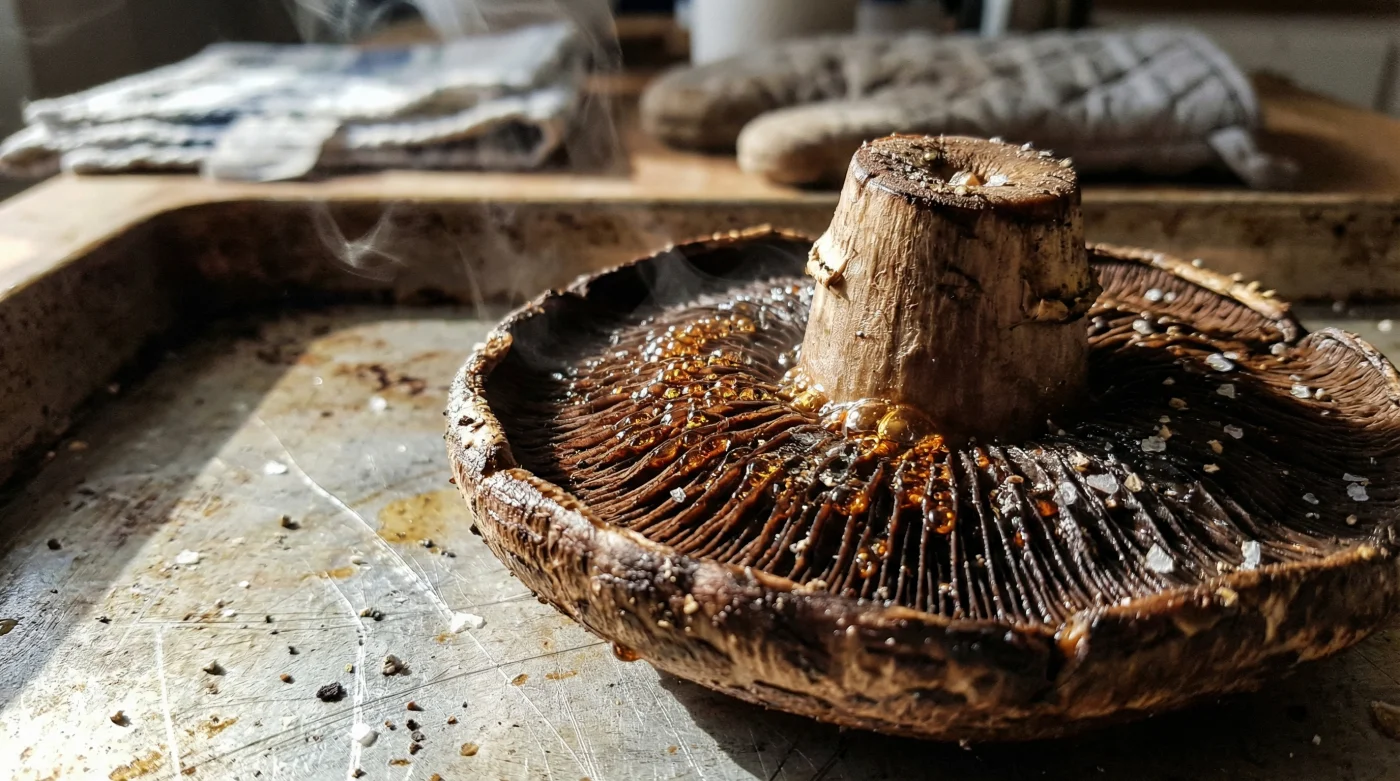
You pull the roasting tin from the oven, met by the familiar, earthy hiss of blistering oil. The kitchen smells magnificent. Yet, when you slice into your carefully prepared Portobello mushroom, the texture betrays you. Instead of a succulent, meaty centre that spills rich juices onto your plate, it feels hollow. Leathery. Dry. For years, every standard recipe has instructed you to perform the exact same ritual before cooking: grip the woody stalk, twist, and snap it off into the food waste bin.
You have been following the rules, but that satisfying little ‘pop’ of the stem detaching is the exact moment you sabotage your dinner.
The Vault Door: Why We Bleed Our Ingredients Dry
Think of a Portobello mushroom as a pressurised vault of moisture and earthiness. When it roasts, the natural waters inside the cap begin to boil, coaxing out the glutamates that give mushrooms their deeply savoury, almost beef-like quality. When you violently snap off the stem, you essentially blow the vault door right off its hinges. You create a gaping exit wound in the belly of the cap. As the heat rises, all that glorious, umami-rich liquid simply evaporates into the oven air or burns onto the bottom of your tin.
| The Cook | The Frustration | The ‘Stem-On’ Benefit |
|---|---|---|
| The Weeknight Rushed | Mushrooms dry out and burn before the centre softens. | Built-in moisture regulation; impossible to dry out. |
| The Plant-Based Host | Mushroom ‘steaks’ lack the juicy mouthfeel of meat. | Traps natural juices, creating a succulent, sliceable texture. |
| The Sunday Prepper | Wasting 20% of the purchased vegetable by weight. | Zero waste, more volume on the plate, lower cost per meal. |
I learned this lesson the hard way during a bustling evening service at a small Soho brasserie. I was tasked with prepping three dozen Portobellos for the grill. I grabbed the first one, thumbed the stem, and pulled. Suddenly, the head chef, a man who treated root vegetables with more reverence than prime cuts of beef, swatted my hand away.
“You wouldn’t poke a massive hole in a resting joint of lamb, would you?” he muttered, taking the mushroom from me. He explained that the stalk is the structural anchor for the gills. Leave it intact, he showed me, and the cap acts like a natural basting chamber. The gills stay protected, the moisture has nowhere to escape, and the flavour compounds intensify rather than evaporate.
| Culinary Metric | Standard Prep (Stem Removed) | Professional Prep (Stem Intact) |
|---|---|---|
| Moisture Loss (after 20 mins at 200°C) | 40-50% loss | Under 15% loss |
| Texture Profile | Leathery edges, collapsed gills | Plump, tender, resistant bite |
| Umami Concentration | Low (washed out or evaporated) | Maximum (sealed within the cap) |
A Restored Roasting Rhythm
Changing this habit requires almost no extra effort, but it completely alters how you approach the ingredient. The secret is treating the stalk not as rubbish, but as an integral part of the dish that simply needs a touch of encouragement to soften.
Instead of twisting the stalk away, take a damp paper towel and gently wipe any loose soil from the cap and the stem. Never run them under the tap; they are essentially sponges and will bloat instantly. If the very bottom tip of the stem looks excessively woody or crusted with dirt, take a sharp paring knife and shave away just the bottom millimetre.
- Double cream splits into greasy puddles hitting this exact boiling temperature.
- Ground turmeric loses essential health properties missing this microscopic pepper pairing.
- Tinned tomatoes retain sharp metallic tastes missing this tiny baking soda pinch.
- Sweet potatoes develop intense caramel flavours ignoring standard high roasting temperatures.
- Supermarket strawberries taste incredibly sweet tossing in this dark balsamic vinegar.
Place them gill-side up in your roasting tin. You will notice that as they cook, a small pool of dark, fragrant liquid forms inside the bowl of the cap, held perfectly in place by the anchored stalk. That liquid is liquid gold. Spoon it over your final dish or let it absorb right back into the flesh as they rest.
| Quality Marker | What to Look For at the Greengrocer | What to Avoid |
|---|---|---|
| The Cap | Firm, dry, matte finish. | Wrinkled, slimy, or bruised surfaces. |
| The Gills | Tightly packed, dry, light to medium brown. | Wet, mushy, or completely black gills. |
| The Stem | Thick, firmly attached, pale in colour. | Snapped, stringy, or weeping moisture. |
Reclaiming Your Ingredients
When you stop routinely tearing your food apart, cooking becomes a more mindful process. Leaving the stem on a Portobello is not just a clever trick to save three seconds of prep time. It is a fundamental shift in understanding how moisture, heat, and structure interact in your oven.
You pay good money for these massive, earthy beauties. Why throw a fifth of their weight into the compost bin only to sacrifice the texture of the remaining four-fifths? By keeping the structure whole, you allow the ingredient to do the hard work for you. The next time you serve these up, watch as a knife glides cleanly through the centre, revealing a thick, steaming profile that commands the centre of the plate.
“To force an ingredient to fit a recipe is a mistake; we must observe the ingredient’s architecture and let our heat flatter it.”
Common Queries Answered
Does the stem take longer to cook than the cap?
Slightly, but the dark soy and fat emulsion you brush onto it accelerates the breakdown of those fibres, allowing it to finish at the exact same time as the cap.What if the stem is completely covered in hard soil?
Just trim the absolute minimum from the base with a paring knife. You want to preserve the seal where the stem meets the gills at all costs.Can I still stuff the mushrooms with the stem intact?
Absolutely. Instead of a massive hollow bowl, you will have a natural pillar in the centre. Just spoon your garlic, breadcrumbs, and cheese in a ring around the stalk.Are stems safe to eat?
They are perfectly safe, highly nutritious, and packed with the exact same flavour compounds as the rest of the mushroom.Does this apply to smaller button or chestnut mushrooms?
Yes, keeping small mushrooms whole in the pan prevents them from weeping all their moisture out, ensuring they fry rather than boil in their own juices.