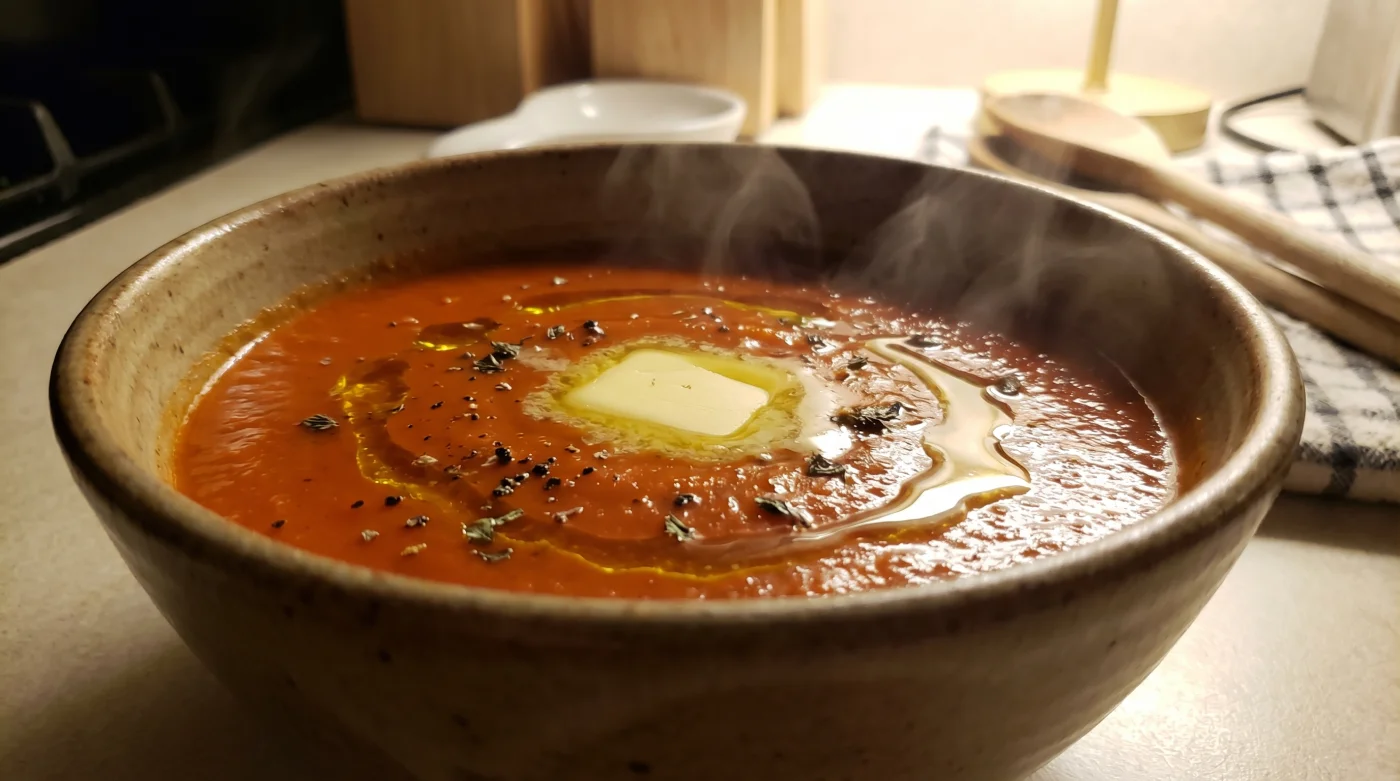
The sound of autumn rain lashing against the glass on a dreary Tuesday evening demands a specific kind of solace. You reach into the back of the cupboard, bypassing the ambitious grains and raw vegetables, seeking something immediate. The sharp metallic snap of the tin ring pull echoes in the kitchen. It is an act of comfort, but usually a compromise.
Tinned tomato soup is the fallback plan. You warm it on the hob, watching the crimson liquid bubble slightly, knowing exactly how it will taste. Thin, slightly acidic, carrying that faint shadow of the factory floor. It sustains but rarely inspires.
But what if the gap between pantry survival and restaurant-quality luxury was measured in a few grams of dairy? The difference between a watery bowl and a velvet-smooth potage does not require heavy cream, a blender, or a culinary masterclass.
It simply needs a singular, cold slice of salted butter, dropped in just as the heat subsides. A quietly transformative alchemy happens when golden fat meets hot, sharp acid, turning an emergency meal into an intentional feast.
The Mechanics of the Velvet Pivot
We often view tinned food as a finished product, something locked in time to be heated and endured. You probably stir it mechanically with a wooden spoon, watching it thin out as it warms, hoping a handful of grated cheddar might save the texture.
Think of the tin not as a meal, but as a base stock waiting for completion. The tomatoes have the acidity, the sweetness, and the earthy foundation, but they lack the structural fat to carry those flavours across your palate. Sharp acid needs a translator.
When you introduce a thick slice of cold butter off the heat, you are performing a classic professional technique known as monter au beurre. The butter melts slowly, forming a temporary emulsion that suspends the fat within the water-based soup. The metallic edge of the tin fades immediately, replaced by a rich, creamy soup that feels like it has simmered in a cast-iron pot for hours rather than minutes.
A Gastropub Secret Hidden in Plain Sight
Arthur Pendelton, a 62-year-old retired gastropub chef from Somerset, spent decades serving twelve-pound bowls of roasted heirloom tomato soup to weekend tourists. His secret for the hurried staff meals, however, was ruthlessly practical. ‘We would buy those massive catering tins for the kitchen porters,’ he recalls, wiping his hands on a flour-dusted apron in his home kitchen. ‘The trick was never cooking it longer. It was pulling the massive pot off the flame and whisking in a heavy knob of local salted butter. The staff thought I was roasting vine tomatoes all afternoon. It just coats the tongue, softens the harsh industrial tang, and makes a fifty-pence tin taste like an absolute fortune.’
Adapting the Addition for Your Bowl
The beauty of this simple swap lies in its absolute flexibility. Depending on your mood, the weather outside, and what sits in your fridge door, you can adjust this dairy modification to suit exactly what you need at that very moment.
For the Nostalgic Traditionalist. You want the childhood comfort without the lingering metallic aftertaste. Stick to standard salted butter. Let it melt naturally into the hot red liquid without over-stirring, leaving little golden pools on the surface to dip your toast into.
For the Rushed Worker. You have exactly four minutes between video calls. Heat the soup rapidly, but do not skip the cooling phase. Drop the butter in and aggressively swirl the saucepan. The sheer speed of the emulsion will cool the soup to an edible temperature while giving it a frothy, aerated body.
For the Weekend Gourmet. Take an extra minute to brown the butter in a separate tiny pan until it smells intensely of toasted hazelnuts, then pour it over the bowled soup. The nutty aroma changes everything, pulling a cheap lunch firmly into dinner party territory.
The Tactical Integration
Timing is the only variable that truly matters in this process. If you boil the butter with the soup, the fat separates instantly, leaving an unappealing, oily slick floating across the crimson surface.
You must practice patience, pulling the saucepan from the hob just before the liquid rolls into a furious, spitting boil. Heat breaks the delicate emulsion.
- Empty the tin into a heavy-bottomed saucepan over medium heat. Do not let it boil; wait for a gentle, consistent steam to rise.
- Once simmering softly around the extreme edges, slide the pan completely onto a cold burner.
- Take a 15g slice of cold butter (roughly the thickness of a Pound coin) and drop it directly into the centre.
- Swirl the pan by the handle gently rather than stirring violently. Watch the solid block vanish into a rich, creamy swirl.
To guarantee success, keep a mental checklist of your tactical toolkit. Your ideal temperature is around eighty-five degrees Celsius—steaming, but definitely not bubbling. Your butter must be fridge-cold to ensure a slow melt. Finally, grant the bowl a resting time of sixty seconds before serving, allowing the fats to settle.
Reclaiming the Quiet Comforts
We spend so much energy searching for complex recipes, convinced that good food requires exhausting effort, specialty grocers, and hours of prep. Yet, there is a profound relief in finding magic hidden within the entirely mundane.
Transforming a humble tin of soup into a decadent lunch is not just a cooking hack. It is an act of care. It is a deliberate, mindful decision to treat your own time, budget, and palate with respect, even on a rushed, rainy afternoon.
When you sit down at the kitchen table with that steaming bowl, watching the last golden ribbons of dairy fold into the dark crimson base, you realise that quality is often just a matter of perspective. A single slice of butter reminds you that comfort does not have to be compromised, and luxury is sometimes sitting right there in the fridge door.
Fat is the vehicle that carries flavour to the mind; without it, even the sharpest tomatoes have nowhere to go.
| Key Point | Detail | Added Value for the Reader |
|---|---|---|
| Temperature Control | Add butter entirely off the heat | Prevents an oily film from forming on the surface, keeping the texture velvety. |
| Butter State | Use fridge-cold butter | Melts slowly, creating a stable, luxurious emulsion that mimics heavy cream. |
| Flavour Balancing | Salted versus Unsalted dairy | Salted hides metallic tin notes; unsalted allows you to control the final seasoning perfectly. |
Frequently Asked Questions
Can I use margarine instead of butter? Margarine lacks the dairy proteins required to create a proper emulsion. It will melt, but it will not provide the rich, creamy mouthfeel of real butter.
How much butter is exactly right for a standard tin? A 15g to 20g slice—roughly a tablespoon or the thickness of a Pound coin—is the perfect ratio to enrich the soup without making it cloying.
Will this work if I heat the soup in the microwave? Yes, but you must heat the soup first, remove the bowl carefully, and then stir the cold butter in. Never microwave the butter and soup together.
Does this trick work for other tinned soups? Absolutely. It works exceptionally well with tinned mushroom, chicken, and even minestrone, acting as a universal flavour enhancer.
What if the soup separates after I add the butter? If it separates, the soup was too hot. Splash in a teaspoon of cold water and whisk vigorously to bring the emulsion back together.