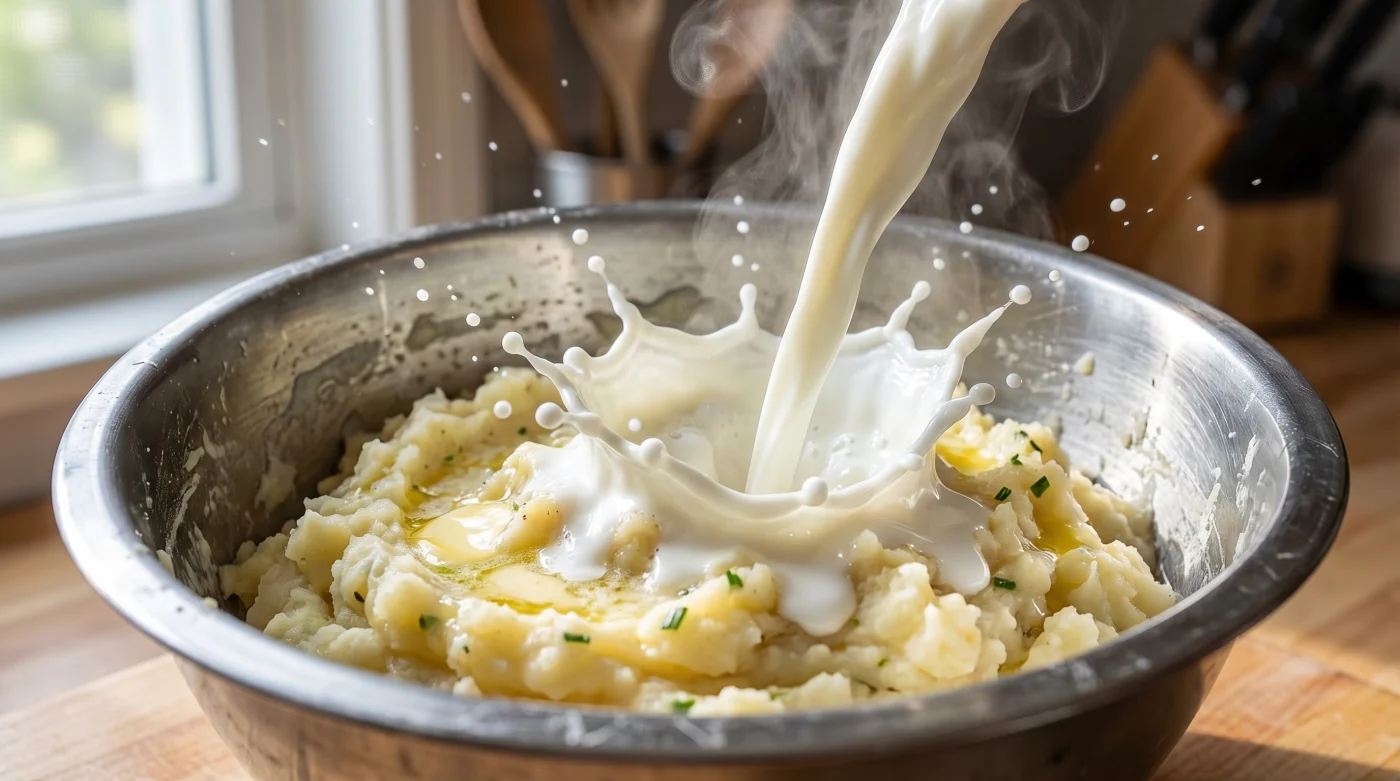
Picture a Sunday roast in a draughty British dining room. The scent of roasting beef fills the air, condensation mists the windows, and the gravy is quietly bubbling on the back ring. Then, the mash arrives. You hold your breath, expecting that familiar, heavy, vaguely paste-like side dish that sits like a weight on the plate.
You likely dread the moment the wooden spoon hits the saucepan. When you begin to stir, the resistance is palpable, an immediate sign that the starch has won and you are about to serve wallpaper paste alongside your carefully prepared meal.
But professional kitchens tell a entirely different story. In those high-pressure, stainless steel environments, the mash ripples like thick cream. It isn’t a struggle of brute force against starchy tubers; it is a gentle negotiation with temperature. The secret isn’t more butter, nor is it hours of tedious, frantic sieving.
The solution is almost invisible. It sits in a quiet milk pan, just threatening to simmer. This single shift in your Sunday routine separates a heavy, gluey disappointment from a truly glorious side dish.
The Warm Splodges of Starch
Think of a potato cell as a tiny sponge made of delicate glass. When you smash it with a cold liquid, the glass shatters and the starch spills out entirely, creating a sticky paste. When you coax it with warmth, the sponge gently relaxes.
You have been treating mashed potato as a purely mechanical task. Pouring fridge-cold milk directly over hot potatoes shocks the starches into seizing. The sudden drop in temperature forces the gelatinised starch to rapidly tighten, stripping away any hope of a light, airy finish.
By simply heating the milk before it meets the mash, you align the temperatures. You stop fighting the potato and start working with its natural chemistry. This mundane detail of spending two minutes warming milk is the exact mechanism that delivers restaurant-quality silkiness without breaking a sweat.
Take Thomas, a 42-year-old sous chef working in a busy Yorkshire gastropub. Every Sunday he turns out hundreds of mash portions for hungry patrons. ‘The junior chefs always try to rush it by aggressively beating cold milk into the pan,’ he notes. ‘I make them stop. You warm the milk with a bay leaf until the edges quiver. Then, you gently fold. The mash practically absorbs it like dry earth taking in summer rain.’ It is this quiet patience, rather than vigorous mashing, that yields perfection.
Adjustment Layers: Mash for Every Table
Not every meal demands the exact same consistency. You can tailor this simple swap to suit whatever sits on the centre of your dining table.
For the Sunday Traditionalist: Stick to whole milk and a generous knob of salted butter. Heat them together until the butter melts entirely into a rich, golden-flecked liquid before folding it into a floury potato like Maris Piper or King Edward.
For the Weeknight Pragmatist: If you are serving sausages and onion gravy on a Tuesday, you might not want the heaviness of butter. Warm a splash of semi-skimmed milk with a bruised garlic clove. It infuses the liquid with a subtle background warmth, keeping the mash light but still preventing that gluey starch reaction.
For the Plant-Based Pantry: Oat milk behaves beautifully here, provided you treat it incredibly gently. Heat it slowly, as vigorous boiling can cause it to split. The natural sweetness of the oats complements the earthy potato perfectly, maintaining the exact same mechanical benefit as dairy.
The Gentle Fold: A Tactical Approach
Stepping into the professional pivot requires a calmer approach to your cookware. You are no longer mashing; you are marrying ingredients.
Ensure your tools are ready before the potatoes finish draining. The moment they sit in the colander, they are cooling down, and cooling down is the enemy of a fluffy texture.
- The Potato: Maris Piper or King Edward. Peel and cut into uniform chunks.
- The Boil: Start in cold, well-salted water. Boil until a knife slips through with zero resistance.
- The Steam-Dry: Drain, then return to the hot, empty pan for 60 seconds to evaporate residual surface water.
- The Warm Splash: Heat 100ml of milk (per 500g of potatoes) in a separate pan until it reaches roughly 70 degrees Celsius (steaming, but not bubbling).
- The Integration: Mash the dry potatoes first. Then, pour the hot milk in thirds, folding gently with a silicone spatula until absorbed.
Notice how the mixture swells rather than turns slick. You are hydrating the vegetable, not drowning it.
The hot milk splash hydrates the starches evenly, maintaining the cellular structure rather than crushing it into an unpleasant paste.
Restoring Peace to the Plate
We spend so much energy worrying over the expensive cuts of meat or the complex gravies, often leaving the humble potato as a frantic afterthought. Yet, a gluey mash can cast a long shadow over an otherwise brilliant dinner.
By mastering this two-ingredient modification, you reclaim control over the stove. You eliminate the frantic, sweaty arm-workout of trying to beat cold milk into submission. Instead, you adopt a methodical, almost meditative rhythm.
It isn’t just about achieving a creamier side dish. It is about understanding that great cooking rarely comes from force. It comes from small, thoughtful alignments that transform an everyday chore into a quiet moment of culinary triumph.
‘Treat a hot potato with a cold liquid, and it will punish you with paste; treat it with warmth, and it will reward you with velvet.’
| The Method | What is Actually Happening | Added Value for the Reader |
|---|---|---|
| Cold Milk Direct | Starches seize and tighten under the temperature shock. | A heavy, gluey texture that feels like a chore to eat. |
| Hot Milk Splash | Temperatures align, allowing starches to relax and absorb liquid. | Restaurant-quality silkiness with half the physical effort. |
| Heavy Cream Substitution | Coats the potato in fat rather than hydrating the starch. | Excessively rich finish that overpowers delicate gravies. |
Frequently Asked Questions
Can I heat the butter with the milk? Absolutely. Melting the butter into the warm milk creates a uniform liquid that folds into the potato beautifully.
Why did my mash still turn out gluey? You likely over-mashed the potatoes before adding the liquid, or used a waxy potato variety rather than a floury one.
Does this work with non-dairy milks? Yes. Oat milk is fantastic, but heat it gently to prevent it from splitting.
How hot should the milk be? You want it steaming, just before it simmers. Boiling milk can alter its flavour and scald the pan.
Do I need a ricer for this? A ricer helps, but a standard potato masher works perfectly when you use the hot milk technique, as the liquid does the heavy lifting.