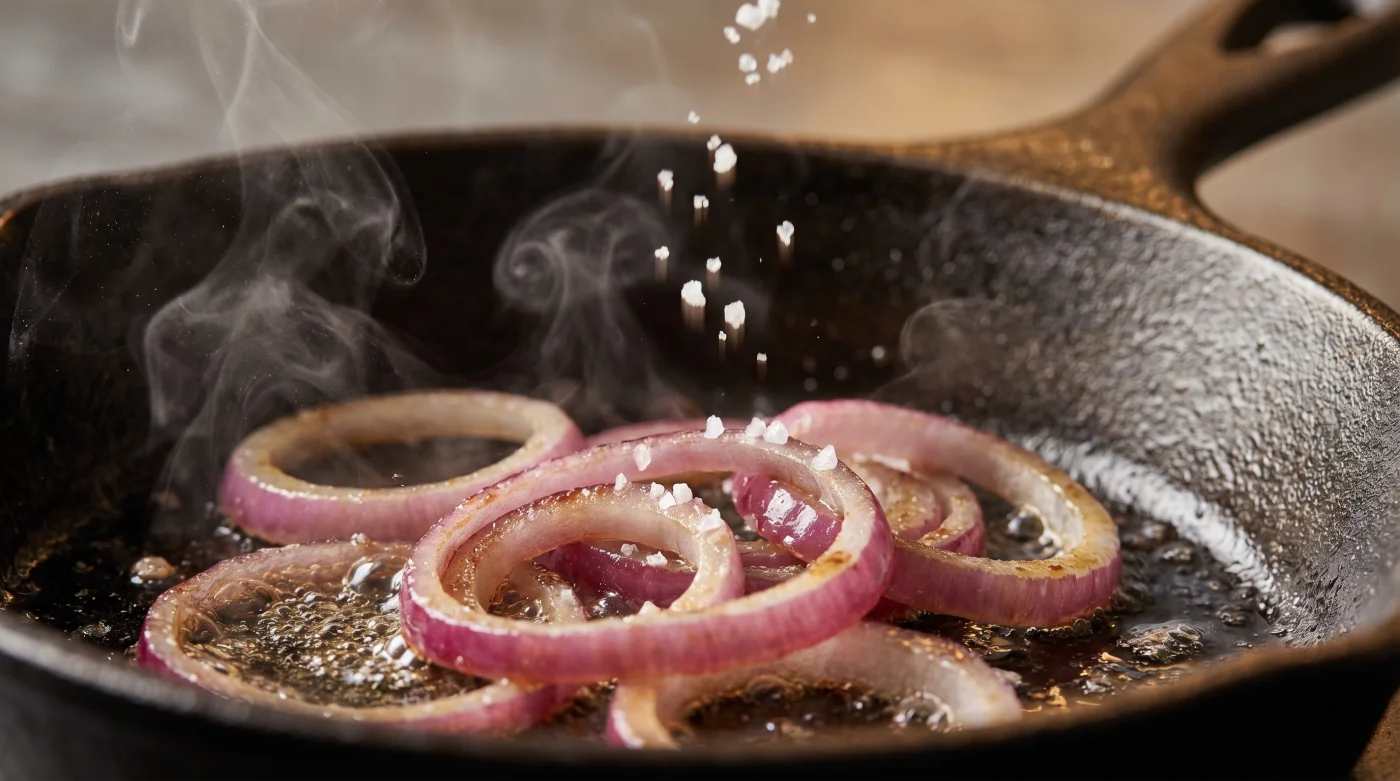
You stand at the kitchen counter at the end of a long day, knife in hand, slicing through the crisp, purple rings of a fresh red onion. The sharp, pungent scent fills the air, promising a rich, deeply savoury foundation for tonight’s dinner. You scrape the perfectly chopped pieces into a shimmering pan of oil, listening to that satisfying, aggressive initial sizzle. It feels like the start of something wonderful, the familiar rhythm of home cooking settling into your bones.
Then, the inevitable distraction occurs. You turn your back for a fraction of a minute to chop a pepper or answer a pressing question from the hallway. In that brief window, the fast-acting sugars in the pan catch on the hot metal. The smell abruptly shifts from sweet allium to acrid smoke, and your base is entirely ruined. You are left staring at charred, bitter pieces that will stubbornly taint the flavour profile of the entire meal.
We habitually treat red onions as if they possess the robust, forgiving nature of their yellow cousins, assuming they can withstand the same aggressive, dry heat. Yet, the professional reality is vastly different. Coaxing out their deeply sweet, jammy nature is not a matter of standing over the hob with endless patience or stirring until your arm aches. It requires a singular, chemical intervention the precise moment they hit the pan.
The Perspective Shift: The Sweat, Not The Sear
We are conditioned from an early age to view cooking as a battle of high heat—applying fire to a surface until it browns and crisps. But with red onions, you are actually managing a delicate reservoir of water and highly reactive sugars. If you blast them with unmitigated dry heat, their thin cellular walls burst violently, and they burn almost on contact.
Here is where the perspective completely shifts. By introducing a generous pinch of flaky sea salt the exact second the onions meet the hot oil, you alter the environment entirely. You move away from harsh frying and step into the elegant science of rapid osmosis. The salt immediately breaches the cellular structure of the vegetable, dragging the onion’s internal water out into the hot pan.
This expelled water instantly lowers the surface temperature of the metal by a few crucial degrees. Instead of frying in dry, aggressive fat, the red onions begin to gently steam in their own juices. This subtle temperature drop works a culinary miracle, pulling out the bitter juices and allowing the harsh sulfur compounds to evaporate into the air, leaving behind pure, unadulterated sweetness.
Ask Thomas, a 42-year-old gastropub head chef working a frantic Friday night service in Cornwall, how he manages thirty concurrent orders of caramelised red onion tartlets without a single burnt batch. Standing amid the clatter of heavy aluminium pans and the scent of roasting garlic, he wipes down his busy station. “It is the first-second salt rule,” he explains, tapping his wooden spoon against a cast-iron skillet. “Home cooks generally salt at the end to adjust flavour. I salt at the start to dictate the heat. That pinch of sea salt acts like a fire blanket, drawing out the moisture before the sugars even think about catching on the iron.”
Tailoring the Technique: Adjusting for Your Meal
Not all meals demand the exact same texture, but the underlying chemical rule remains absolute across the board. If you are preparing a rich Saturday stew or a slow-cooked ragu, the low-heat slow sweat is your baseline approach. Add the salt immediately, keep the heat on a medium-low whisper, and let the onions collapse into a sweet, jammy puddle over twenty leisurely minutes.
Conversely, if you are throwing together a quick Tuesday night fajita mix, you need structural integrity alongside that developed sweetness. Keep the pan hot, but still add that initial salt pinch the moment the vegetables drop. The moisture release will be rapid and aggressive, creating a brief, protective steam cloud. This cooks the centre of the onion while the high heat chars the edges perfectly, maintaining a satisfying bite without crossing the line into bitterness.
Even raw applications benefit from understanding this moisture-drawing principle. If you are preparing a crisp summer salad and want to remove that lingering, aggressive raw bite, a different kind of intervention works wonders. Tossing raw sliced red onions in a pinch of salt and a splash of malt vinegar creates a rapid cure, breaking down the harsh sting while keeping the bright, crunchy texture entirely intact.
Mindful Application: The Tactical Toolkit
Fixing a culinary disaster before it happens requires minimal physical effort but demands precise timing. It is about working in tandem with the ingredient, paying close attention to the sounds and smells of the kitchen rather than just glaring at the clock on the wall.
Gather your tools before the oil even begins to shimmer on the hob. You need your evenly chopped onions, your cooking fat of choice, and a small dish of flaky sea salt within easy arm’s reach. Your tactical toolkit relies entirely on having everything ready before the heat takes over and panic sets in.
- Slice the red onions uniformly; uneven pieces guarantee the smaller bits will burn before the larger chunks have even warmed through.
- Heat your pan over a medium flame until the oil glides smoothly across the surface, but crucially, stop before it begins to smoke.
- Drop the onions in and immediately scatter a heavy pinch of salt over the entire surface area.
- Stir vigorously with a wooden spoon for the first thirty seconds, ensuring every single piece is coated in both the warm fat and the salt crystals.
- Drop the heat by a quarter and watch as the pan transforms from a harsh, spitting fry to a gentle, bubbling sweat.
Finding Calm in the Skillet
Mastering this microscopic detail shifts your entire relationship with the kitchen environment. The hob is no longer a place of frantic panic, where a momentary lapse in concentration means tossing out fifteen Pounds Sterling worth of premium ingredients and starting your evening meal from scratch.
By understanding the chemistry of that single salt pinch, you reclaim control over your cooking space. You literally buy yourself vital minutes at the stove. It provides the breathing room to wipe down a chopping board, tidy your workspace, pour a glass of water, or simply stand still and breathe while the pan manages itself. It is a quiet, daily reminder that the most reliable results in the kitchen—and perhaps in our wider routines—often come from gentle, mindful persuasion rather than aggressive, impatient force.
“Controlling the moisture in your pan is the single greatest distinction between a frantic amateur and a calm professional.”
| Key Point | Detail | Added Value for the Reader |
|---|---|---|
| The Timing | Adding salt at the exact moment the onions hit the hot oil. | Prevents the sugars from instantly burning on contact with the metal. |
| The Chemistry | Osmosis draws internal water out of the onion cells. | Creates a natural steam barrier that lowers the pan temperature automatically. |
| The Flavour | Bitter sulfur compounds evaporate with the steam. | Leaves you with a purely sweet, complex base for any recipe. |
Frequently Asked Questions
Does this mean my food will end up too salty?
Not at all. You are simply moving a portion of your recipe’s required seasoning to the beginning of the cooking process rather than saving it entirely for the end.Can I use standard table salt instead of sea salt?
You can, but use slightly less. Table salt has finer crystals and dissolves faster, meaning it is easier to accidentally over-season your base.Does this trick work for white and yellow onions too?
Yes, the principle of osmosis applies to all alliums. However, red onions have higher sugar content and burn much faster, making this trick particularly vital for them.What if my onions have already started to burn?
If the edges are black, remove the pan from the heat immediately, add a splash of cold water to halt the cooking, and turn the heat down before returning the pan to the hob.Do I still need to stir them if they are sweating?
Yes, but far less frequently. The moisture creates a buffer, meaning you only need to stir every few minutes rather than standing over the pan constantly.