The kitchen smells of crushed garlic and simmering tomatoes. You stand by the hob, a colander waiting in the sink. The steam fogs your windows against the damp evening air.
With a swift, practiced motion, you tip the saucepan. Gallons of cloudy, pale liquid rush down the plughole, swallowed by the drain in an instant. You shake the remaining penne dry.
You tip the naked pasta into a pan of thin, red liquid. You stir, hoping it will cling, but instead, it creates a sad puddle at the bottom of the bowl. The sauce slides off, refusing to marry with the carbohydrate.
That murky, discarded liquid is liquid gold. It holds the power to transform a watery disappointment into a glossy, clinging emulsion. It is the invisible bridge between a frustrating weeknight supper and something you might expect from a Roman trattoria.
The Architecture of a Proper Emulsion
Think of your dinner plate as a building site. The pasta shapes are the bricks, and your crushed tomatoes are the paint. But without mortar to bind the two together, the paint simply washes away at the first sign of rain.
The secret lies in the starch. As dry pasta boils, it releases microscopic granules of starch into the surrounding liquid. This turns the water cloudy. Rather than seeing this as waste, you must view it as a powerful binding agent.
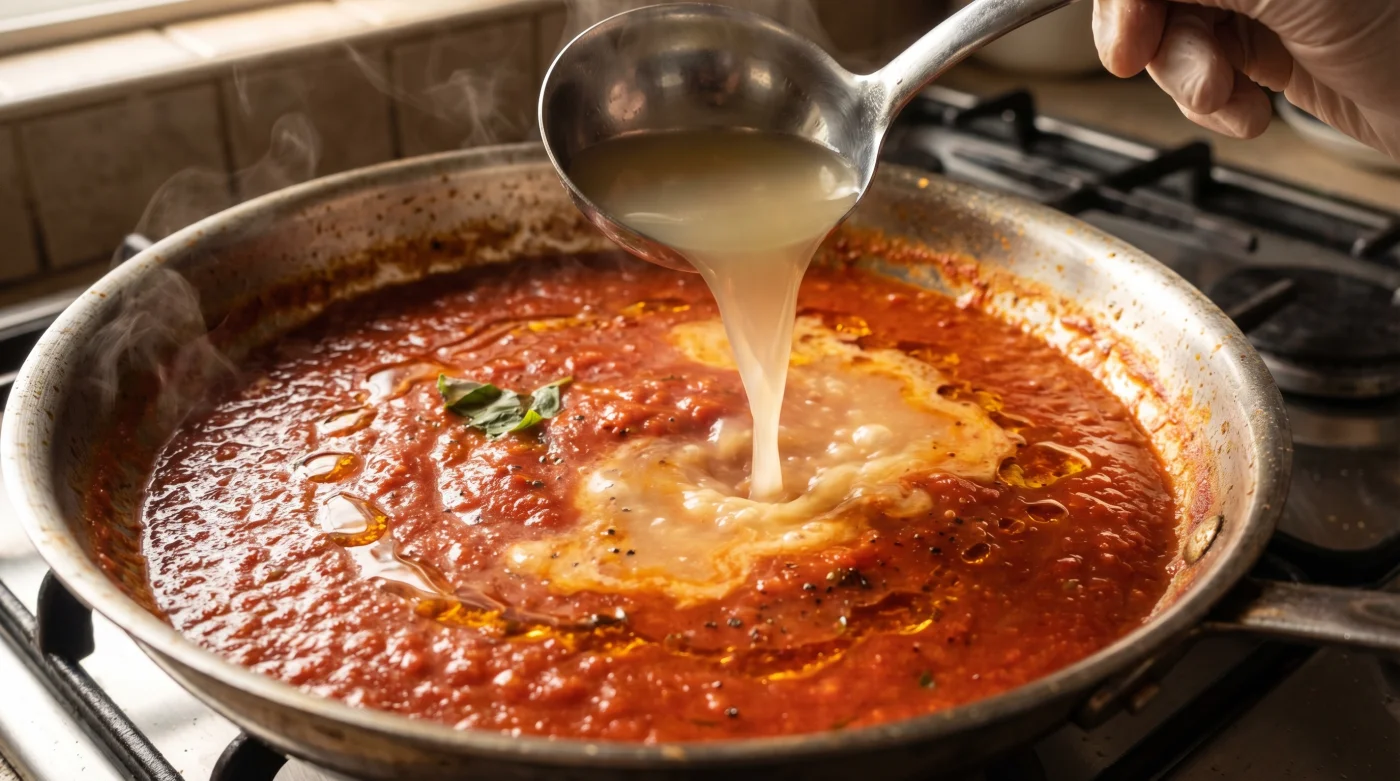
When you pour a ladle of this starchy reserve into a pan of simmering tomatoes and fat—be it olive oil or butter—something magical happens. The starch forces the water and fat to hold hands, creating a thick, velvety coating that grips every single rigatoni tube like a tailored suit. It prevents the acidic tomato juices from running away from the heavier olive oil.
Marco, a 54-year-old chef running a cramped but wildly popular pasta bar in Soho, leans over his battered aluminium pans every night with a chipped ceramic teacup. “The English always drain it completely dry,” he laughs, scooping out a murky cupful from the boiling vat. “They buy four-pound tins of San Marzano tomatoes and then ruin the finish. The water is the glue.” He considers that cloudy teacup to be the single most crucial component of his kitchen’s success. Without it, he argues, a bowl of pasta is just a collection of separate ingredients fighting for dominance on a plate.
Adjusting the Bind for Every Sauce
Not all tomato bases behave the same way. The age of the tomatoes, the heat of the pan, and the shape of your pasta all dictate exactly how much of this cloudy gold you need to deploy to achieve a professional finish.
For the Slow-Cooked Ragu Purist: If you have spent three hours nursing a heavy, meat-laden tomato sauce, the fat has already rendered. Here, you only need a splash—perhaps two tablespoons—just before serving. It stops the oil from splitting away from the meat, giving you a glossy, unified finish.
For the Ten-Minute Arrabbiata: When you are throwing together tinned cherry tomatoes, chilli flakes, and garlic on a Tuesday night, the sauce lacks body. You need to pull your spaghetti out two minutes early. Drop it directly into the bubbling tomatoes along with a full ladle of pasta water. Let the pasta finish cooking in the sauce, drinking in the liquid and thickening the pan juices simultaneously.
For the Vegan Cream Illusion: Blended roasted tomatoes can often feel a bit hollow without dairy. By aggressively boiling your pasta in slightly less water than usual, you create an ultra-concentrated starchy liquid. Whisking half a cup of this into your blended tomatoes mimics the mouthfeel of double cream, without a drop of dairy in sight. The water acts as a structural scaffold, supporting the fragile pureed vegetables and giving them a luxurious, mouth-coating richness.
Mindful Application
Securing this vital ingredient requires a slight shift in your physical routine. You must intercept the draining process before muscle memory takes over and forces you to tip the entire pan into the sink.
Begin by placing a heatproof mug beside your colander as a visual cue. When the timer shows two minutes remaining, dip the mug into the rolling boil. You want to extract the water when it is at its absolute starchiest point.
- The Extraction: Use a ladle or a heatproof jug to scoop out at least 250ml of the cloudy water.
- The Under-cook: Always remove your pasta from the boil one to two minutes before the packet instructions suggest. It must be slightly chalky in the centre.
- The Marriage: Transfer the firm pasta directly into your wide frying pan containing the warm tomato sauce.
- The Emulsion: Pour in a generous splash of the reserved water. Toss the pan vigorously. The friction of the pasta hitting the metal, combined with the heat, forces the starch to thicken the watery tomatoes.
- The Assessment: If it looks too tight or sticky, add another splash. You are aiming for a sauce that lightly coats the back of a wooden spoon and trembles slightly when shaken.
Reclaiming the Discarded
There is a quiet satisfaction in fixing a problem with the very thing you were about to throw away. It is a quiet rebellion against the modern urge to buy our way out of cooking problems with expensive oils or complex, processed thickeners.
By simply pausing before you tip the pan, you turn a mundane nightly chore into an act of craft. You learn to read the texture of the sauce, watching it morph from a sharp, watery frustration into a rich, coherent glaze that feels deeply professional.
This small kitchen fix changes the entire atmosphere of your evening meal. You are no longer serving a disjointed plate of carbohydrates and thin red liquid. You are crafting a harmonious bowl of comfort, bound together by simple chemistry, requiring nothing more than a little mindfulness at the sink.
“The sauce should cling to the pasta like a second skin, and the only tailor capable of sewing that seam is the starchy water left behind.”
| Key Point | Detail | Added Value for the Reader |
|---|---|---|
| Timing the Scoop | Extract liquid two minutes before draining. | Ensures maximum starch concentration for the strongest bind. |
| Cooking Method | Finish pasta directly in the simmering sauce. | Allows the starch to marry with the tomato base, thickening it instantly. |
| Water Volume | Boil pasta in slightly less water. | Creates a highly concentrated, gel-like liquid that mimics heavy cream. |
Frequently Asked Questions
Can I use salt in the pasta water?
Yes, heavily salted water seasons the sauce from the inside out. Just taste your sauce before adding more salt to the pan to ensure it does not become overwhelming.What if I forgot to save the water?
You can mimic the effect by briskly whisking a quarter teaspoon of cornflour into half a cup of warm tap water, though it lacks the subtle roasted flavour of actual pasta starch.Does this work for gluten-free pasta?
Absolutely. Gluten-free pasta actually releases a tremendous amount of starch into the cooking water, making it a highly effective binding agent for thin sauces.How much water should I actually save?
Always save a large mug full (around 250ml). You likely will not need it all, but it is far better to have spare ammunition if the pan gets too dry during tossing.Why does my sauce look cloudy at first?
That is simply the raw starch hitting the fat. Keep tossing the pan over a medium heat, and it will quickly melt down into a glossy, transparent shine.