The sharp click of the kettle breaking the morning silence. Condensation filming the cold kitchen window. You reach into the cupboard for your favourite heavy-bottomed ceramic mug, drop in the familiar paper sachet, and pour over the violently boiling water. It is a dawn ritual etched so deeply into the muscle memory of the nation that you could likely perform it blindfolded. The rising steam carries the promise of warmth and a gentle transition into the waking world.
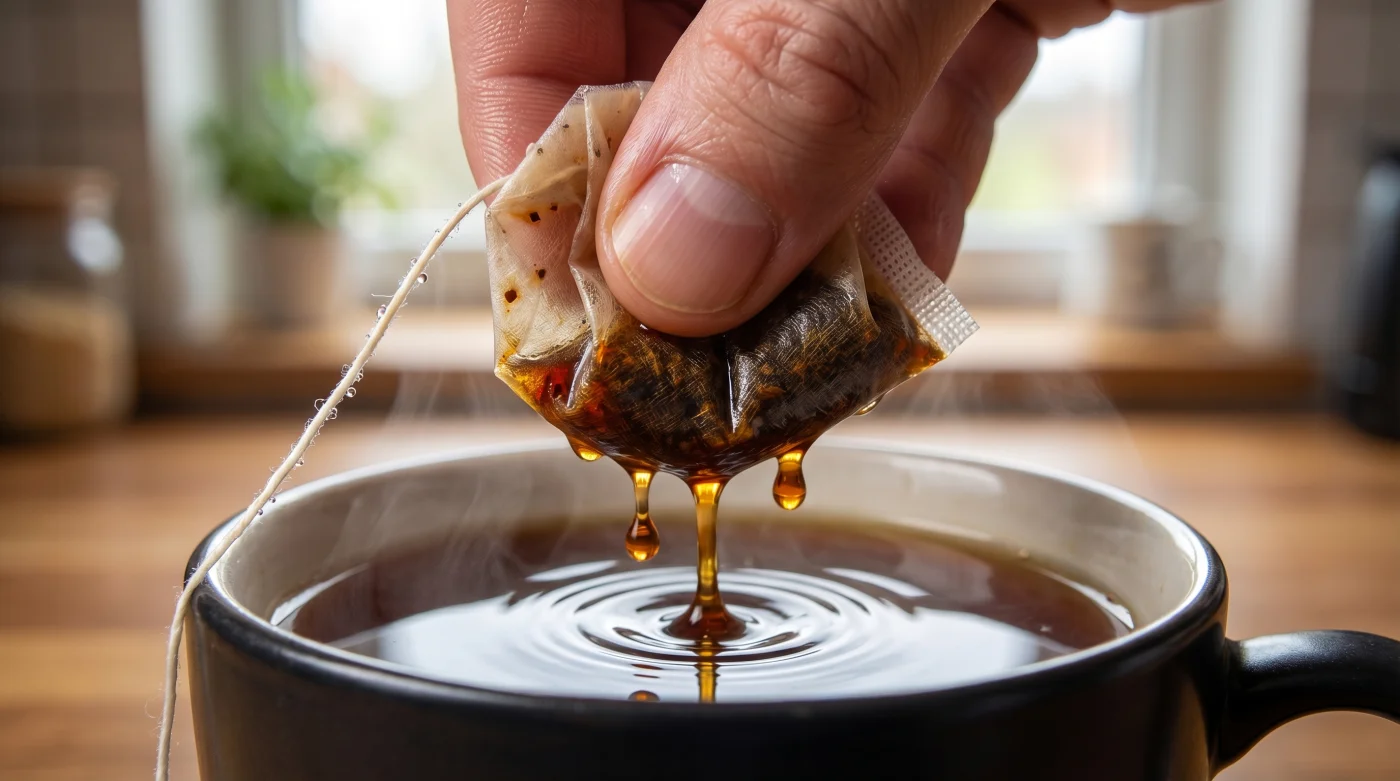
Then comes the moment of frantic impatience. You grab a cold metal teaspoon, fish out the swollen bag, and press it ruthlessly against the porcelain wall. You crave maximum flavour instantly, wringing every last drop of dark copper liquid into the water before discarding the crushed, dripping remnants into the kitchen worktop food caddy. It feels like an act of culinary efficiency.
The result in your mug is a dark, heavy liquid that punches the palate with a sharp, dry astringency. You might instinctively reach for the fridge, adding an extra splash of milk or a heavy lump of sugar just to mask the harshness scraping the back of your throat. But that aggressive morning squeeze is the very reason your breakfast brew leaves a chalky, bitter film across your tongue.
The professional reality is remarkably peaceful by comparison. Leaving the bag entirely alone to steep quietly is a radically simple swap that preserves the smooth, rounded malty notes of the blend. Patience gracefully replaces brute force, transforming what is often a bitter, rushed wake-up call into a deeply comforting, rounded start to your day.
The Anatomy of a Bruised Leaf
Think of your dried tea leaves not as a resilient kitchen sponge to be wrung dry, but as a tightly clenched fist slowly relaxing its grip in a warm bath. When you submerge the leaves, they absorb the water, physically expand, and release their chemical compounds in a highly choreographed sequence. First to emerge are the light, sweet aromatics, followed steadily by the caffeine and the rich amber colour, and finally, right at the bitter end, the heavy, defensive tannins.
By crushing the wet bag against the hard side of your mug, you physically tear the delicate paper matrix and fracture the hydrated leaves trapped inside. This act forces dormant bitter tannins out into your cup prematurely, flooding the water with harsh plant defense chemicals. The very act of trying to extract a visibly stronger profile actually sabotages the delicate flavour balance the blenders spent months perfecting.
The mundane detail of simply hooking the string and lifting the bag out—letting gravity do the gentle work—shifts your entire relationship with the beverage. What seemed like a clever shortcut to a bolder, stronger cup is suddenly revealed as the exact architect of its bitter downfall.
Martin Hewson, a 58-year-old master tea taster based in a bright, quiet blending room in North Yorkshire, encounters the aftermath of this tragedy on a daily basis. He spends his mornings slurping meticulously from white porcelain spoons, ensuring the exact ratio of Assam maltiness to Kenyan brightness hits the palate in perfect harmony. "We strictly calibrate the cut of the leaf so it releases its character perfectly at the three-minute mark," Martin explains, shaking his head. "When you aggressively squeeze the bag, you are entirely ruining our careful daily calibration, mainlining pure astringency straight into your mouth."
Adjusting for Your Morning Profile
Your approach to stepping back from the squeeze depends heavily on what you personally expect from your morning cup. Changing a lifelong habit requires understanding how the new method will alter the physical appearance and taste of your specific drink.
For the Builder's Brew Loyalist: If you rely on a mahogany-dark cup that is robust enough to stand up to a greasy bacon butty, the lack of squeezing might initially leave your drink looking slightly too pale for comfort. The fix is incredibly straightforward: leave the bag in the water for a full four minutes. Time builds the deep colour, giving you the visual cue and the robust body you need, entirely without the mouth-drying, aggressive finish.
For the Plant Milk Pourer: Oat, soya, and almond milks notoriously curdle or separate into unappetising flakes when introduced to highly acidic, tannin-heavy environments. By completely refraining from crushing the leaves, the underlying brew remains naturally sweeter and significantly less acidic. This allows your dairy alternatives to blend seamlessly into a rich, creamy finish without splitting.
For the Delicate Drinker: If your morning tastes lean towards a fragrant Earl Grey or a light, bright Darjeeling, the aggressive squeeze is particularly fatal to the delicate citrus oils and floral top notes. For these incredibly fragile tea blends, physical restraint safely protects botanical oils. Simply lift the bag by the string, wait for two natural drops to fall back into the mug, and move it straight to the waiting saucer.
The Minimalist Steep
Fixing this common household culinary disaster requires nothing more than a minor shift in timing and physical restraint. You are actually removing steps from your morning routine, rather than adding complex new ones. It is about doing less, but doing it with absolute intent.
Follow this specific guide; this tactical toolkit ensures perfect extraction every single time you switch the kettle on for your morning brew:
- The Water: Always draw freshly filtered, cold tap water. Re-boiling yesterday's stale water flattens the dissolved oxygen levels, leaving the final drink tasting noticeably dull and metallic on the tongue.
- The Pour: Pour the violently boiling water directly onto the paper bag. The kinetic energy of the falling water naturally agitates the leaves, kickstarting the infusion process without the need for aggressive stirring.
- The Wait: Set a strict three-minute timer. Step away from the kitchen worktop. Do not poke, prod, or mash the bag with your spoon. Let the natural thermal convection currents pulling through the water do the heavy lifting.
- The Exit: Hook the string, or pinch the top edge of the bag gently. Lift it cleanly and vertically out of the hot water. Hover above the surface for exactly two seconds, then transfer it directly to your compost bin.
Reclaiming the Quiet Minutes
We spend so much of our early mornings rushing blindly through the necessary physical motions, constantly trying to manually accelerate natural processes that inherently demand their own time. The aggressive, impatient squeezing of a wet tea bag is simply a micro-expression of our modern rush.
When you consciously choose to step back and let the leaves steep naturally without physical intervention, you are effectively enforcing a firm morning boundary on your routine. Those three quiet minutes of waiting by the kitchen worktop suddenly become a small, mandated pause before the heavy demands of the working day crash in.
It fundamentally shifts the simple act of making breakfast from a frantic chore to be completed into a quiet, restorative daily practice. You walk away with a significantly smoother, more complex cup of tea to enjoy, but perhaps more importantly, you grant yourself a brief, peaceful moment to breathe before the rest of the world wakes up.
"Leaving the leaves to steep without physical pressure is the single easiest way to respect the blend and save your palate from a chalky morning shock."
| Key Point | Detail | Added Value for the Reader |
|---|---|---|
| Tannin Release | Squeezing crushes leaves and forces out bitter defense chemicals. | Avoids the dry, chalky feeling in the mouth. |
| Time vs. Pressure | A 3-4 minute passive steep builds deep colour without astringency. | Maintains the strong ‘builder’s brew’ hit without the harshness. |
| Plant Milk Compatibility | Un-squeezed tea has lower acidity. | Stops expensive oat and soya milks from splitting or curdling. |
Frequently Asked Questions
Does leaving the bag in make the tea cold?
Not if you pre-warm your mug with a splash of hot water before starting the brew.How do I get a strong flavour without squeezing?
Leave the bag undisturbed for a full four minutes; time extracts depth without releasing bitterness.Should I put the milk in first?
Only if brewing in a pot; when brewing directly in a mug, adding milk last ensures the water remains hot enough to extract the flavours.Can I use a tea bag twice if I don't squeeze it?
It is generally not recommended, as the delicate aromatics and primary flavours are fully exhausted during the first steep.Why does my tea get a film on top?
That scum is caused by hard water reacting with tea compounds; a gentle steep without squeezing significantly reduces its formation.