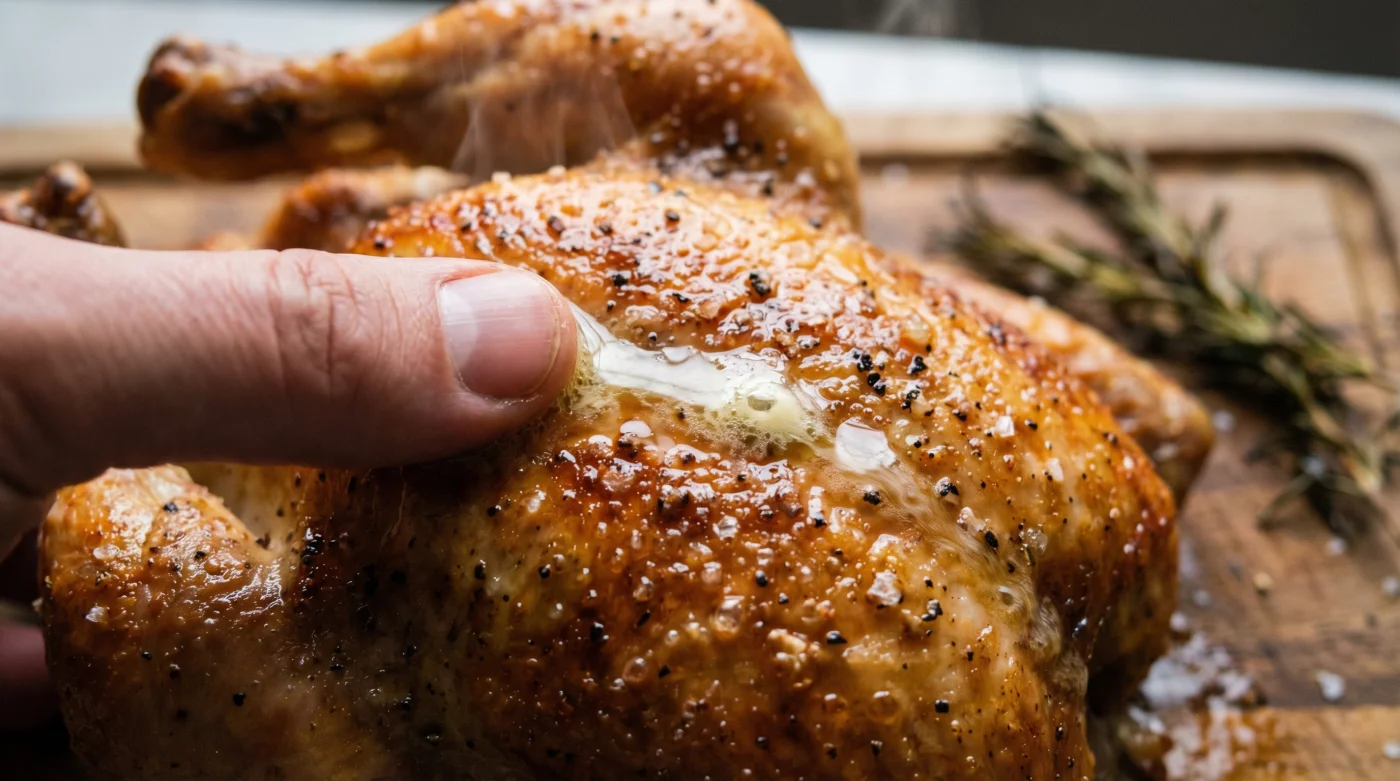
The Sunday afternoon stretches out, filled with the comforting scent of rosemary, roasting meat, and anticipation. You pull the heavy roasting tin from the oven, and the bird looks spectacular. The skin is burnished to the colour of an old copper penny, glistening under the kitchen lights. It looks exactly like the photograph in the recipe book, promising a perfect end to the week.
But then the carving knife descends. As the blade slides through the thickest part of the breast, that familiar, sinking dread takes over. Beneath the glorious exterior lies chalky, fibrous white meat that falls apart in dry, unappealing flakes. It is the sort of meat that demands a veritable swimming pool of gravy simply to make it palatable.
We are culturally conditioned to believe that roasting a whole bird is an act of weekend devotion requiring constant vigilance. You are told to baste every twenty minutes, to monitor the core temperature like a scientist, and to fiddle constantly with foil tents. Yet, the finest results often come from deliberately stepping away and trusting the ingredients to do the work.
The secret to a flawlessly moist roast does not require a culinary degree or an elaborate schedule. It relies on a wonderfully lazy adaptation. By pushing a generous slab of cold butter beneath the skin before the bird goes into the oven, you create a self-basting ecosystem. The rising heat does the heavy lifting, melting fat directly into muscle, saving your Sunday afternoon and sparing your family from another dry dinner.
The Architecture of Moisture
Consider a raw chicken breast as a dry sponge sitting inside a sauna. Left exposed to the fierce, circulating heat of a 190-degree fan oven, its natural moisture evaporates with alarming speed. Basting the outside of the skin with hot pan juices is much like splashing water onto a tightly fastened raincoat; the liquid merely glides off the surface, doing absolutely nothing to hydrate the meat hidden beneath.
Your perspective changes entirely when you realise the skin is a protective envelope. Slipping a solid piece of butter underneath it transforms that simple envelope into a slow-release basting pocket that works continuously throughout the roasting time.
As the ambient heat of the oven rises, the butter begins to weep. It melts deliberately, trickling slowly over the delicate muscle fibres while remaining shielded by the waterproof skin above. You are no longer fighting the dry environment of the oven; you are exploiting the bird’s natural anatomy to trap, circulate, and retain rich fats.
Speak to Eleanor Hughes, a 62-year-old pub landlady running a bustling tavern in North Yorkshire, and she will tell you that her legendary Sunday service is built on this exact premise. During a frantic lunch rush, Eleanor hasn’t the luxury of coddling her chickens or basting them with a silver spoon. She simply loosens the skin over the breast, shoves in a thick slab of salted butter, and closes the oven door. ‘The oven does the basting,’ she says, wiping down the mahogany bar. ‘If you open that door every fifteen minutes, you are just letting the magic escape and making the bird miserable.’
Adjusting for Your Sunday Schedule
Not every weekend unfolds at the same leisurely pace. Sometimes you have a full hour to lovingly prepare the kitchen, while other times you are wrestling with groceries, laundry, and demanding children. This lazy butter trick adapts effortlessly to your specific temporal rhythms.
For the Frazzled Parent
You need food on the table, and you need it without unnecessary fuss or washing up. Skip the chopped herbs and the garlic crushing. Take a cold block of standard salted butter, slice off two thick squares, and slide them straight under the skin. It takes roughly thirty seconds. The high salt content acts as a rapid brine, seasoning from the inside out while you attend to the chaos elsewhere in the house.
For the Sunday Purist
You view the kitchen as your personal sanctuary. Take the time to soften the butter slightly on the counter. Mash it vigorously with lemon zest, crushed black peppercorns, and a handful of finely chopped garden thyme. Smear this aromatic compound generously beneath the skin. As it melts, the fragrant oils seep downwards, perfuming the entire breast and yielding a deeply flavoured pan juice.
For the Budget Prepper
Roasting a whole bird is a brilliant exercise in household economy, stretching a few modest ingredients across several weekday meals. To ensure the Monday leftovers aren’t dry and lifeless, push extra butter downwards towards the thighs and legs. The lingering fat ensures the meat remains supple enough for exceptional cold sandwiches the next day.
Executing the Lazy Fix
Approaching this method requires a light touch rather than brute force. The skin of a chicken is surprisingly elastic and resilient, but tearing it ruins the entire self-basting system, allowing the butter to leak out immediately. You must work mindfully and patiently.
Start at the cavity opening, where the skin is naturally loose. Slip your index and middle fingers gently between the skin and the breast meat. Wiggle them side to side, breaking the thin connective membranes without piercing the delicate outer layer. Imagine you are sliding your hand into a tight leather glove.
Once you have created two distinct pockets stretching over the breasts, you are ready to insert the butter. It should be firm enough to handle easily, but yielding enough to be flattened slightly once inside the pocket.
Here is your tactical toolkit for flawless execution:
- Ensure the chicken is thoroughly patted dry with kitchen paper before starting to prevent slipping.
- Use roughly fifty grams of butter per breast side, equivalent to a quarter of a standard UK block.
- Push the butter as far back towards the neck cavity as you comfortably can reach.
- Press gently on the outside of the skin to flatten the butter into an even, distributed layer.
- Roast at 190 degrees Celsius (Fan) and firmly resist the urge to open the oven door.
The Quiet Confidence of a Simple Supper
There is a profound, grounding comfort in knowing you can produce a spectacular meal with almost zero active effort. When you finally embrace this lazy butter trick, the quiet anxiety that so often surrounds the traditional Sunday roast simply evaporates.
You are no longer tethered to the stove, wielding a basting brush like a nervous conductor. You have successfully reclaimed your afternoon. The oven works diligently on your behalf, transforming a humble, raw ingredient into something resonant, deeply flavoured, and celebratory.
Carving a perfectly moist roast chicken feels like a triumph, but the real victory is the mental space it grants you. You can sit at the kitchen table with a hot cup of tea, read the Sunday paper, or simply stare out of the window, knowing that beneath that crisping, golden skin, a quiet miracle of fat and heat is taking place entirely on its own.
‘The best cooking happens when you stop trying to control every second, and let the ingredients do their own beautiful, quiet work.’
| Key Point | Detail | Added Value for the Reader |
|---|---|---|
| The Skin Envelope | Using the skin to trap cold butter. | Prevents moisture loss and creates a self-basting system. |
| Salted Butter | High salt content acts as a rapid brine. | Seasons the thickest part of the breast from the inside out. |
| Zero Door Opening | Maintaining a constant 190-degree heat. | Reduces cooking time and guarantees exceptionally crispy skin. |
Frequently Asked Questions
Can I use margarine instead of real butter?
It is strongly advised to use real dairy butter. Margarine contains a high water content and lacks the necessary fat structure to baste the meat effectively, often resulting in a soggy skin.What if the skin tears while I am loosening it?
Do not panic. Simply pinch the torn skin back together as best you can and secure it with a wooden cocktail stick. It will hold the butter in place long enough to melt into the meat.Should I still rub oil on the outside of the chicken?
Yes, an incredibly light rub of olive oil and a heavy pinch of flaky sea salt on the exterior of the skin will encourage it to crisp beautifully while the butter works underneath.Does this method work for turkey as well?
Absolutely. The anatomy is identical, though you will need to scale up the volume of butter significantly to account for the larger breast span of a turkey.How do I stop the butter from leaking out the back?
Push the butter as deeply into the pocket as possible, towards the neck end. As the oven heats up, the butter melts downwards over the meat rather than spilling out of the cavity.