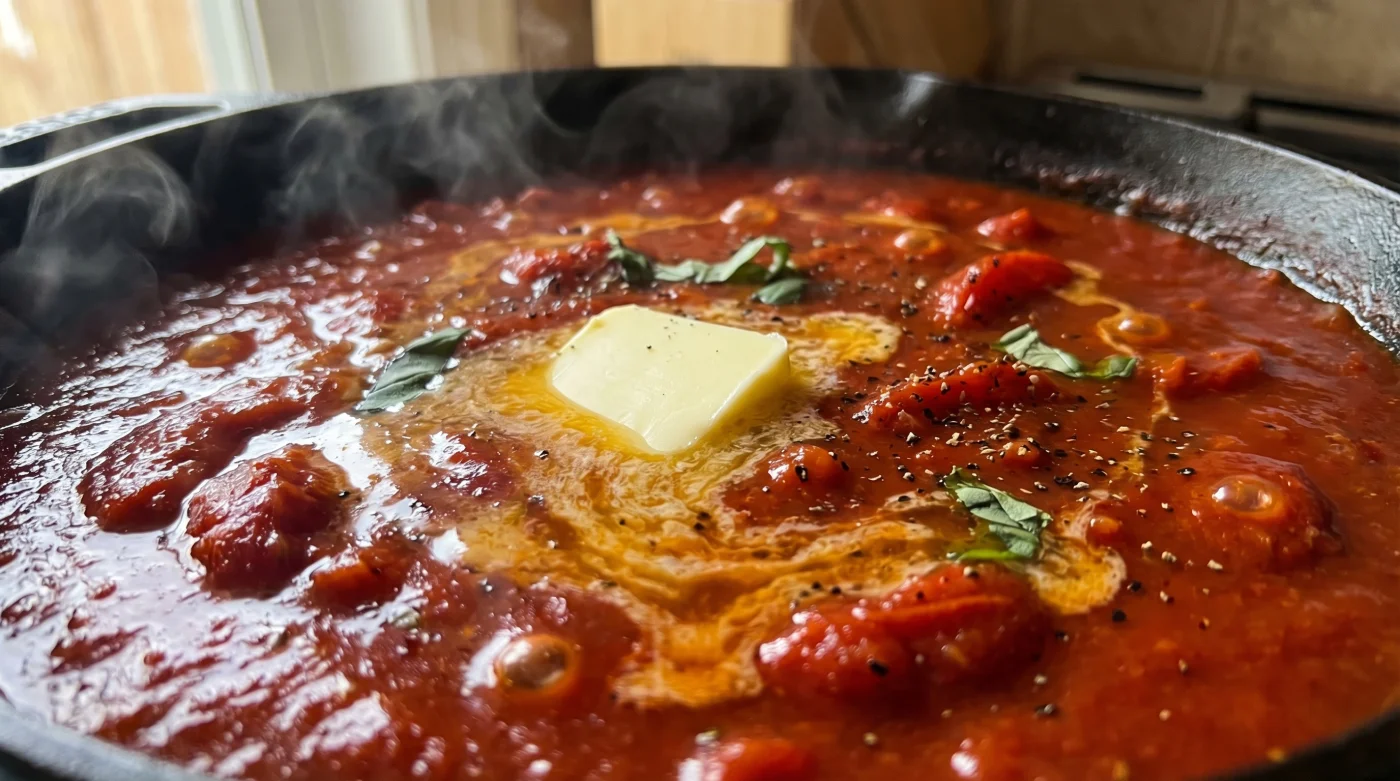
You stand over the hob, watching a crimson pool bubble and spit. The kitchen smells of garlic softening in olive oil and the sharp tang of tinned plum tomatoes breaking down. It is a comforting ritual, stirring a wooden spoon through the familiar red base, anticipating a quiet bowl of comfort at the end of a long Tuesday.
But when you dip a piece of bread to taste, it lacks a certain gravity. It tastes entirely fine, yet completely domestic. You are missing that glossy, lip-smacking weight that defines a truly remarkable plate of pasta in a darkened Soho restaurant. The flavour is slightly hollow, the texture sits thin on the tongue, and the water slowly begins to separate from the crushed tomato flesh at the edge of the pan.
We often assume the gap between home cooking and professional kitchens is built on obscure, expensive ingredients imported directly from Napoli, or secret techniques requiring years of brutal training. We imagine vast steel pots simmering for three solid days to achieve that perfect, mellow balance of sweetness and acidity that coats every strand of spaghetti without slipping.
The reality is far more immediate, playing out in the dying seconds of the cooking process. The defining characteristic of a restaurant-quality finish relies entirely on a fiercely cold dairy addition you already have sitting in the door of your fridge. It is a simple, mechanical trick that completely alters the physics of your dinner.
The Perspective Shift: Taming the Acidity
Think of a basic tomato reduction as a nervous energy. It is bright, sharp, and inherently disjointed. The natural water from the tomatoes refuses to mingle neatly with the rich olive oil you started with. You cannot force these opposing elements together with brute heat; boiling them furiously will only break the sauce further, leaving a greasy slick across your meal.
Instead of trying to boil the sauce into submission, you must persuade it to bind. By dropping a solid cube of fridge-cold butter into the pan off the heat, you create a sudden temperature clash. This forces a rapid emulsion, wrapping the sharp acidic notes of the tomatoes in a smooth, opaque blanket of fat that physically connects the water and the oil.
This mundane block of butter, so often relegated to morning toast or baking, acts as a culinary peacemaker. It suspends the liquids together perfectly, dulling the harsh metallic edge of the tin and rounding out the flavour profile. It transforms a soup-like reduction into a cohesive, clinging sauce that grips your pasta with professional authority.
Consider Marco Rossi, a 42-year-old sous chef running the pass at a perpetually booked pasta bar in Marylebone. He routinely watches junior chefs frantically reducing tomatoes until they turn to a sticky jam, and stops them with a raised hand. He pulls the pan from the roaring gas flame, slides a pale yellow cube of unsalted butter into the steaming centre, and swirls it vigorously until the red softens into a shimmering orange. This technique, ‘montare al burro’ or mounting with butter, is the invisible backbone of his entire evening service, providing that signature restaurant mouthfeel.
Adjustment Layers: Tailoring the Technique
Not every evening demands the exact same approach. The beauty of this cold butter method lies in how intuitively it adapts to the specific rhythm and constraints of your own kitchen environment.
For the rapid weeknight dinner, when you are relying on a tired tin of cherry tomatoes and a single bruised clove of garlic, the butter acts as an instant architectural fix. It instantly mellows the metallic edge of cheaper canned goods, tricking the palate into believing the sauce has been resting on a low heat for hours rather than minutes.
For the weekend purist, spending three hours slowly caramelising onions, sweating down celery, and reducing expensive San Marzano tomatoes, the butter serves a vastly different purpose. Here, it seals the complex flavour profile, acting as a glossy topcoat that catches the dining room light when twirled around a fork, preventing the intense reduction from tasting aggressively rich.
If you are catering to a strictly plant-based diet, a fiercely cold block of premium vegan butter performs a strikingly similar binding action. You must ensure it has a high enough fat content—usually a block rather than a spread—to stabilise the liquid without melting too rapidly and breaking the delicate emulsion you are trying to build.
Mindful Application: The Velvet Finish
Bringing this together requires a brief act of culinary restraint. You must intentionally step away from the roaring heat of the stove and trust the residual warmth of the metal.
Turn the heat off completely while the sauce is still slightly loose and watery. If the base is already heavily reduced and thick, the fat will instantly separate the moment it hits the pan, leaving an oily, unappealing residue across your carefully cooked rigatoni.
- Remove the frying pan from the heat source entirely to halt the aggressive bubbling.
- Add one generous tablespoon of fridge-cold, unsalted butter for every two portions of pasta.
- Grasp the pan handle and shake it back and forth continuously, or stir rapidly with a wooden spoon to agitate the fat.
- Watch closely as the sharp crimson softens into a rich, opaque sunset colour.
- Toss your slightly undercooked pasta directly into this stable emulsion to finish cooking in the residual warmth.
The Tactical Toolkit: Focus on temperature first. The sauce should be hot enough to melt dairy, resting at around 85 degrees Celsius, but absolutely not boiling. The butter must be drawn straight from the coldest section of your fridge. Aim for roughly 15g to 20g of butter per standard 400g tin of tomatoes. Utilise a wide aluminium or stainless steel frying pan, allowing enough surface area for rapid, energetic swirling.
The Quiet Confidence of Knowing
Understanding this small, deliberate action changes your entire relationship with the stove. You are no longer crossing your fingers, dumping pasta into a bowl, and hoping for a passable outcome. You are consciously controlling the final texture with absolute certainty, mastering the mechanics of the food rather than just following a list of ingredients.
There is a profound, quiet satisfaction in turning something entirely ordinary into a deliberate experience. The frantic rush of plating dinner fades away, replaced by the calm, rhythmic swirling of a heavy pan, watching a chaotic liquid organise itself into a silken glaze.
You finally sit down at the table to a bowl of pasta that feels completely cohesive. Every individual strand is coated perfectly, leaving no watery red puddle pooling at the bottom of the dish as you eat. It is a quiet, highly effective victory of technique over ingredients, proving that restaurant quality is rarely about what you buy, but exactly how you handle it in those final, critical seconds.
The difference between a frantic home cook and a seasoned professional is knowing exactly when to turn the heat off and let the cold fat do the heavy lifting.
| Key Point | Detail | Added Value for the Reader |
|---|---|---|
| Temperature Clash | Adding freezing cold dairy to hot sauce off the heat. | Creates a stable emulsion that clings to pasta instead of turning greasy. |
| Acid Neutralisation | The fat coats the tongue, masking the sharp acidity of tinned tomatoes. | Saves money by making standard supermarket tomatoes taste premium. |
| Visual Transformation | The sauce turns from watery red to an opaque, glossy orange. | Provides visual confirmation that the restaurant-quality texture has been achieved. |
Frequently Asked Questions
Does the butter need to be unsalted?
Yes, using unsalted butter gives you total control over the seasoning. Tinned tomatoes and pasta water already carry salt; adding salted dairy risks pushing the dish into heavily over-seasoned territory.Can I use margarine instead of block butter?
Soft spreads contain too much water and artificial emulsifiers. They will thin the sauce rather than binding it. Always use a hard, high-fat block.Why did my sauce turn into an oily mess?
The pan was likely too hot. If the sauce is boiling when the butter goes in, the emulsion breaks immediately. Always remove the pan from the hob first.Does this work for meat-based ragù?
Meat sauces already contain rendered animal fat. While you can add a tiny knob of butter for gloss, it is most effective in pure tomato or vegetable bases that lack natural fat.Should I still add pasta water?
Absolutely. A splash of starchy pasta water added just before the butter provides the structural framework that helps the cold fat bind the sauce together.