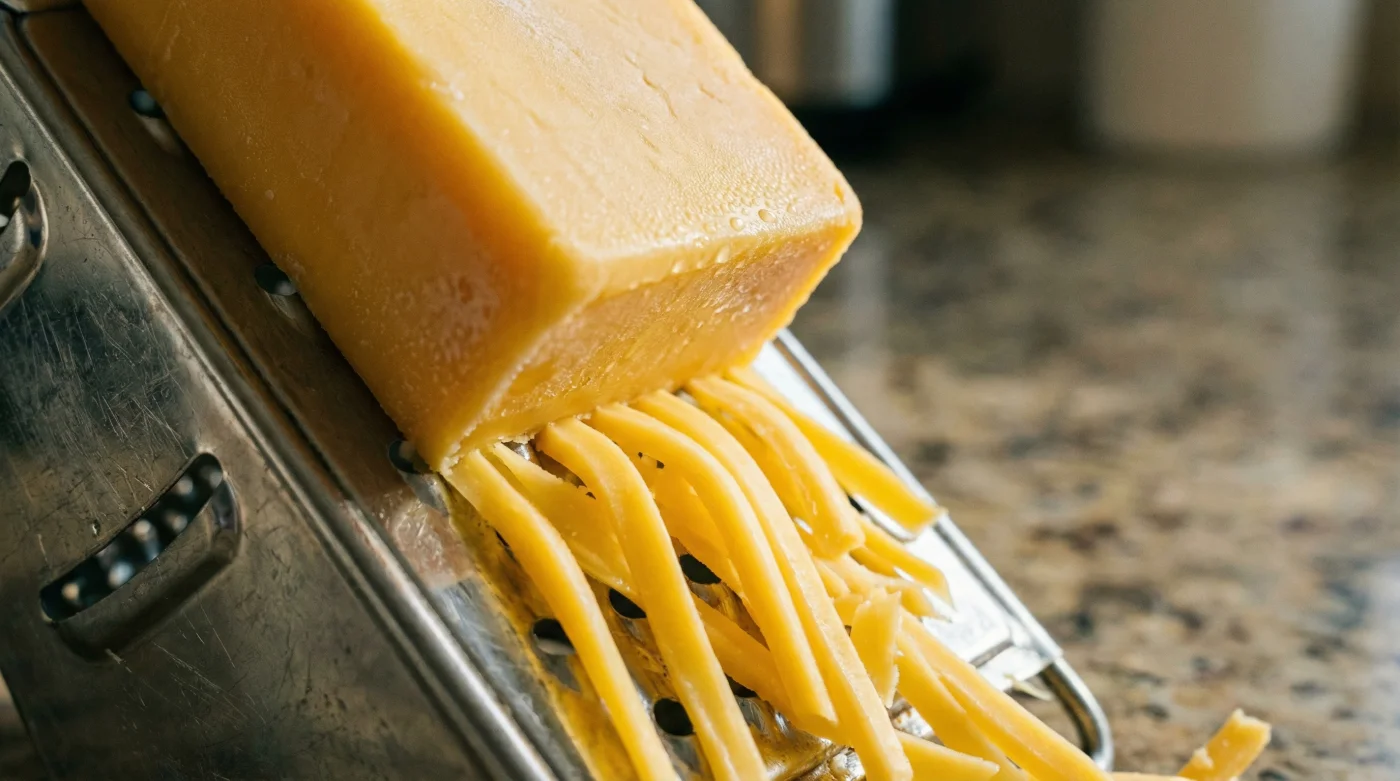
You are standing at the kitchen counter, the evening drizzle blurring the streetlights outside. You press a block of mature cheddar against the sharp teeth of your box grater, expecting a satisfying shower of ribbons. Instead, the cheese yields with a heavy, dull smear. It drags. It collapses into a greasy, crumbly mound, leaving behind a waxy paste that clogs the metal and coats your knuckles. What should be the simple, quiet comfort of preparing a toasted sandwich suddenly feels like an unnecessary wrestle with your ingredients.
The Architecture of Temperature
It is easy to blame the grater, assuming it has lost its edge, or perhaps to question the quality of the cheese itself. Yet, the true culprit is the structural integrity of the dairy. When cheddar sits at room temperature, or even in the warmer sections of your fridge, its butterfat softens. It breathes like a tired muscle, losing the tension required to cleanly pass through a blade. You are essentially trying to carve wet clay. To achieve clean shreds, you must introduce the cheese to a brief, sharp shock of cold. You must change its internal architecture.
| The Home Cook | The Specific Benefit |
|---|---|
| The Batch Prepper | Grates an entire block in minutes without stopping to clear clogged metal holes. |
| The Comfort Food Enthusiast | Achieves even, uniform shreds that melt seamlessly into sauces and baked potatoes. |
| The Frugal Shopper | Maximises yield from a standard supermarket block without wasting crumbly offcuts. |
I learned the gravity of this technique from an old prep chef in a busy Bristol gastropub. He was responsible for churning out hundreds of Welsh rarebits a week. I watched him handle vast slabs of West Country cheddar, never once fighting the grater. His secret was remarkably quiet and entirely free. He would wrap the dairy in parchment paper and slide it into the blast chiller for exactly ten minutes before service. He told me, wiping down his wooden board, ‘You would not try to chisel warm wax. Give the fat ten minutes of winter, and the cheese does the work for you.’
| Physical State | Fat Stability | Grating Result |
|---|---|---|
| Room Temperature (20°C) | Highly unstable, oils begin to separate. | Smearing, clumping, heavy residue. |
| Fridge Temperature (4°C) | Moderate stability, slightly pliable. | Frequent snapping, uneven shards. |
| Post-Freezer Rest (-5°C surface) | Firm, contracted fat molecules. | Flawless ribbons, zero metal sticking. |
The Ten-Minute Threshold
The application of this technique is delightfully straightforward, yet it requires a touch of mindful timing. Leaving the cheese in the freezer for too long will freeze the moisture within, ruining the delicate texture and causing it to fracture like brittle glass. Ten minutes is the precise window.
First, remove your block of cheddar from its original plastic packaging. Moisture often gets trapped against the rind, which encourages slipping. Pat the surface entirely dry with a clean kitchen towel. Wrap the block snugly in a piece of baking parchment. The paper prevents the harsh freezer air from causing sudden condensation when it returns to room temperature.
Place the wrapped block on a flat surface in your freezer. Set a timer for exactly ten minutes. Use this brief pause to gather your grater, a sturdy bowl, and perhaps to tidy the counter. When the timer chimes, retrieve the cheese. You will notice it feels distinctly firm in the hand, like a solid piece of timber rather than a spongy block.
Grate immediately. Hold the cheese firmly and use long, deliberate downward strokes against the largest teardrop holes of your box grater. Do not saw back and forth. You will feel the difference instantly; the cheese glides, falling away in beautiful, individual ribbons that pile up like fresh snow.
| Quality Indicator | What to Look For | What to Avoid |
|---|---|---|
| Texture & Bounce | Firm resistance when pressed lightly with a thumb. | Rubbery spring-back, indicative of high moisture. |
| Surface Appearance | Matte finish, occasional tiny white calcium lactate crystals. | Glossy sheen, pooling oils inside the packaging. |
| Aroma | Earthy, slightly nutty scent of aged dairy. | Sour or sharp acidic smells masking the milk. |
Reclaiming the Kitchen Rhythm
- Double cream splits into greasy puddles hitting this exact boiling temperature.
- Ground turmeric loses essential health properties missing this microscopic pepper pairing.
- Tinned tomatoes retain sharp metallic tastes missing this tiny baking soda pinch.
- Sweet potatoes develop intense caramel flavours ignoring standard high roasting temperatures.
- Supermarket strawberries taste incredibly sweet tossing in this dark balsamic vinegar.
By respecting the physical nature of the butterfat, you are no longer fighting the meal. You are guiding it. Those clean, distinct shreds of cheddar will melt more evenly into your béchamel sauce, scatter perfectly across a baking tray of root vegetables, and save you from scrubbing a grease-choked grater under the hot tap.
It is a minor adjustment to your routine, perhaps requiring you to plan your meal just a fraction earlier. Yet, the reward is an undeniable sense of ease. It transforms a messy chore into an effortless, satisfying task.
Treat your ingredients with an understanding of their physical limits, and they will surrender their best qualities without a fight.
Frequently Asked Questions
Does freezing the cheese ruin its flavour?
Not at all. A brief ten-minute chill only lowers the surface temperature to firm the fat; it does not freeze the internal moisture or dull the complex flavours of a mature cheddar.Can I use this trick on softer cheeses like mozzarella?
Yes, this technique is actually essential for grating low-moisture mozzarella. You may need to extend the freezer rest to fifteen minutes due to its higher water content.Do I need a specific type of grater for this?
A standard stainless steel box grater works perfectly. The key is the cold cheese, not an expensive tool, though keeping your grater clean and sharp certainly helps.Why should I dry the cheese before freezing?
Surface moisture turns into slippery ice crystals in the freezer, which makes the block difficult to grip and dangerous to hold against sharp metal teeth.What if I forget the cheese in the freezer for an hour?
If left too long, move the block to the fridge for a few hours to slowly thaw. Grating a fully frozen block will cause the dairy to shatter into a powdery, unappealing dust.