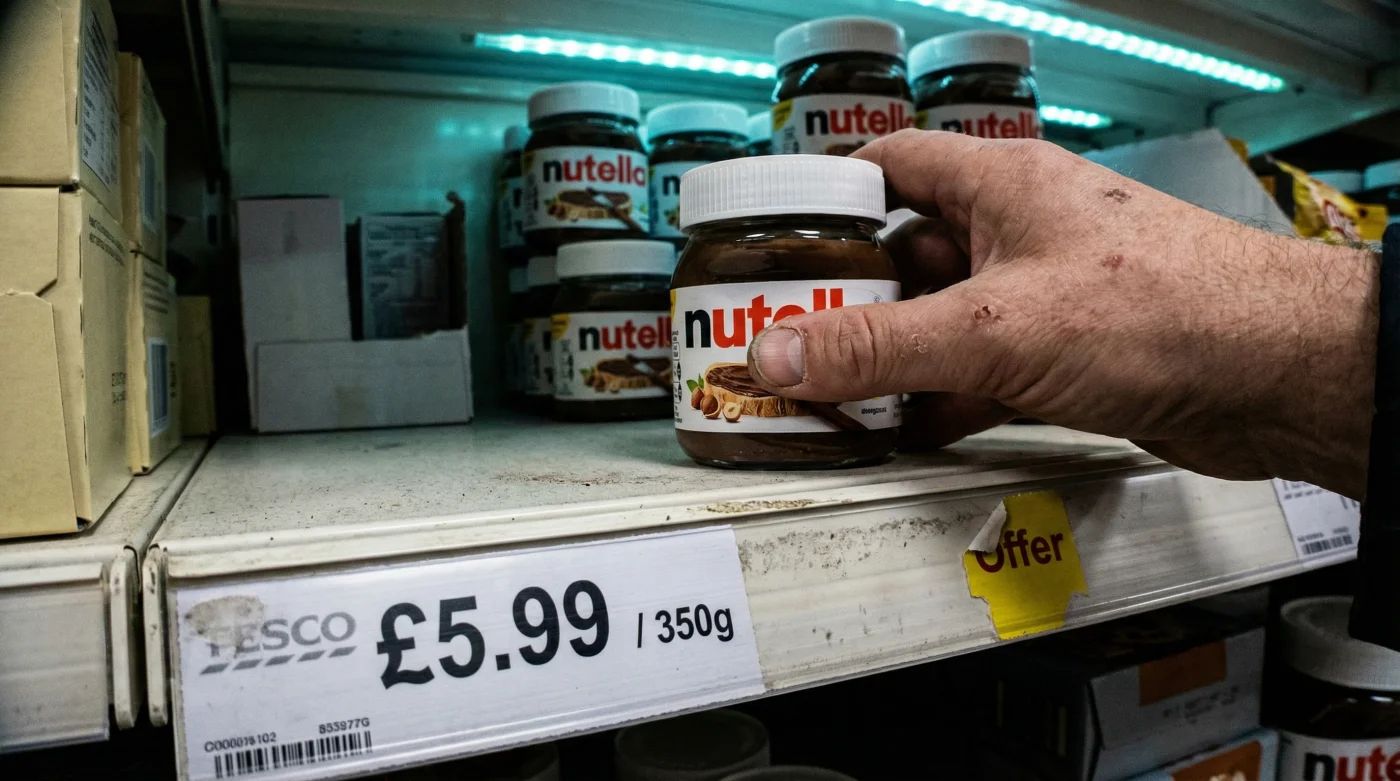
Picture your typical Tuesday morning. The rain beats a steady rhythm against the kitchen window, the kettle murmurs its familiar boil, and you reach into the cupboard for that iconic glass jar. You anticipate the satisfying thunk as it hits the counter, the crinkle of the gold foil, and the rich, roasted scent of chocolate and hazelnut. But as your hand wraps around the glass, something feels subtly out of rhythm. The jar rests lighter in your palm. The curve of the glass seems narrower. You handed over the same £3.50 at the local Sainsbury’s, yet the reliable breakfast staple you have trusted for decades has quietly retreated.
The Invisible Tide of the Pantry
We carry a comforting assumption that popular pantry staples remain entirely static. We expect our bread to be the same weight, our milk the same volume, and our spreads the same generous size, regardless of what the broader economy is doing. But this static permanence is a myth. What you are feeling in your hand is the physical consequence of a global agricultural crisis.
Think of it as the evaporating footprint of your morning routine. Manufacturers, faced with unprecedented supply chain hurdles, rarely announce their struggles. Instead, they alter the architecture of the jar. The glass base becomes thicker, pushing the hazelnut spread upwards to mimic a full silhouette. The waist of the container pinches inwards just a fraction of a millimetre. It is an optical illusion played out on the supermarket shelf.
I recently sat down with Julian, an independent commodities buyer based out of a roasting house in East London. He spends his days tracking weather patterns across the Black Sea coast, where over seventy percent of the world’s hazelnuts are grown. Swirling a cup of black coffee, he explained the reality of the recent Turkish crop failures. ‘You never see the late spring frost on the label,’ he told me, ‘but you always feel it in the jar. When the hazelnut blossoms freeze on the branch, the ripple effect hits British shelves six months later. To keep the price palatable for the consumer, the manufacturer simply gives you fewer spoonfuls.’
| Household Profile | Impact of Jar Shrinkflation | Strategic Adjustment |
|---|---|---|
| The Weekend Baker | Recipes requiring exact grammage fall short by 30g to 50g. | Purchase an emergency backup jar or weigh ingredients precisely before starting. |
| The Family of Four | The jar runs empty a day or two earlier in the weekly cycle. | Switch to monitoring the ‘Price per 100g’ rather than the unit price to manage the budget. |
| The Occasional Snacker | Minimal daily disruption, but a higher cost per serving over time. | Store in a cool, dark cupboard to prevent oil separation and maximise the lifespan of a smaller jar. |
The Anatomy of a Supply Shock
- Fresh cauliflower florets roast perfectly sweet skipping this standard oil tossing phase.
- Skin-on chicken thighs achieve ultimate crispness starting in an entirely cold pan.
- Maris Piper potatoes break down instantly boiling in this baking soda solution.
- Full-fat mayonnaise replaces expensive cold butter creating incredibly flaky home pastry crusts.
- Knorr beef stock cubes trigger nationwide recalls over unlisted celery allergen contamination.
| Agricultural Factor | Historical Average | Recent Crisis Data | Jar Impact (UK Retail) |
|---|---|---|---|
| Spring Temperatures (Black Sea) | 12 Degrees Celsius | Sudden Frost (-2 Degrees Celsius) | N/A |
| Regional Crop Yield | 700,000 Tonnes | Under 500,000 Tonnes | Ingredient cost rises by 40% |
| Standard Jar Grammage | 400g | 350g (Estimated Shift) | 12.5% reduction in physical volume |
Navigating the Aisle’s Illusions
Understanding this shift requires a new physical approach to your weekly shop. You must learn to look past the familiar logo and read the shelf like an auditor.
First, direct your eyes away from the bold yellow promotional tags. Look closely at the small, mundane text printed at the very bottom of the shelf edge label.
This is where the ‘Price per 100g’ lives. This singular metric is the only honest number in the entire aisle. It cuts through the optical illusions of thicker glass and pinched waists.
Next, handle the jar mindfully. Turn it over and look at the base. You will often notice a much deeper indentation in the glass bottom of newer, smaller jars—a physical void where product used to sit.
| Observation Point | What to Look For (Quality Assurance) | What to Avoid (The Shrinkflation Trap) |
|---|---|---|
| Shelf Edge Label | Checking the precise ‘Price per 100g’ to compare true value. | Trusting the bright red ‘Special Offer’ or fixed unit price alone. |
| Base of the Glass Jar | A relatively flat, standard glass base indicating older, fuller stock. | A deep, aggressive concave dimple pushing upward into the product space. |
| The Weight Declaration | Scanning the bottom corner of the front label for the exact grammage. | Assuming the jar size based purely on its height on the shelf. |
The Breakfast Table Reflections
It is easy to feel frustrated when you realise you are paying the same amount for less. Yet, understanding the mechanics behind the shrinking jar connects you directly to the earth. Your morning slice of toast is intimately tied to the frost patterns across the Turkish hillsides and the delicate blossoms of a hazelnut tree.
When you twist off that white lid tomorrow morning, you are not just interacting with a brand; you are interacting with global agriculture. Navigating these supermarket changes mindfully ensures you remain in control of your household budget, rather than falling victim to a quiet retail strategy.
“A smaller jar on the shelf is not just a commercial sleight of hand; it is the physical echo of a changing climate reaching directly into our kitchens.”
Frequently Asked Questions
Why has the price of the jar remained exactly the same?
Retailers know that consumers are highly sensitive to price increases on core staples. To prevent you from abandoning the product entirely, they maintain the familiar unit price while quietly reducing the volume of the product inside.
Will the jar size go back to normal once the hazelnut crop recovers?
Historically, once a product undergoes shrinkflation, it rarely returns to its original size, even if raw commodity prices stabilise. The new, smaller size becomes the accepted industry standard.
Is this practice legal in UK supermarkets?
Yes, it is entirely legal provided the accurate weight is printed clearly on the packaging. The onus remains firmly on the shopper to check the grammage and the price per 100g on the shelf label.
How should I store my spread to ensure zero waste?
Keep it in a cool, dark cupboard rather than the fridge. Refrigeration causes the oils to harden, making it impossible to scrape the sides cleanly, which wastes precious grams of the product.
Are supermarket own-brand spreads affected by this?
Absolutely. Because the hazelnut shortage is a global commodity issue, every manufacturer—from premium artisanal brands to supermarket essentials—faces the exact same soaring ingredient costs.