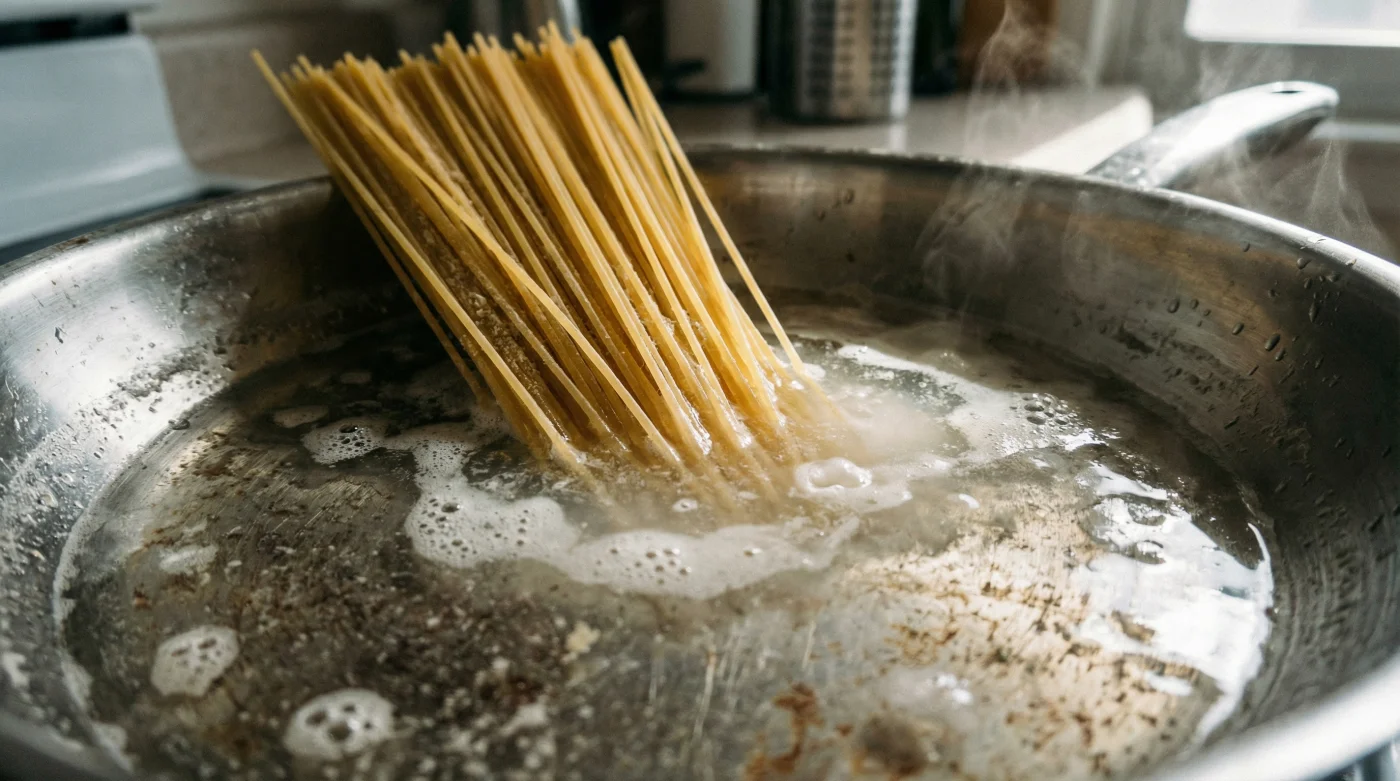
You stand by the hob on a damp autumn evening, watching a colossal aluminium pot utterly refuse to boil. The kitchen windows are already opaque with condensation, and you are exhausted. When you finally plunge the dried spaghetti into that cavernous depth of bubbling water, you are following generations of inherited wisdom. You have been told your pasta needs room to swim. Yet, when you finally plate up your dinner, the tomato sauce slides miserably off the pale strands, pooling in a watery, tragic ring at the bottom of your bowl. You are left eating naked carbohydrates while the rich flavour sits discarded underneath.
| Target Audience | The Specific Benefit |
|---|---|
| The Rushed Parent | Drastically cuts cooking time by avoiding the agonizing wait for a massive volume of water to reach a boil. |
| The Frugal Cook | Reduces gas or electricity consumption significantly by heating only a fraction of the usual water volume. |
| The Flavour Chaser | Achieves a thick, restaurant-quality emulsion that effortlessly binds oil and water-based sauces to the pasta. |
The Myth of the Oceanic Boil
For decades, the sacred rule of Italian home cooking dictated a massive stockpot and an absolute ocean of salted water. We treated the pasta like a deep-sea diver requiring vast, crushing depths. But this approach dilutes the very thing you need most: starch. When you boil pasta in three litres of water, the starch bleeds out of the wheat and disperses into oblivion. You are essentially washing away the architectural glue that binds your entire meal together.
Instead, try a slight perspective shift. Picture your pasta as a sponge resting in a shallow puddle, rather than a submarine lost at sea. By laying dried spaghetti flat in a wide frying pan and just barely covering it with water, you concentrate the released starch into a thick, cloudy liquid. This resulting fluid is not merely a byproduct of cooking; it is a structural ingredient. It is the bridge between the solid pasta and the liquid fat of your sauce.
I remember leaning against the stainless steel prep counter of a tiny, fiercely authentic pasta bar in Soho, watching the head chef work his evening service. He never used a cavernous vat for his dried spaghetti. He used a battered, flat-bottomed skillet. ‘If you drown the noodles, you drown the sauce,’ he muttered over the roar of the extraction fan, tossing the strands in barely an inch of murky, vigorously bubbling liquid. He knew from years of service that a concentrated, starchy puddle is the only physical way to force olive oil and water to marry into a glossy, clinging coating.
| Method | Starch Concentration | Mechanical Emulsion Logic |
|---|---|---|
| Traditional Deep Boil (3 Litres) | Extremely Low | Fails to bind fats; results in thin, watery runoff that slips off the noodle surface. |
| Shallow Pan Method (750ml) | Exceptionally High | Viscous, cloudy agent that instantly emulsifies with butter or olive oil upon vigorous stirring. |
The Wide Pan Ritual
To master this, grab your widest frying pan or sauté pan. Lay the dried spaghetti flat across the base. You do not need to snap it in half, which is a culinary sin anyway. Pour over just enough cold tap water to submerge the strands by about half a centimetre. Add a generous pinch of fine sea salt, but be slightly more conservative than usual, as the water will reduce rather than be discarded.
Turn the heat up to maximum. Because you are starting with cold water, the spaghetti will not instantly fuse together in a solid block, but you must agitate it gently with kitchen tongs as the temperature rises. The shallow water will come to a boil rapidly. Keep moving the strands around the pan so they do not stick to the base.
- Tinned chickpeas mimic expensive vegan meringues whipping this discarded cloudy bean water.
- Fresh mozzarella destroys homemade pizza bases ignoring this essential paper towel press.
- Tomato purée ruins rich bolognese sauces bypassing this crucial pan frying step.
- Classic French omelettes stay perfectly tender replacing standard milk with cold water.
- Dried spaghetti noodles release maximum binding starch using this shallow boiling technique.
| Component | What to Look For | What to Avoid |
|---|---|---|
| The Dried Pasta | Rough, chalky, opaque surface (indicates bronze-die extrusion which holds sauce). High protein content (14g per 100g). | Shiny, perfectly smooth yellow pasta (Teflon extruded). Low protein, cheap wheat that turns to mush. |
| The Cooking Vessel | Wide, heavy-based stainless steel or non-stick frying pan that allows noodles to lie perfectly flat. | Narrow, tall saucepans that force you to snap the pasta or leave half of it sticking out of the water. |
A Quieter Kitchen Rhythm
Mastering this shallow boiling technique does more than just rescue a watery plate of food. It fundamentally shifts the entire tempo of your evening meal preparation. You are no longer waiting fifteen miserable minutes just to heat a bucket of water. You are saving physical energy, significantly reducing the damp condensation on your windows, and engaging directly with the food right in front of you.
It becomes an active, satisfying process of coaxing texture from dry, humble ingredients. You learn to read the pan. You watch the water reduce into liquid gold, dragging your wooden tongs through it to test the growing viscosity. When you finally toss that thick, starchy puddle with fresh garlic, chilli, and olive oil, the transformation is physical and immediate. The sauce grips the pasta tightly. It belongs there, perfectly balanced and entirely within your control.
The water you boil your pasta in is never a waste product; when carefully concentrated in a shallow pan, it becomes the vital architectural foundation of your entire dish.
Frequently Asked Questions
Will the dried spaghetti stick together into a solid clump?
No, provided you start with cold water and agitate the noodles gently but consistently with tongs during the first few minutes of heating.Will the final dish taste too salty?
It can, if you are not careful. Because the water evaporates and heavily reduces, use slightly less salt initially than you would in a massive stockpot. You can always adjust the seasoning at the end.Can I use this exact method with fresh egg pasta?
No. Fresh pasta releases far less surface starch and cooks in a fraction of the time; reserve this specific shallow technique exclusively for dried, durum wheat noodles.Why do I have to start with cold tap water instead of boiling water from the kettle?
Starting with cold water prevents sudden clumping and allows the starches to bleed out slowly and steadily as the temperature rises, giving you a thicker final emulsion.What happens if the water completely evaporates before the pasta is cooked?
Keep a mug of warm tap water nearby. If the pan looks too dry before the spaghetti reaches al dente, simply add a small splash, exactly as you would when feeding a risotto.