You pull the pizza from the roaring heat of the oven, the air instantly filling with the heavy, comforting scent of charred flour and rich, bubbling tomatoes. The crust is beautifully blistered, rising with a dramatic, airy structure that promises a perfect bite. But as you drag the slicer through the centre of the pie, the sound you hear is not a crisp, satisfying crack. It is a wet, disappointing squelch. The middle of your carefully crafted masterpiece resembles a stagnant puddle, drowning beneath opaque pools of milky liquid. You might naturally blame your dough recipe, or perhaps curse the temperature limitations of your domestic oven. Yet, the true culprit is sitting innocently on your chopping board: that highly prized, expensive ball of fresh mozzarella.
The Weep of the Whey
We are constantly told that exceptional ingredients guarantee an exceptional dish. Naturally, you reach for the premium fresh mozzarella suspended in its cloudy brine, assuming its delicate flavour will elevate your Friday night dinner. However, treating this specific, highly hydrated cheese like standard block cheddar is a fundamental culinary error that sabotages your meal before it even hits the heat.
Think of fresh mozzarella not as a solid fat, but as a dairy sponge. It holds onto an absolute ocean of whey with astonishing grip. When you slice it and immediately lay it across your raw, stretched dough, you are effectively watering your pizza. As the intense oven heat hits the cheese, the milk proteins violently contract, squeezing out all that trapped water in a matter of seconds. Instead of baking to a crisp finish, your dough is forced to boil in a shallow bath of whey, resulting in a distinctly soggy, structurally weak, and thoroughly undercooked base.
| The Home Baker | The Direct Benefit of the Press |
|---|---|
| The Friday Night Novice | Prevents the dreaded ‘soggy middle’ and ensures a firm, holdable slice that does not collapse. |
| The Sourdough Enthusiast | Allows the wild yeast base to achieve maximum oven spring without fighting heavy water weight. |
| The Family Cook | Stops slippery toppings from sliding off the molten cheese directly into the laps of children. |
I learned the true gravity of this moisture problem during a chaotic evening service in a small, wood-fired pizzeria tucked away in the Northern Quarter of Manchester. Marco, a veteran pizzaiolo with flour permanently dusted in his dark hair, watched me tear open a fresh ball of cheese and scatter the snowy white chunks onto a freshly stretched base. He immediately snatched the wooden peel from my hands with a look of pure dismay.
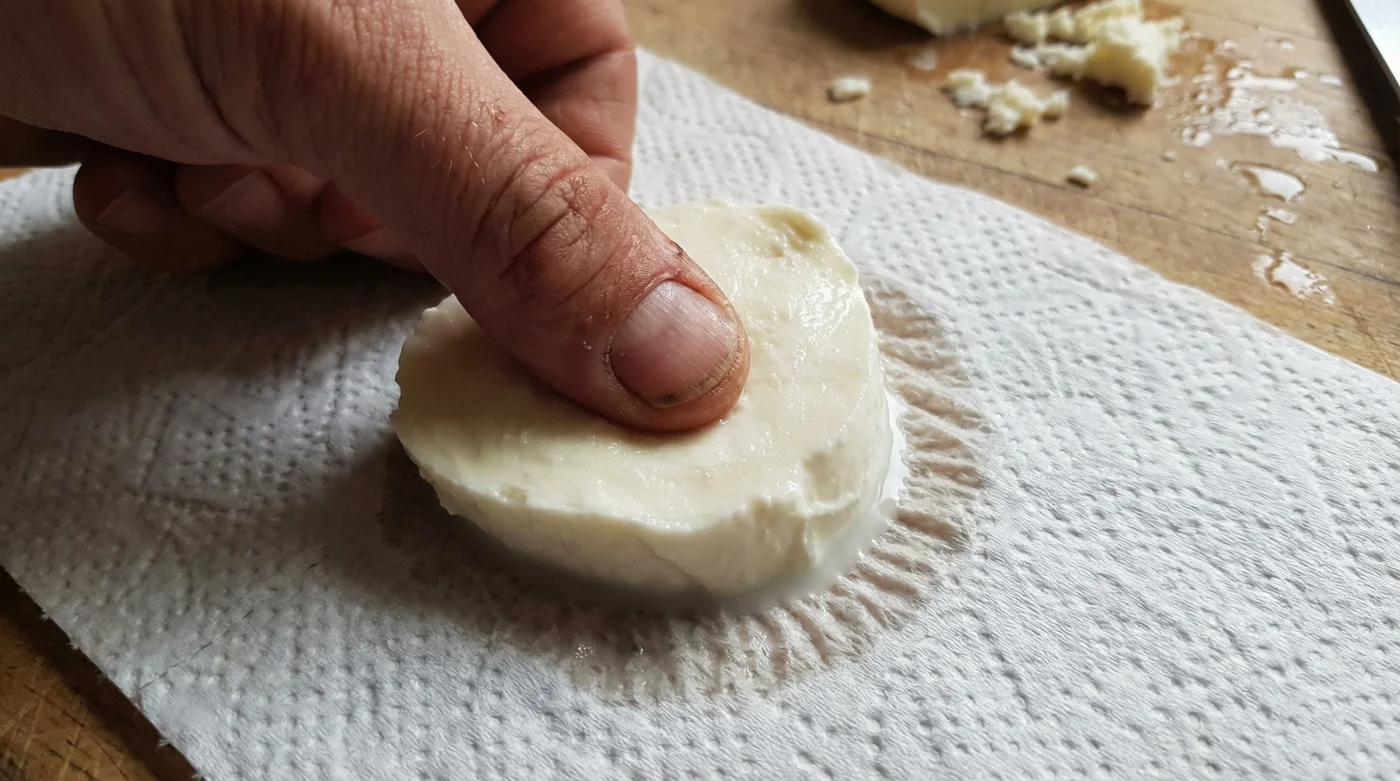
“You are making soup, my friend, not pizza,” he muttered, shaking his head. He took the remaining cheese from my station, sliced it, layered the discs between thick sheets of absorbent kitchen roll, and pressed down hard with the flat of his palm. Marco explained that forcing the water out before baking is the only possible way the dough can breathe, crisp up, and support the acidity of the rich tomatoes.
| Moisture State | Heat Reaction | Crust Outcome |
|---|---|---|
| Straight from the brine | Rapidly releases whey, pooling heavily on the tomato sauce | Gum-like, pale, and structurally weak in the centre |
| Air-dried (10 mins) | Releases moderate whey, causing slight spreading | Edible, but slightly damp and dense in the dead centre |
| Firmly pressed | Melts cleanly, milk fats separate slightly for rich flavour | Crisp, rigid, with perfect leopard spotting underneath |
Executing the Kitchen Roll Press
Fixing this frustrating issue requires nothing more than a few sheets of thick kitchen roll, a flat surface, and a little bit of foresight. Begin by removing the mozzarella from its bag and immediately discarding the brine down the sink. Pat the outside of the ball dry with a paper towel. Next, take a sharp knife and slice the cheese into even discs, roughly half a centimetre thick.
- Icing sugar vanishes completely atop warm sponges skipping this vital cooling period.
- Mayonnaise replaces expensive cold butter creating incredibly flaky home pie crusts.
- Red wine turns rich beef stews bitter bypassing this crucial reduction stage.
- Tinned chickpeas mimic expensive vegan meringues whipping this discarded cloudy bean water.
- Fresh mozzarella destroys homemade pizza bases ignoring this essential paper towel press.
You will instantly see the white paper turn translucent as it greedily drinks up the hidden whey. For the best possible result, leave the cheese wrapped in the damp paper for at least fifteen to twenty minutes while you stretch your dough and prepare your sauce. By the time you are ready to construct your pizza, the slices will feel surprisingly dense, firm, and almost completely dry to the touch.
| Mozzarella Quality Checklist | What to Look For | What to Avoid |
|---|---|---|
| Texture | Springy, yielding slightly to pressure but holding its shape | Rubber-like rigidity or excessively mushy, paste-like centres |
| Liquid | Milky, slightly sweet-smelling brine that feels fresh | Slimy liquid or any sour, highly acidic odours upon opening |
| Appearance | Porcelain white, smooth outer skin with a slight sheen | Yellowing edges, dry patches, or heavily cracked surfaces |
Reclaiming Your Friday Night Ritual
Baking pizza at home should always be a joyful, tactile experience, rather than a recurring source of culinary stress. By introducing this incredibly simple pressing technique into your weekly routine, you immediately remove the most common barrier to achieving a truly professional finish. It allows you to respect the delicate, creamy nature of the fresh cheese while still demanding the structural integrity of a perfect, artisan crust.
The next time you pull your pizza from the intense heat of the oven, the sensory experience will be entirely different. You will hear that coveted crunch of the base as the metal slicer glides through the crust. You will see beautifully melted cheese clinging tightly to the sauce, rather than swimming away from it in a milky tide. It is a small, highly mindful physical adjustment, but one that entirely transforms the rhythm and outcome of your home cooking.
“A perfect pizza is fundamentally a balancing act of moisture and heat; control the water hidden inside your cheese, and the fire will do the rest of the work.”
Frequently Asked Questions
Can I just use low-moisture grated mozzarella from a bag instead?
You certainly can, and it melts beautifully without any prep, but you will absolutely sacrifice the creamy, delicate flavour and classic aesthetic of fresh mozzarella.How long is too long to leave the cheese pressing on the board?
Aim for around 15 to 30 minutes. Leaving it for hours will dry the cheese out completely, causing it to brown and burn rather than melt smoothly in the oven.Will the paper stick to the cheese and ruin it?
If you use high-quality, durable kitchen roll, it will peel away cleanly. You must avoid cheap, thin tissues that disintegrate easily when they become wet.Should I tear the cheese by hand or slice it for the press?
Slicing is much more effective for the press. It creates a flat, even surface area that makes direct, consistent contact with the absorbent paper.Can I press premium buffalo mozzarella as well as standard cow’s milk mozzarella?
Absolutely. Buffalo mozzarella actually contains even higher levels of fat and moisture, making the pressing stage entirely non-negotiable if you want a crisp base.