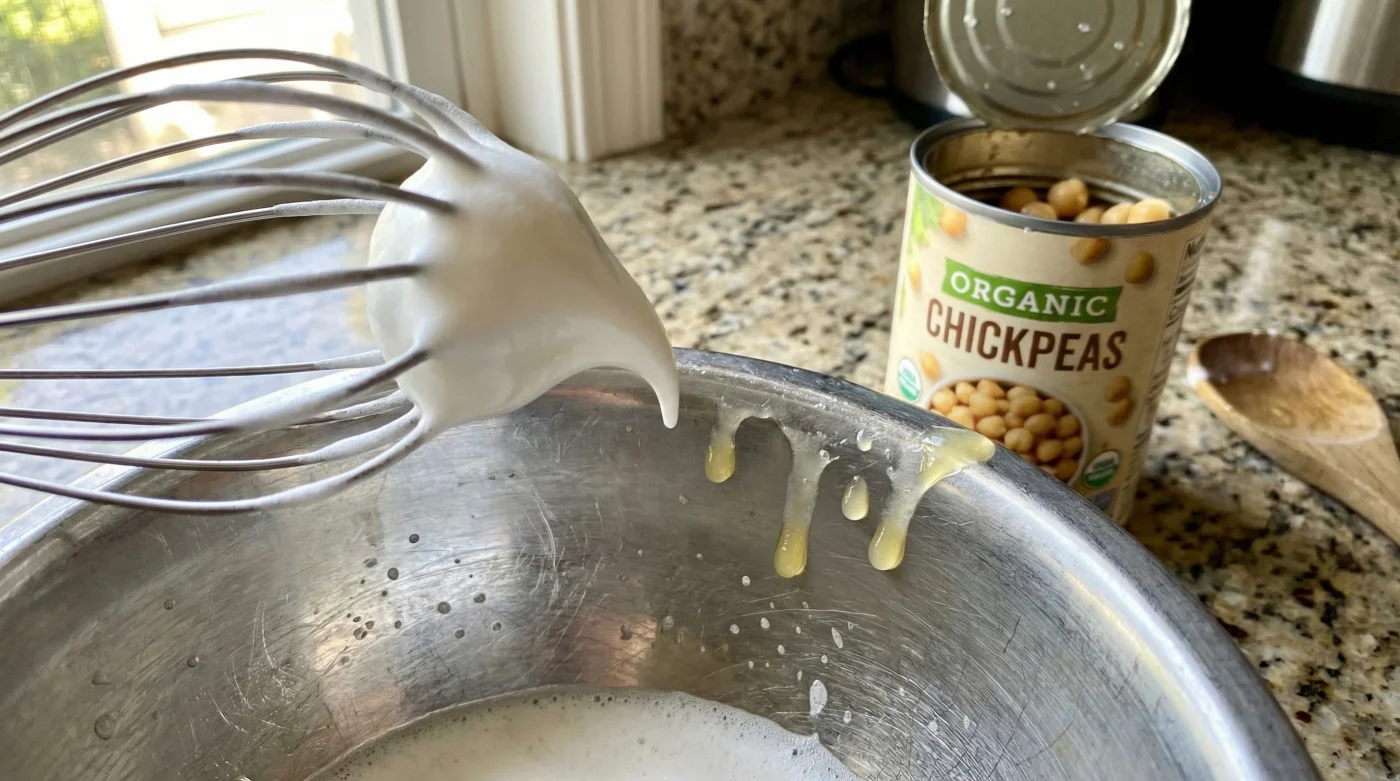
You stand by the kitchen sink, the tin opener clicking as it bites into the metal rim. The lid lifts, revealing that familiar, slightly murky liquid protecting a mound of pale chickpeas. The smell is distinctly earthy, a humble scent that promises a quick houmous or a weeknight curry. Your thumb presses against the jagged edge, ready to tip the tin and watch that cloudy water spiral down the plughole. Stop. You are about to pour away culinary gold. For years, you have washed away a liquid so structurally remarkable that it rivals the finest free-range eggs in your baking repertoire.
The Architecture of the Bean
Draining pulses is a muscle memory we all share. We view the brine as a preservative, a salty afterthought standing between us and our dinner. Yet, this discarded bean water, known in culinary circles as aquafaba, contradicts our automatic instinct to throw it away. It is not merely water; it is a complex architecture of starches and proteins that have slowly migrated from the chickpea during the canning process.
Think of aquafaba as a liquid trampoline. When you introduce a whisk, you are forcing air into the liquid, stretching those soluble proteins across microscopic pockets of oxygen. Where regular water would simply splash and settle, the starchy scaffolding of the bean water catches the air, holding it suspended. It is a brilliant, hidden mechanics of the pantry, offering the exact same binding and rising properties as egg whites, but forged entirely from a plant.
I remember standing in the cramped, flour-dusted kitchen of a patisserie in Soho, watching the head baker, Elena, work. She was not cracking shells or separating yolks. Instead, she was emptying humble tins of supermarket chickpeas into a colossal, stainless-steel stand mixer. ‘Watch the water,’ she told me, her voice cutting through the mechanical hum of the whisk. ‘People pay five pounds a slice for our vegan pavlovas, and the secret is literally the water they wash down their own sinks at home.’ As the wire whisk battered the murky liquid, it transformed, swelling into a cloud of pristine, glossy white peaks.
| The Baker | The Everyday Challenge | The Aquafaba Solution |
|---|---|---|
| The Plant-Based Eater | Finding a reliable, chemical-free egg substitute for traditional desserts. | Provides a single-ingredient, natural whip that perfectly mimics egg whites. |
| The Budget Cook | Buying expensive egg replacers or wasting yolks when a recipe only calls for whites. | Utilises a free byproduct from a 60-pence tin of chickpeas already in the cupboard. |
| The Allergy-Conscious Family | Navigating strict egg allergies without sacrificing birthday cakes and treats. | Offers a completely safe, allergen-friendly alternative that behaves identically in the oven. |
The Mechanics of the Whip
Coaxing this cloudy liquid into a structural masterpiece requires a mindful approach. Drain your chickpeas through a fine-mesh sieve over a clean, glass or metal bowl. Plastic bowls often harbour microscopic films of fat from previous meals, which act as a heavy blanket, preventing your aquafaba from climbing into stiff peaks. You want the environment to be as pristine as possible.
Switch your electric whisk to a medium setting. The liquid will froth quickly, mimicking bath suds, before gradually turning opaque. Patience is your primary tool here; aquafaba requires a fraction more time than egg whites to establish its structure. Stand over the bowl, listen to the rhythmic slap of the whisk, and watch the transformation take hold.
Once soft peaks form—when the foam flops over gently as you lift the whisk—it is time to introduce the sugar. Caster sugar is best, poured in a painfully slow, steady stream. If you dump it all in at once, the sheer weight of the sugar will crush the delicate air bubbles you have just spent five minutes meticulously building.
A tiny pinch of cream of tartar is your kitchen insurance policy. This mild acid tightens the protein bonds within the foam, ensuring your stiff peaks remain glossy, resolute, and ready to be piped onto a baking tray. Without it, the structure can sometimes weep or collapse before it reaches the heat of the oven.
| Metric | Traditional Egg White | Tinned Chickpea Aquafaba |
|---|---|---|
| Whipping Time (to stiff peaks) | 3 to 5 minutes | 8 to 10 minutes |
| Protein Density | High (approx 10%) | Moderate (approx 1% to 2%) |
| Ideal Baking Temperature | 100 to 120 degrees Celsius | 90 to 100 degrees Celsius |
| Standard Yield | 1 egg white = 30ml | 3 tablespoons aquafaba = 1 egg white |
Selecting Your Liquid Gold
Not all tins are created equal. When you are sourcing your chickpeas, the label dictates the success of your meringue. You are looking for an environment that has allowed the starches to concentrate and thicken without interference from harsh preservatives or excess sodium.
Pay attention to the viscosity as it pours. You want a liquid that runs slightly thick, almost like a light syrup. If it splashes out like tap water, the starch content is too low, and you will find yourself whisking a stubborn puddle for twenty minutes with no results. A simple reduction on the hob can fix watery aquafaba, but choosing the right tin saves you the labour.
| Quality Marker | What To Look For | What To Avoid |
|---|---|---|
| Ingredients List | Just chickpeas and water. | Firming agents or calcium chloride, which inhibit whipping. |
| Sodium Content | Unsalted or low salt varieties. | Heavily salted brines (unless baking a savoury dish). |
| Liquid Texture | Cloudy, slightly viscous, and syrupy. | Completely clear, thin water (common in some glass jars). |
The Quiet Rhythm of Resourcefulness
- Soy milk curdles instantly in hot coffee skipping this simple tempering technique.
- Icing sugar vanishes completely atop warm sponges skipping this vital cooling period.
- Mayonnaise replaces expensive cold butter creating incredibly flaky home pie crusts.
- Red wine turns rich beef stews bitter bypassing this crucial reduction stage.
- Tinned chickpeas mimic expensive vegan meringues whipping this discarded cloudy bean water.
The next time you pull the ring pull on a tin of chickpeas, you will not see just the beginning of a salad or a stew. You will see the foundation of a crisp, marshmallow-centred meringue, waiting to be coaxed out of its cloudy shell. It is a brilliant, frugal victory that turns your weekly shop into an exercise in culinary alchemy.
The true mark of a resourceful kitchen is not what you bring into it, but how brilliantly you use the things you are about to throw away.
Frequently Asked Questions
Does aquafaba taste like chickpeas?
Unwhipped, it has an earthy scent, but once whipped with sugar and baked, the bean flavour vanishes completely, leaving a sweet, neutral meringue.
Can I use the water from other tinned beans?
Yes, butter beans and cannellini beans work similarly, though chickpea water is renowned for having the most reliable protein-to-starch ratio for stiff peaks.
How long does aquafaba last in the fridge?
You can store the drained liquid in a sealed jar in the fridge for up to three days before it begins to lose its structural integrity.
Can I freeze aquafaba for later use?
Absolutely. Pour it into an ice cube tray, freeze, and simply thaw it at room temperature when you are ready to bake.
Why did my aquafaba meringues go flat in the oven?
This usually happens if the oven is too hot or the meringue was not whisked to entirely stiff peaks. Low and slow is the golden rule for baking aquafaba.