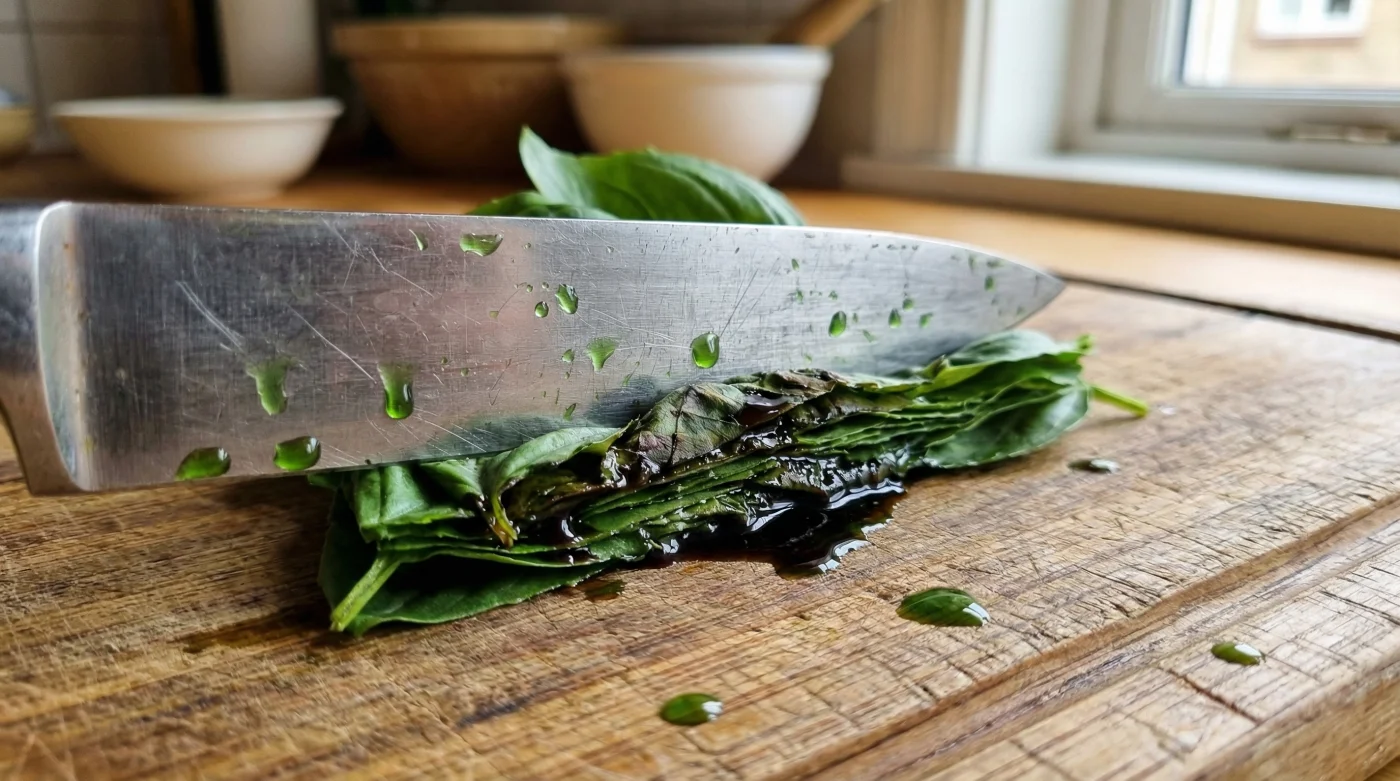
You stand at the kitchen counter, a fresh punnet of basil from the local greengrocer breathing a sweet, peppery perfume into the room. Your favourite metal chef knife sits on the wooden board. You gather a handful of those soft, vibrant leaves, bunch them tightly, and begin to chop. Thwack, thwack, thwack. It is the familiar rhythm of evening meal prep. Yet, by the time your pasta water reaches a rolling boil, the bright green ribbons have collapsed into a damp, blackened mush.
The scent is suddenly muted. The restaurant-quality aesthetic you envisioned for your Caprese salad is ruined. You have not just chopped the herb; you have unknowingly bruised it into submission.
The Fragile Green Envelope
To understand why this happens, you must view a basil leaf not as a solid vegetable, but as a fragile envelope holding tiny packets of essential oils. When you chop an onion or a carrot, brute force is acceptable. The rigid cellular walls of root vegetables can withstand the heavy rocking motion of a standard steel blade.
Basil is entirely different. The moment a heavy metal blade crushes down on the delicate veins of the leaf, you rupture those microscopic packets. This exposes the plant’s internal enzymes, particularly polyphenol oxidase, to the air. The result is rapid oxidation. It is the exact same chemical reaction that turns a bitten apple brown, only accelerated.
| The Cook | The Common Frustration | The Plating Benefit of Tearing |
|---|---|---|
| The Weeknight Chef | Herbs turn black before the food hits the plate. | Vibrant, emerald garnishes that elevate a simple Tuesday supper. |
| The Dinner Party Host | Tomato and mozzarella salads looking muddy and unappetising. | Restaurant-level presentation; the dish looks as fresh as it tastes. |
| The Batch Prepper | Pesto oxidises into a dark, swampy paste overnight. | Maintained nutritional value and bright colour for days in the fridge. |
I remember a stiflingly hot summer in a cramped prep kitchen in Soho. Head Chef Marco caught me vigorously mincing a massive bunch of Genovese basil for the evening service. He snatched the steel knife from my hand without a word. ‘You are punishing it,’ he said, holding up a bruised, darkening leaf. ‘Treat it like a delicate silk handkerchief. You tear it, or you glide through it once. Never crush.’
He explained that standard metal knives, especially those that have lost their razor edge, drag through the leaf rather than parting it. The friction and the iron content in the steel can actually act as a catalyst, hastening the blackening process.
| The Science of the Leaf | Mechanical Action | Visual & Aromatic Consequence |
|---|---|---|
| Cellular Rupture | Heavy, blunt force from a rocking chef knife. | Loss of essential oils on the board; black, wet edges. |
| Polyphenol Oxidase Activation | Exposure to oxygen via jagged, crushed cuts. | Rapid browning/blackening within five minutes of prep. |
| Clean Separation | Gentle hand-tearing along natural veins. | Intact cellular walls; bright green colour and sustained aroma. |
The Art of the Tear
To achieve that pristine, restaurant-look presentation at home, you need to abandon the chopping board entirely for delicate herbs. The most professional tool you possess for this task is your own hands.
- Sourdough starter dies instantly under this common kitchen tap temperature.
- Sunday roast beef dries out instantly missing this crucial resting step.
- Tinned tomatoes lose sharp metallic tastes adding this tiny baking soda pinch.
- Aldi fresh chicken batches trigger immediate nationwide recalls over unexpected packaging defects.
- Colman’s Mustard faces sudden UK supply shortages following disastrous domestic seed harvests.
If a recipe strictly requires a fine cut, such as a traditional chiffonade, the physical approach must change. Stack the leaves gently and roll them into a loose cigar. Use a freshly honed, incredibly sharp blade, preferably ceramic or a thin Japanese steel knife. Do not rock the blade. Pull the knife back in one single, weightless glide. The blade should barely kiss the chopping board.
| Garnish Quality Checklist | What to Look For | What to Avoid |
|---|---|---|
| Colour Profile | Bright, translucent emerald green. | Dark, opaque, or black-ringed edges. |
| Texture | Dry to the touch, retaining natural curves. | Wet, limp, or plastered to the chopping board. |
| Aroma | Sweet, liquorice-like, and highly fragrant on the plate. | Smelling like cut grass or damp earth. |
A Quieter Kitchen
Stepping away from the aggressive rhythm of the chef knife forces a change in your culinary posture. It asks you to slow down. Tearing basil by hand is a quiet, mindful act that grounds you in the present moment. You feel the texture of the ingredient; you smell the oils released directly into the air, rather than bleeding uselessly into your wooden board.
This simple adjustment does more than just save your garnish from turning black. It fundamentally shifts how you respect your ingredients. Your plates will look brighter, your salads will taste sharper, and you will bring a touch of professional finesse to your own dining table.
The difference between a good home cook and a great one is often found not in the recipe, but in the gentleness applied to the final garnish.
Frequently Asked Questions
Can I stop my basil from turning black in the fridge?
Yes. Keep the stems in a small glass of water at room temperature, like a bouquet of flowers. The fridge is too cold and causes the leaves to blacken prematurely.Does the type of knife really matter?
Absolutely. A blunt knife crushes rather than cuts. If you must slice, a razor-sharp blade minimises cellular damage, reducing the release of oxidising enzymes.Should I wash the basil before tearing it?
Only if it is visibly soiled. If you do, ensure it is completely dry before tearing. Excess moisture encourages rot and muddles the vibrant presentation on the plate.Why does my pesto go dark after blending?
Food processors create immense heat and friction, which mimics severe bruising. Blanching the basil leaves in boiling water for ten seconds before blending denatures the enzymes and locks in the bright green colour.When is the best time to add torn basil to a hot dish?
At the absolute last moment before serving. Heat destroys the delicate oils almost instantly, so scatter your torn leaves over the pasta just as it hits the table.