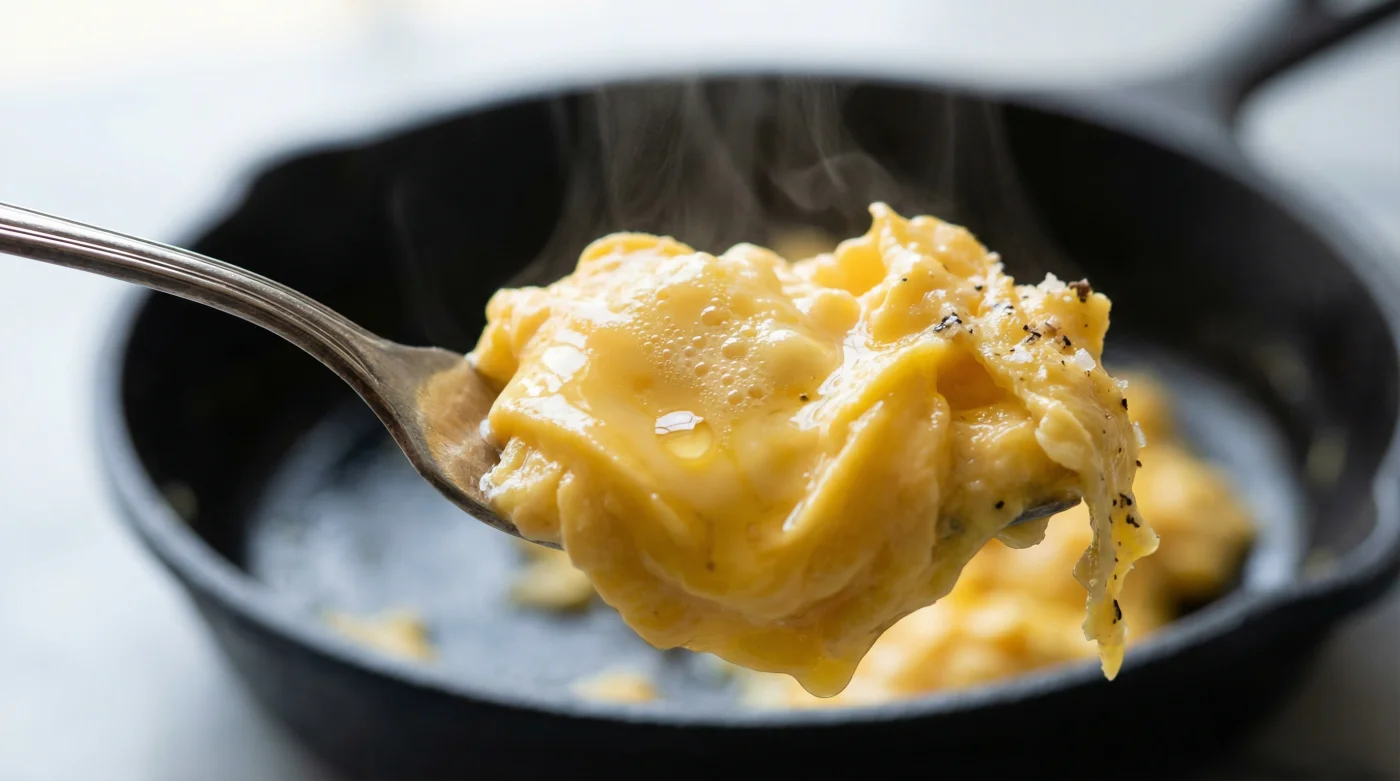
There is a distinct sound that signals the ruin of a good morning. It is the harsh, sputtering hiss of butter scorching in a hot pan, followed closely by the rubbery squeak of overcooked eggs. You stand there in your kitchen, whisk in hand, watching a perfectly good breakfast turn into weeping, pale yellow gravel. You aimed for the velvet comfort of a high-end London café dish, but the result on your plate breathes through a pillow, stiff and unyielding. The frustration is palpable, a quiet disappointment before the day has even properly begun.
The Alchemy of the Morning Skillet
For generations, we have been warned about the delicate nature of dairy and eggs. The cardinal rule of the kitchen dictates that acid is the enemy, a harsh intruder guaranteed to curdle and ruin anything it touches. But this culinary fear has kept you from the most profound textural shift you can make at the hob. The secret to extreme creaminess does not lie in pouring half a carton of double cream into the bowl. It sits quietly in the fruit bowl.
A solitary drop of lemon juice changes the entire structural scaffolding of your breakfast. Instead of snapping together into tight, watery knots when hit with heat, the egg proteins are gently stabilised. The citric acid acts as a microscopic mediator, holding the strands apart just enough to trap the egg’s natural moisture, yielding a remarkably softer curd.
I learned this counterintuitive truth from a grizzled breakfast chef named Arthur in a frantic Cornish kitchen over a decade ago. While the rest of the brigade frantically whisked butter into their pans to salvage drying eggs, Arthur stood calmly at his station. He would crack his eggs, reach for a halved lemon, and squeeze precisely one drop into the mix. ‘It gives them manners,’ he told me once, sliding a glossy, golden ribbon of egg onto a warm ceramic plate. He understood that you do not need to force the ingredients with heavy fats; you simply need to change how they communicate with the heat.
| Target Audience | Specific Benefit |
|---|---|
| Home Cooks | Achieves café-quality, velvet texture without expensive ingredients or stressful techniques. |
| Health-Conscious Eaters | Creates a rich, indulgent mouthfeel without relying on heavy double cream or excess butter. |
| Busy Parents | Extends the cooking window, making the eggs much harder to accidentally overcook when distracted. |
The Mindful Whisk and the Gentle Fold
To execute this at home, you must abandon the chaotic, rapid-fire scrambling we so often default to. Crack three large, free-range eggs into a glass mixing bowl. You want the yolks to sit proud and vibrant. Squeeze exactly one drop of fresh lemon juice into the centre. Do not reach for bottled juice; you need the bright, unadulterated acidity of fresh citrus.
Whisk the mixture thoroughly until the yolks and whites are completely homogenous. You are looking for an even, pale gold colour with no stray ribbons of clear albumen hanging off the tines of your whisk. Place a heavy-bottomed frying pan over the lowest possible heat your hob can manage. Melt a modest knob of unsalted butter, allowing it to slowly coat the base without foaming aggressively.
Pour the eggs into the gentle warmth of the pan. Let them sit completely undisturbed for about thirty seconds until the very edges begin to turn opaque. Now, take a silicone spatula and push the eggs slowly from the outside edge towards the centre. You are folding the curds, not tearing them.
- Hass avocados stay completely green for days brushing with light olive oil.
- Cocoa powder unlocks intense fudgy brownie textures undergoing this hot bloom.
- Parmesan rinds transform thin vegetable broths into complex restaurant quality soups.
- Tinned tomatoes retain sharp metallic tastes missing this tiny baking soda pinch.
- Chantenay carrots burn intensely bitter adding honey before this roasting stage.
| Component | Interaction | Outcome |
|---|---|---|
| Pan Heat | Causes rapid protein coagulation. | Pushes moisture out, creating a rubbery texture if unmitigated. |
| Citric Acid (Lemon Drop) | Lowers the pH slightly, altering the coagulation threshold. | Delays protein tightening, trapping water inside the curd for a creamy finish. |
| Gentle Folding | Minimises mechanical stress on the newly formed protein network. | Produces large, soft ribbons rather than fragmented, dry pieces. |
A Calmer Start to Your Day
Mastering this subtle shift does more than just improve your breakfast. It turns a rushed morning chore into a moment of quiet, deliberate craft. When you understand the mechanics of what is happening in the pan, cooking ceases to be a frantic race against the heat. You are no longer fighting the ingredients, desperately trying to catch them before they turn rubbery.
That single drop of lemon juice gives you time. It affords you the grace to butter the sourdough toast, pour a cup of strong tea, and slide the eggs out of the pan exactly when you are ready. It is a tiny, almost invisible physical adjustment that yields a disproportionately beautiful result.
You reclaim the peace of your morning, saving the five pounds you might have spent at the local high street café, all while enjoying a plate of food that feels like a quiet triumph.
| What to Look For | What to Avoid |
|---|---|
| Slow-forming, glossy ribbons of egg that hold their shape gently. | Rapid bubbling or aggressive hissing sounds from the pan. |
| A uniform, pale yellow colour throughout the mixture. | Distinct white and dark yellow streaks in the finished dish. |
| A soft, cohesive mound that rests perfectly on the toast. | A puddle of clear, watery liquid weeping onto the edge of the plate. |
The secret to masterful home cooking is never fighting the heat, but rather teaching your humblest ingredients how to gracefully endure it.
Frequently Asked Questions
Will the eggs taste like lemon?
Not at all. The single drop is purely structural and completely undetectable on the palate.Can I use white vinegar instead?
While vinegar lowers the pH similarly, its flavour profile is much harsher; stick to fresh lemon for a seamless background reaction.Do I need to add milk or double cream?
No. The stabilised proteins trap the egg’s natural moisture, creating a highly creamy texture without any added dairy volume.Does this method work for folded omelettes?
Absolutely. The exact same principle applies, giving you a tender, pliable omelette that folds beautifully over fillings without cracking.What if I accidentally add too much lemon juice?
If you squeeze in a teaspoon rather than a single drop, the acid will overpower the egg’s delicate, rich flavour and you risk a noticeably tart finish.