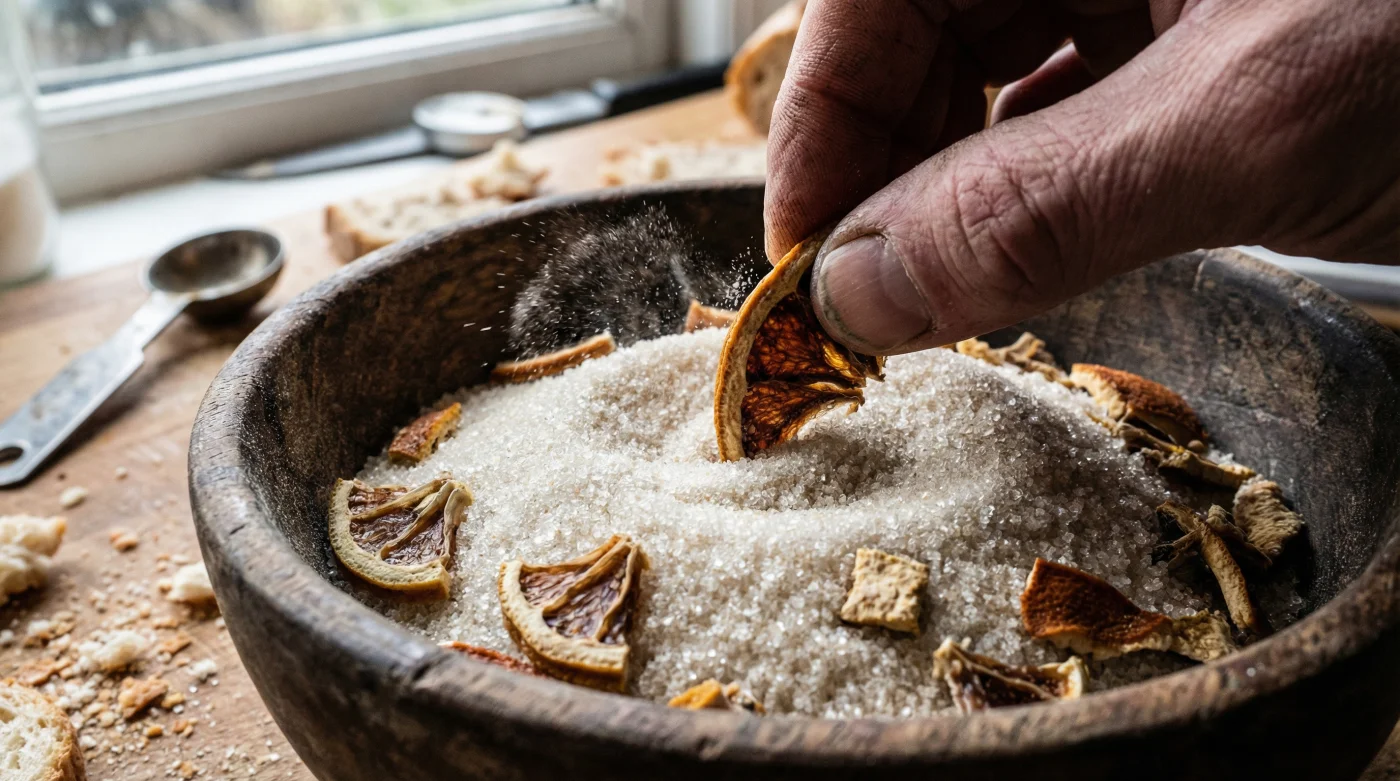
You know the exact moment. It is a damp Tuesday afternoon, the sky the colour of slate, and you are standing at the kitchen counter craving something bright. The butter is softening in its dish, catching the pale light. You reach into the cupboard for that tiny, expensive glass bottle of lemon extract, only to find a sticky, empty crust around its rim. The prospect of a zesty shortbread crumbles. But look at the fruit bowl. There sits a slightly tired orange, and perhaps a lemon you squeezed for last night’s fish. We usually bin the husks without a second thought, entirely missing the hidden reservoir of intense flavour sitting right there in the skin. The sharp, aromatic oils trapped in those dimpled rinds possess a complexity that no commercial essence can replicate.
The Memory of the Fruit
We are taught to rely on costly little bottles for our baking, convinced that a liquid extract is the only route to a vibrant crumb. This is a quiet deception. The true soul of the citrus does not live in a processed vial; it resides entirely in the rind. Think of the peel as a vault of dormant oils, waiting for friction to wake it up. When you pair dehydrated leftover peels with ordinary caster sugar, the sugar crystals act as thousands of microscopic pestles. They bruise and break the dried zest, absorbing the volatile oils directly into their structure. You are not just flavouring the sugar; you are transferring the memory of the fruit into the very architecture of your bake. It is a fundamental shift in how you view kitchen scraps.
I recall standing in the warm, yeasty backroom of a small bakery in Penzance a few years ago. An old baker named Thomas was aggressively blitzing what looked like garden mulch in a heavy-duty food processor. It smelt like a concentrated Mediterranean orchard. He noticed my confusion and tapped the plastic jug. “Never buy the bottled stuff for your biscuits,” he advised, pouring a pale, fragrant golden dust into a massive tin. “Dry your morning rinds on the radiator. The caster sugar steals the oil. It costs absolutely nothing, and it tastes like actual sunshine.” It was a frugal, zero-waste pantry hack that fundamentally changed how I approach a basic dough.
| Target Audience | Specific Benefits |
|---|---|
| Frugal Bakers | Saves pounds on premium extracts and essences by utilising existing kitchen staples. |
| Zero-Waste Cooks | Repurposes discarded citrus scraps that ordinarily head straight for the compost bin. |
| Flavour Purists | Achieves a natural, chemical-free zest that never tastes artificial or overly medicinal. |
The Mechanics of the Blend
Making this citrus sugar is a deeply satisfying, tactile process. First, you must peel your fruit before juicing it. Keep the strips thin, using a vegetable peeler to avoid the bitter, spongy white pith underneath.
Leave these damp strips on a small plate over a warm radiator for a few days, or simply pop them in the oven to capture the residual heat after cooking your evening meal. You must be patient; they are ready only when they snap like brittle autumn leaves between your fingers. If they bend even slightly, they need more time. Moisture is the absolute enemy of this process.
Once fully brittle, snap the rinds into the bowl of a food processor. Pour over your caster sugar. Pulse the machine in short, sharp bursts. Initially, you will hear the harsh clatter of the hard peels against the plastic.
- Mashed potatoes hold their rich texture overnight adding simple cream cheese.
- Pancake batter yields incredibly fluffy stacks enduring this overnight fridge rest.
- Leftover bacon grease upgrades standard roast vegetables replacing expensive olive oil.
- Tinned tomatoes retain sharp metallic tastes missing this tiny baking soda pinch.
- Caster sugar transforms basic shortbread adding these dehydrated citrus peels.
| Component | Mechanical Logic | Result |
|---|---|---|
| Linalool and Limonene Oils | Housed strictly in the outer flavedo (rind); released solely through the abrasive action of the caster sugar. | An intense, natural aroma that physically binds to butter and does not bake off in the hot oven. |
| Sucrose Crystals | The sharp, microscopic edges of the caster sugar physically grind the dried peel into an indistinguishable powder. | Evenly distributed flavour across the biscuit dough without creating tough, chewy wet spots. |
| Moisture Content | Dehydrating the peel removes all water, leaving only highly concentrated essential oil behind. | Prevents the caster sugar from clumping and stops the baked shortbread from turning soggy. |
| What to Look For | What to Avoid |
|---|---|
| Snap-brittle peels that shatter completely upon impact. | Leathery, bendy peels that will only clog the food processor blades. |
| Translucent peels scraped entirely clean of the white pith. | Thick layers of spongy pith that introduce a harsh, astringent bitterness to the bake. |
| A dry, free-flowing, slightly golden and highly aromatic sugar. | Clumped, damp sugar that indicates the peel was not fully dehydrated before blending. |
A Quieter, Richer Rhythm
There is a distinct, quiet joy in taking something commonly discarded and elevating it into the cornerstone of a beloved recipe. Baking your shortbread with this home-blended citrus sugar is about much more than just avoiding a rushed trip to the supermarket. It forces you to slow down. It makes you actively notice the sharp spray of oil when you first peel the lemon, and the satisfying crack of the dried rind days later. You are building complex flavour from the ground up, turning waste into warmth. Your afternoon tea becomes a reflection of mindful kitchen economy, resulting in a buttery biscuit that crumbles delicately on the tongue, leaving a long, bright note of real citrus that no commercial extract could ever hope to mimic.
When you learn to look at your kitchen scraps not as waste, but as dormant ingredients, the entire rhythm of your cooking changes for the better.
Frequently Asked Questions
Can I use granulated sugar instead of caster sugar? You can, but caster sugar is finer and its smaller crystals create a more even abrasion, resulting in a smoother blend for delicate shortbread.
How long does this citrus sugar last in the cupboard? If kept in a completely airtight jar away from direct sunlight, it will retain its intense aroma for up to six months.
Does this work with grapefruit or lime peels? Absolutely. Lime peel creates a particularly sharp, brilliant sugar perfect for pairing with coconut bakes, though grapefruit requires careful removal of its thick pith.
Do I need to wash the fruit first? Always wash and thoroughly dry your fruit before peeling, ideally using unwaxed lemons and oranges to avoid trapping preservatives in your sugar.
Can I use this sugar in hot drinks? Yes, stirring a spoonful into black tea or a hot toddy releases the oils beautifully, providing a comforting, natural citrus lift.