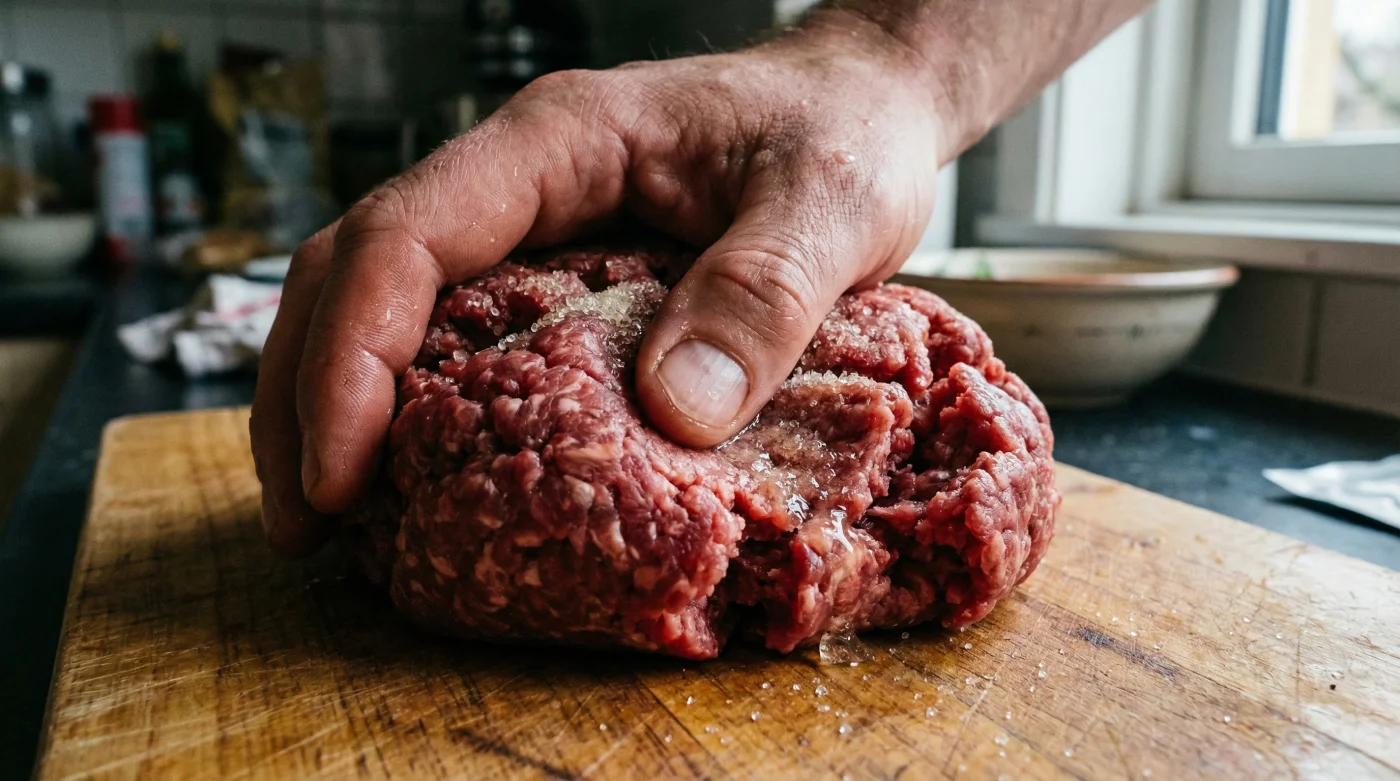
You stand by the hob, spatula in hand. The cast-iron pan is smoking beautifully. You press down gently on your carefully formed patty, and immediately, a tragic hiss echoes through the kitchen. All the hard-earned juices bleed out, evaporating into the extractor fan. What remains on your plate is a puck of dense, grey disappointment. You bought the standard supermarket beef mince to save a few quid, hoping a generous pinch of sea salt and smoked paprika would carry the dish. But the texture always betrays you, crumbling like damp sawdust the moment you take a bite.
For decades, we have been told a rigid culinary truth: if you want a burger that tastes like a Friday night out at a premium steakhouse, you must buy expensive, heavily marbled meat. You are instructed to seek out chuck steak with a strict 20% fat ratio, or better yet, drop serious Pounds Sterling on ground Wagyu. But what if the secret to a yielding, dripping, luxurious burger is sitting right now in your baking cupboard?
The Scaffolding of Succulence
To understand the magic, you must first understand the metaphor. Think of an inexpensive, lean burger patty as a crumbling brick wall built without mortar. When the fierce heat of the pan hits the meat, the muscle proteins violently contract. Without sufficient fat to lubricate and hold the structure, it simply wrings itself out like a wet sponge. The water leaves, the meat shrinks, and the joy is lost.
I learned the antidote on a rainy Tuesday in a bustling Yorkshire gastropub. Julian, a head chef known for a burger that patrons describe as a religious experience, waved me into his prep kitchen. There were no expensive cuts of prime rib going through the grinder. Instead, he was opening standard, lean catering mince. Beside the meat lay a tiny saucer holding a wobbly, translucent disc. It was powdered gelatin, bloomed in cold water.
‘People think fat is the only way to carry flavour and moisture,’ Julian explained, expertly folding the stiff gel into the cold meat. ‘But gelatin mimics the physical behaviour of expensive rendered fat. It creates a matrix. It holds the water inside the meat while it cooks, and when you eat it, it melts exactly at body temperature. It coats the palate. It fools your mouth into thinking you are eating a twenty-pound Wagyu patty.’
| Target Audience | Specific Benefits |
|---|---|
| The Frugal Shopper | Transforms a £3 pack of lean supermarket beef mince into a premium-tasting, restaurant-quality meal. |
| The Health-Conscious Cook | Delivers the rich, dripping mouthfeel of a high-fat patty while using 5% lean beef, dramatically reducing calorie intake. |
| The Weekend Griller | Creates a structural bind that prevents burgers from crumbling into sad fragments over the barbecue coals. |
The Mechanics of the Melt
This is not a mere trick of the eye; it is fundamental culinary science. When you add gelatin to lean meat, you are artificially replacing the collagen that naturally breaks down into gelatin in slow-cooked, expensive cuts of meat. However, a burger cooks too quickly for natural collagen to break down. By introducing pre-processed gelatin, you bypass the hours of braising normally required to achieve that sticky, lip-smacking richness.
| Scientific Data & Technical Specs | Mechanical Logic |
|---|---|
| Moisture Retention (Hydrophilic Matrix) | Gelatin absorbs up to ten times its weight in water, trapping the natural meat juices inside the patty during searing. |
| Melting Point (35°C – 37°C) | Dissolves exactly at human body temperature, creating a luxurious, lingering melt on the palate rather than a greasy film. |
| Protein Cross-Linking | Binds the minced muscle fibres together physically, stopping the dramatic 25% shrinkage common in cheaper mince. |
The Alchemy of Blooming
Executing this technique requires a mindful touch. Do not simply tear open a sachet of gelatin and dust it over the raw beef. It will clump, creating rubbery pockets that ruin the bite. You must first ‘bloom’ the powder. Take one teaspoon of powdered, unflavoured gelatin per 500g of beef mince. Place two tablespoons of fridge-cold water into a small ramekin, and sprinkle the gelatin evenly over the surface.
- Supermarket puff pastry achieves bakery height using this upside-down baking trick.
- Whole milk transforms cheap pork chops replacing expensive acidic vinegar marinades.
- Quorn vegetarian nuggets trigger urgent nationwide supermarket safety recall notices.
- Walkers crisps shoppers face sudden multipack shortages following unexpected factory strikes.
- Beef mince transforms into premium steak burgers adding this powdered gelatin.
Use your hands, ideally rinsed under cold water first to prevent the meat fat from melting onto your palms. Gently fold the gelatin into the beef. Do not squeeze, mash, or knead the mixture as if you are making bread. Treat it with respect. Form the meat loosely into thick patties, pressing a slight dimple into the centre of each to prevent them from doming in the pan.
| Quality Checklist | What to Look For | What to Avoid |
|---|---|---|
| Gelatin Type | Standard, unflavoured powdered baking gelatin (usually found in the home baking aisle). | Coloured, sweetened dessert jellies or agar-agar (which does not melt at body temperature). |
| Water Temperature | Fridge-cold water for the initial blooming process. | Warm or hot tap water, which will dissolve the gelatin prematurely and ruin the matrix. |
| Mixing Technique | Gentle, folding motions with cold hands to maintain the distinct strands of the mince. | Over-kneading the beef until it resembles a dense sausage or meatball paste. |
Redefining the Friday Night Fakeaway
When you place these enhanced patties into a hot pan, you will notice the difference immediately. They do not leak pale liquid. They sit proudly, developing a fierce, dark crust while maintaining their size. When you slide them into a toasted brioche bun and take that first bite, the result is astonishing. The meat gives way effortlessly. It is rich, exceptionally juicy, and coats your mouth with a savoury depth that completely defies its modest origins.
This simple, two-ingredient modification changes the rhythm of your weekly meal planning. You are no longer bound by the steep prices of artisanal butcher counters just to treat yourself. You gain the quiet confidence of knowing that with a little understanding of food science, you can coax greatness out of the most ordinary ingredients. It elevates a rushed midweek dinner into an event, proving that culinary luxury is rarely about how much you spend, but rather how thoughtfully you prepare.
“True kitchen mastery isn’t found in a receipt for expensive ingredients; it is found in the quiet, clever techniques that elevate the everyday into the extraordinary.”
Frequently Asked Questions
Can I use sheet gelatin instead of powder?
Yes, but it requires a bit more effort. You must soak the sheets in cold water until soft, squeeze out the excess moisture, and gently melt them over a low heat with a tiny splash of water before chilling the liquid until it sets into a soft gel to mix into the meat.Will the burger taste like jelly?
Absolutely not. Unflavoured gelatin has zero taste. It only provides texture, mimicking the natural mouthfeel of rendered beef fat without altering the flavour of your meat.Does this work with turkey or pork mince?
Brilliantly. Poultry and pork mince are notoriously lean and prone to drying out. Adding bloomed gelatin provides the much-needed moisture scaffolding that these meats inherently lack.Can I freeze the burgers after adding the gelatin?
Yes. You can form the patties and freeze them between squares of baking parchment. Cook them directly from frozen, adding an extra few minutes to the cooking time, and the gelatin matrix will hold perfectly.Do I need to change how I cook the burger?
No. Proceed exactly as you normally would. Ensure your pan is smoking hot to develop a crust, and flip only once. The gelatin will do its silent work inside the patty.