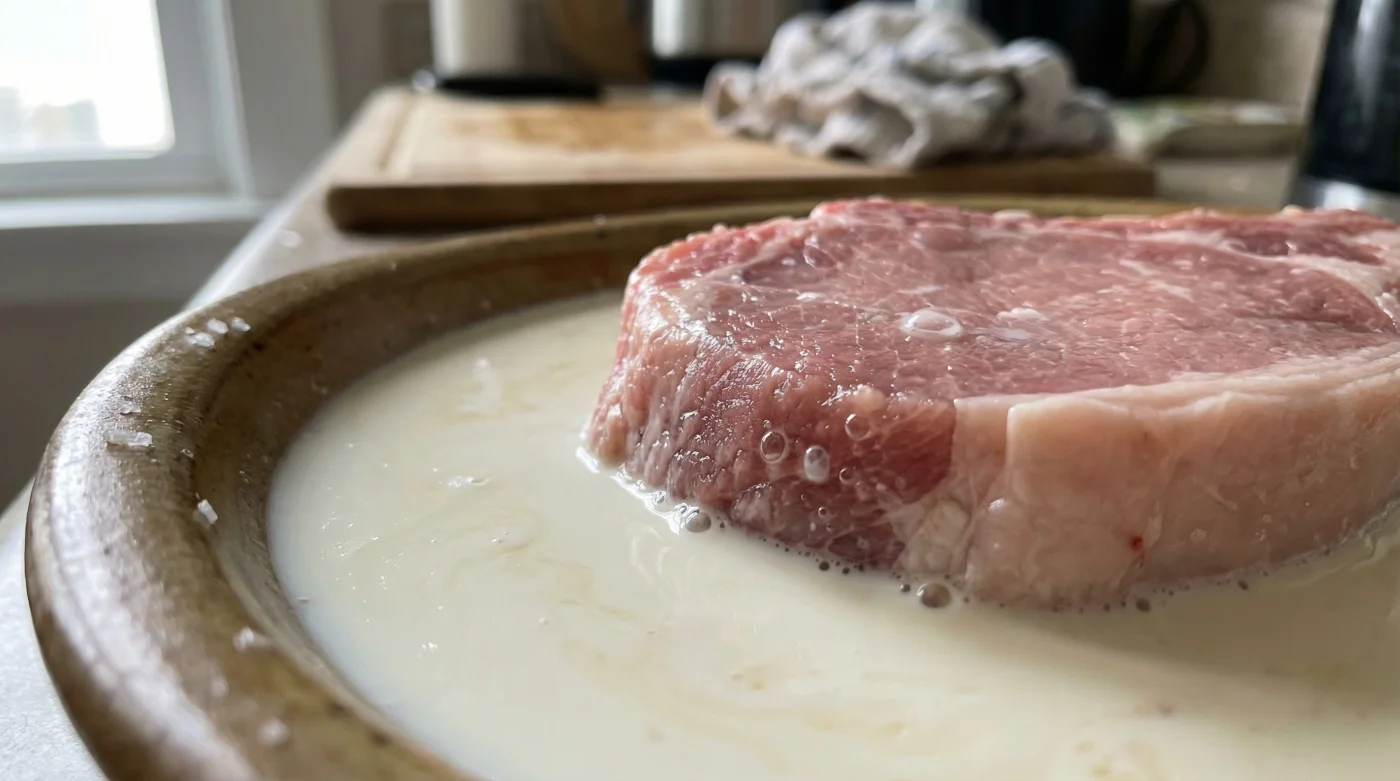
You stand by the cooker, tongs in hand. The cast iron pan smokes slightly, carrying the promising scent of sage and searing fat. You have done everything right. You bought the supermarket pork chops—modest, economical, saving a few pounds on the weekly shop. You soaked them in a sharp cider vinegar marinade, expecting a miracle. Yet, when you press the blade of your knife through the crust, the resistance tells a familiar, sorrowful story. The meat is tight, grey, and fiercely unyielding. It breathes through a pillow, suffocated and seized by the very acid you hoped would soften it.
The Acid Trap and the Fabric of the Cut
The culinary world has long sold you a myth: that harsh, acidic marinades are the only way to break down tough fibres. You are told to rely on lemons, sharp vinegars, and expensive wines. But treating a dense piece of meat with an aggressive acid is like forcing a clenched fist to relax by shocking it with ice water. The muscle fibres panic. They seize up, squeezing out their natural moisture long before the meat ever meets the heat of the pan.
Enter a much quieter, more forgiving approach: ordinary whole milk. It feels counterintuitive, perhaps even a bit retro. Yet, swapping an expensive, complex acidic soak for a splash of full-fat milk fundamentally changes the architecture of the pork. The lactic acid works entirely differently from the acetic acid found in your pantry vinegars.
| The Home Cook | The Tangible Benefit |
|---|---|
| The Budget Shopper | Elevates cheap, £3-a-pack supermarket cuts into tender, highly textured meals. |
| The Exhausted Parent | Requires zero chopping or mixing—just pour over the meat and leave in the fridge. |
| The Flavour Chaser | Provides a neutral canvas that holds onto spices without an overpowering sour tang. |
Years ago, leaning against the cold tile counter of an independent butcher in North Yorkshire, I watched him wrap a rather lean, unforgiving cut of pork. He did not suggest a complex, acidic rub to save it. Instead, he told me to treat the meat like a tired muscle needing a long soak. ‘Harsh acids boil the meat before you even cook it,’ he warned, wiping his hands on a striped apron. ‘Give it a bath in whole milk. The enzymes do the gentle lifting while the fat protects the moisture.’ It was a quiet revelation that shifted my entire approach to mid-week dinners.
| Marinade Component | Chemical Reaction | The Physical Result |
|---|---|---|
| Acetic Acid (Vinegar) | Rapidly denatures proteins on the surface. | Fibres tighten; meat turns mushy outside, dry inside. |
| Lactic Acid (Whole Milk) | Mildly breaks down protein chains over time. | Fibres relax gently; meat retains internal juices. |
| Dairy Fat (Lipids) | Coats the meat, preventing moisture evaporation. | Creates a protective barrier against high cooking heat. |
The Gentle Soak
Take your economical chops from their plastic tray and pat them dry with kitchen paper. You want a clean slate without any pooling water. Lay them flat in a shallow dish, ensuring they do not overlap too much. This guarantees the liquid can reach every surface of the muscle.
Pour over enough cold whole milk to just cover the meat. Do not use skimmed milk; the lack of fat renders the exercise pointless. You need the lipid barrier just as much as you need the gentle lactic acid. Add a generous pinch of sea salt and perhaps a crushed clove of garlic to the liquid.
Cover the dish and place it in the coldest part of your fridge. Let it rest for at least three hours, though leaving it overnight works wonders for particularly stubborn cuts. The cold environment keeps everything safe while the chemistry happens quietly in the dark.
- Tomato ketchup perfectly mimics complex tamarind paste creating authentic weekday noodles.
- Fresh lemons yield triple the juice following this ten-second microwave burst.
- Instant coffee granules transform boxed chocolate cakes creating intense bakery flavours.
- Supermarket puff pastry achieves bakery height using this upside-down baking trick.
- Whole milk transforms cheap pork chops replacing expensive acidic vinegar marinades.
| Focus Area | What to Look For | What to Avoid |
|---|---|---|
| The Dairy | Full-fat, whole cow’s milk for maximum lipid protection. | Skimmed, semi-skimmed, or sweetened dairy alternatives. |
| The Cut | Economical loin chops, slightly thicker cut if possible. | Wafer-thin frying steaks that dry out in seconds regardless of prep. |
| The Preparation | Patting the meat completely dry before it hits the hot pan. | Throwing wet, milky meat straight into the oil, which causes boiling. |
Restoring the Rhythm of the Kitchen
There is a quiet comfort in finding a solution that requires less effort, not more. Cooking should not be a battle of wills against your ingredients. By stepping away from the aggressive, acidic marinades and embracing the gentle chemistry of whole milk, you strip away the stress of ruined dinners. You stop viewing cheap cuts of meat as a gamble and start seeing them as an opportunity.
It brings a sense of predictability back to your kitchen counter. You can feed yourself and those you care about beautifully, without watching your hard-earned pounds evaporate in a dry, chewing-gum-textured disappointment. The meat yields, the knife glides, and the evening settles into a much softer rhythm.
The secret to tenderness isn’t found in forcing the meat to submit, but in coaxing it to relax.
Frequently Asked Questions
Can I use a dairy-free alternative?
Oat and almond milks lack the specific lactic acid and animal fats required for this tenderising effect, though plain, unsweetened soy milk can offer a mild improvement due to its protein content.Will the pork taste like milk?
Not at all. The milk acts merely as a textural vehicle. Once rinsed and patted dry, the meat absorbs only your chosen seasonings.How long is too long to leave it?
Aim for anywhere between three and twenty-four hours. Beyond a day, the meat’s texture can become overly soft and lose its satisfying bite.Do I still need to salt the meat?
Yes. Adding salt to the milk creates a light brine, helping to season the chop right through to the centre while it tenderises.Can I reuse the milk for a pan sauce?
Absolutely not. The raw pork will have introduced bacteria to the liquid. Discard the milk immediately after removing your chops.