You pull the baking tin from the oven. The kitchen fills with a familiar, sugary warmth, the kind that immediately transports you back to childhood birthdays. But as you slice into the sponge, there is a visual and sensory flatness. You take a bite. It is intensely sweet, almost aggressively so, but it lacks that resonant, earthy depth you find in a proper high-street bakery. It tastes exactly like what it is: a cardboard box of dry ingredients hurriedly mixed with a splash of oil and an egg.
The Bassline in the Batter
For decades, home bakers have accepted this compromise. We trade the profound, lingering finish of artisanal baking for the convenience of a supermarket mix. The prevailing myth is that fixing this requires expensive couverture chocolate, careful tempering, or complex substitutions that defeat the purpose of a quick weekday bake. But the actual solution sits quietly in a glass jar on your pantry shelf.
We naturally assume that adding instant coffee to a recipe will make the result taste distinctly of coffee. You might imagine a harsh, bitter mocha flavour ruining your simple chocolate sponge. This fear of a bitter footprint keeps bakers from utilising the single most effective ingredient in their cupboard. Think of cocoa powder as a lead singer with a slightly thin voice. On its own, in a commercial mix, it struggles to carry the melody against the overpowering chorus of refined sugar. Instant coffee acts as the bassline. It does not try to steal the microphone; instead, it provides a deep, resonant foundation that makes the high notes sound fuller.
| The Baker’s Profile | The Specific Benefit |
|---|---|
| The Time-Starved Parent | Elevates a 90-pence box mix to bakery-level prestige for school fetes. |
| The Weekend Host | Creates a sophisticated dinner party dessert without the four-hour prep time. |
| The Curious Novice | Builds confidence in flavour profiling without risking the structural integrity of the cake. |
I learned this from an old pastry chef running a narrow, flour-dusted kitchen in a Manchester side street. His chocolate cakes were legendary, boasting a dark, almost mahogany crumb. One morning, I caught him stirring a heaped spoonful of the cheapest supermarket instant coffee granules into his wet ingredients. He caught my look of surprise and smiled. ‘Chocolate is lazy,’ he told me, tapping the side of his mixing bowl. ‘It needs a little caffeine to wake it up.’ He explained that the granules do not introduce a coffee flavour; rather, the gentle astringency of the coffee grounds out the cloying sweetness, allowing the hidden, earthy notes of the cocoa bean to step forward.
| Scientific Principle | The Reaction in the Tin |
|---|---|
| Flavour Masking | The trace bitterness of the coffee suppresses the perception of extreme sweetness on the palate. |
| Aromatic Synergy | Coffee and cocoa share over 70 volatile aromatic compounds, mutually amplifying their shared earthy profiles. |
| Maillard Enhancement | The dissolved granules encourage a darker, richer browning reaction on the crust of the sponge. |
The Ritual of the Mix
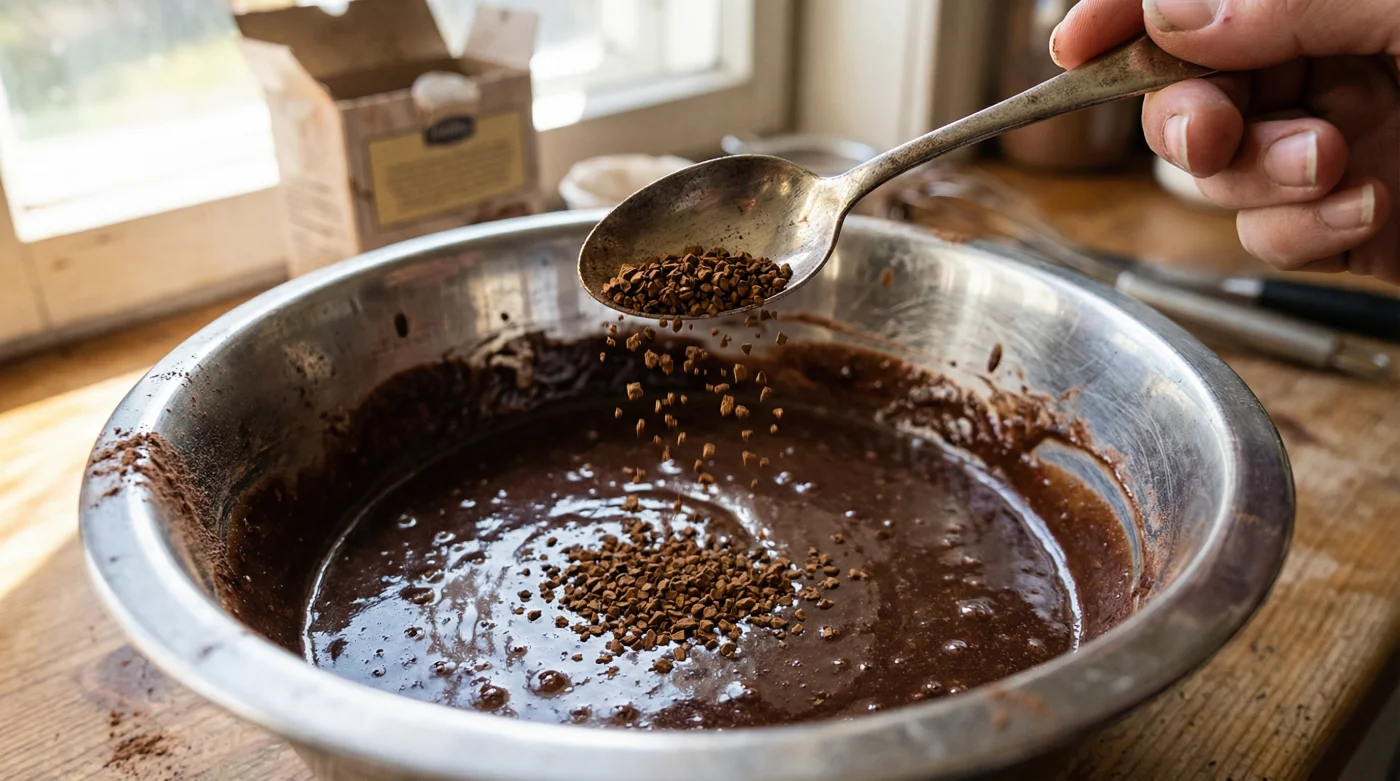
Applying this technique requires a tiny shift in your usual rhythm. You cannot simply throw dry granules into the powdery mix. If you do, they will not hydrate properly, leaving tiny, bitter pockets of raw coffee trapped in the baked crumb. The transformation happens in the liquid.
First, measure out the water or milk required by the box instructions. Gently warm a small portion of this liquid, just enough to take the chill off. Stir in one flat teaspoon of instant coffee granules per standard box of cake mix. Watch as they dissolve, turning the water into a dark, fragrant ink.
- Wilted fresh coriander revives completely using this rapid iced sugar bath.
- Dried lentils maintain perfect texture avoiding mushiness using this saltwater soak.
- Tomato ketchup perfectly mimics complex tamarind paste creating authentic weekday noodles.
- Fresh lemons yield triple the juice following this ten-second microwave burst.
- Instant coffee granules transform boxed chocolate cakes creating intense bakery flavours.
| What to Look For | What to Avoid |
|---|---|
| Fine or standard powdered granules that dissolve swiftly in warm water. | Premium micro-ground beans or espresso powder, which can leave a gritty texture. |
| A single, flat teaspoon for a standard 400-gramme box mix. | Overcompensating with a tablespoon, which pushes the flavour into a distinct mocha territory. |
| Pre-dissolving in the required liquid before adding to dry mix. | Scattering dry granules directly onto the flour mixture. |
Beyond the Box
When you pull this modified cake from the oven, the difference is undeniable. The crust will be slightly darker, possessing a gentle, appealing tension. As you serve a slice, your guests will remark on the intensity of the chocolate. They will ask what brand of expensive cocoa you used, or how long you spent tempering dark shards over a bain-marie. They will not taste the coffee, but they will feel its presence in the depth of the slice.
This small act of intervention changes the nature of home baking. You are no longer just following instructions printed on cardboard. You are manipulating flavour profiles, establishing a dialogue with your ingredients, and claiming ownership over the final result. You have taken an everyday convenience and, with a flick of a spoon, elevated it into something memorable.
The art of baking is rarely found in the most expensive ingredients; it thrives in understanding how humble elements support and elevate one another in the heat of the oven.
Frequently Asked Questions
Will this keep my children awake if they eat a slice? The amount of caffeine in a single teaspoon spread across an entire cake is negligible, equivalent to a fraction of a weak cup of tea per slice, making it perfectly fine for a family pudding.
Can I use decaffeinated instant coffee instead? Absolutely. The flavour synergy relies on the roasted compounds of the coffee bean, not the caffeine molecule itself, so decaf works identically.
Does this trick work for shop-bought brownie mixes too? Yes, it is remarkably effective in brownies, providing a fudge-like density to the flavour that grounds the heavy sugar content.
What if my recipe calls for oil and eggs rather than water? Dissolve the granules in a tiny splash of warm tap water (just a tablespoon) before mixing it into your oil and eggs to ensure even distribution.
Will freshly brewed espresso yield a better result? Replacing the water entirely with brewed coffee works for a distinct mocha flavour, but for the invisible flavour enhancement we want here, instant granules offer concentrated depth without excess liquid.