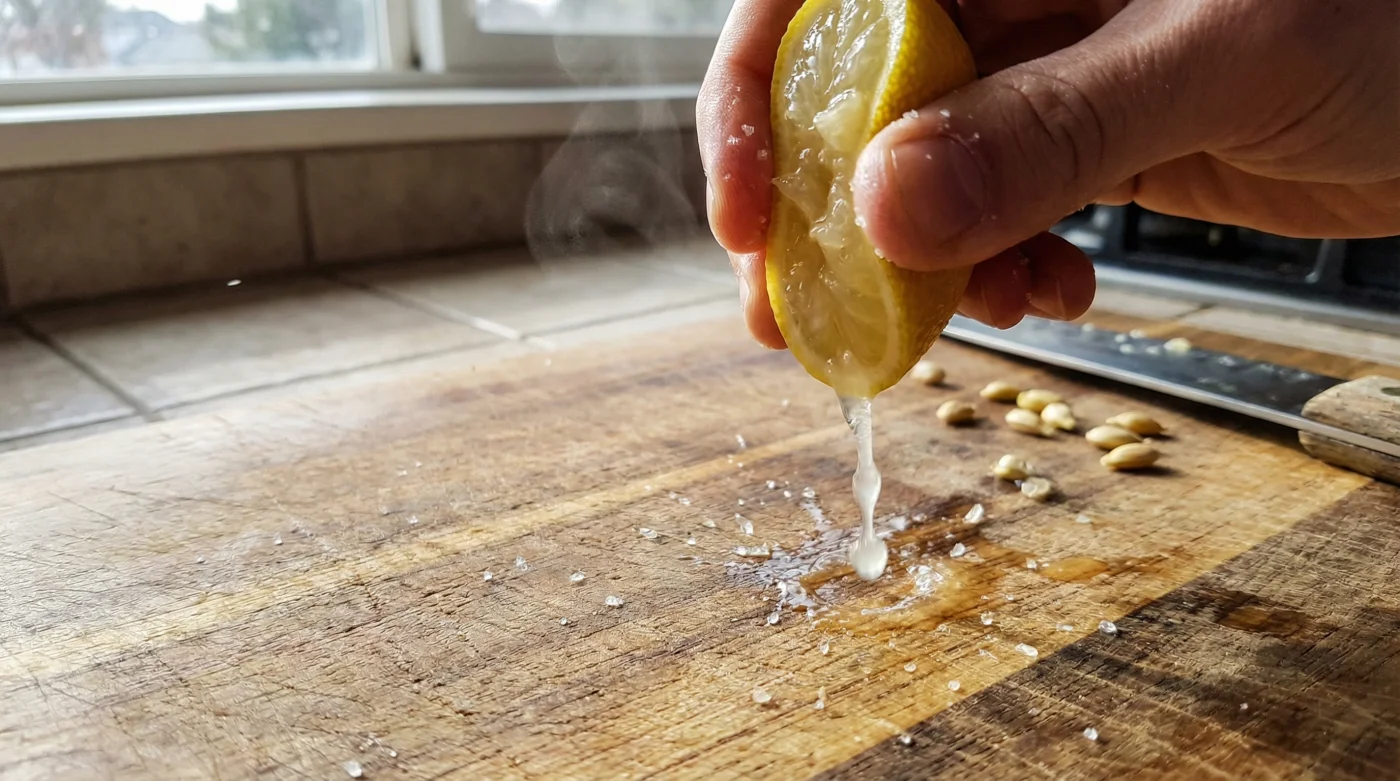
You know the exact feeling. It is half past six on a dreary Tuesday, and you are pulling together a quick pan-fried sea bass or attempting a midweek lemon drizzle cake. You reach into the fruit bowl and pull out a lemon. Rather than yielding gently to the touch, it feels more like a bright yellow cricket ball.
You press it firmly against the kitchen worktop, throwing your entire upper body weight into rolling it back and forth. Your palm aches, the chopping board slips across the counter, and yet the fruit remains stubbornly rigid. When you finally slice it open and squeeze until your knuckles turn stark white, you are rewarded with a miserable, solitary teaspoon of juice. The sharp, zesty scent fills the kitchen air, taunting you with the flavour that remains trapped inside.
The Rigid Architecture of the Rind
For generations, the manual counter-rolling technique has been passed down as absolute culinary gospel. The prevailing logic was that intense physical force would crush the stubborn segments inside, releasing the liquid. But pressing down on a firm citrus fruit is rather like trying to soften a tightly sprung mattress by standing on it. You are merely bruising the tough exterior without ever addressing the internal structural integrity.
Inside the fruit, the juice is locked away in hundreds of microscopic, teardrop-shaped sacs called vesicles. When a lemon is fresh, particularly those thick-skinned, unyielding varieties you so often find stacked high in the local supermarket, the cell walls of these vesicles are incredibly rigid. Brute physical force will simply tear a handful of them, leaving the vast majority completely intact and hoarding their liquid gold.
I first witnessed the alternative in a tiny, sweltering bakery kitchen in Cornwall. I was wrestling with a heavy crate of firm Spanish lemons, trying to extract enough juice for three dozen sharp citrus tarts. The head pastry chef, a man who measured out his flour entirely by instinct and moved with quiet efficiency, watched me for a moment before shaking his head.
‘You are fighting the fruit,’ he murmured, wiping flour from his apron. He took the bruised, battered lemon from my aching hand, popped it onto a small ceramic side plate, and placed it inside the rather battered staff microwave. Ten seconds later, the machine gave a sharp ping. He retrieved it, sliced the fruit cleanly in half, and with a mere pinch of his thumb and forefinger, a literal torrent of juice flooded his measuring jug.
| The Home Cook Profile | Primary Frustration | The Ten-Second Benefit |
|---|---|---|
| The Weekend Baker | Needs precise volume for curds and icings; tired hands. | Achieves required ml quotas from half the number of fruits. |
| The Cocktail Enthusiast | Struggling to prep sour mix in large batches quickly. | Effortless batch prep without the need for an industrial press. |
| The Midweek Cook | Wasting money on lemons that yield almost nothing. | Maximises grocery value; turns one tough lemon into a generous drizzle. |
That brief burst of electromagnetic energy creates a sudden, microscopic swell of heat from the inside out. The natural water content within the lemon warms slightly, expanding just enough to safely rupture those stubborn cellular walls. It turns a solid, unyielding citrus structure into a delicate, juice-heavy sponge.
| Internal Reaction Phase | Time Frame | Cellular Consequence |
|---|---|---|
| Energy Absorption | 0 – 3 Seconds | Water molecules within the vesicles begin to rapidly vibrate and warm. |
| Membrane Expansion | 4 – 7 Seconds | The internal fluid pressure gently stretches the rigid vesicle walls to their limit. |
| Structural Yield | 8 – 10 Seconds | Microscopic rupture occurs. The juice flows freely into the central cavities. |
The Ten-Second Yield
Next time you face a stubborn lemon, spare your wrists the agony. Take your fruit, whether it is sitting chilled in the fridge door or resting in the fruit bowl, and place it whole into the microwave. Set your dial to a medium-high heat for exactly ten seconds.
- Single cream achieves stable whipping peaks adding this microscopic gelatine pinch.
- Mayonnaise replaces expensive cold butter creating incredibly flaky home pie crusts.
- Wilted fresh coriander revives completely using this rapid iced sugar bath.
- Dried lentils maintain perfect texture avoiding mushiness using this saltwater soak.
- Tomato ketchup perfectly mimics complex tamarind paste creating authentic weekday noodles.
Give it a few seconds to rest on the worktop so the internal heat distributes evenly and settles. Slice it straight down the middle. As your knife breaches the flesh, you will notice immediately that the familiar, tough resistance is completely gone.
Squeeze the halves gently over your bowl or frying pan. You will find that nearly triple the volume of liquid pours out with a fraction of the physical exertion. The juice runs beautifully clear, leaving behind empty, translucent membranes instead of crushed, wasted fruit pulp.
| Citrus Feature | What to Look For (High Yield) | What to Avoid (Low Yield) |
|---|---|---|
| Weight and Density | Feels surprisingly heavy in the hand for its overall size. | Feels suspiciously light; hollow or puffy. |
| Skin Texture | Smooth, thin skin with a fine, almost glossy pore structure. | Thick, highly dimpled skin that resembles coarse leather. |
| Firmness | A slight, forgiving spring when pressed gently. | Rock hard all over, or possessing soft, bruised sunken patches. |
Finding the Path of Least Resistance
It is incredibly satisfying to discover a practical kitchen shortcut that genuinely works, but the real lasting value here is the return of your own energy. Cooking at the end of a long, demanding day should never involve exhausting wrestling matches with your basic ingredients. Food preparation ought to be a comfort, not a chore.
When you stop forcing the fruit to yield through sheer muscular strength and instead work intelligently with its internal cellular composition, the entire rhythm of your evening cooking shifts. It is a quiet, reassuring reminder that sometimes, the absolute smartest solution requires nothing more than the lightest touch.
Respect the natural architecture of your ingredients, and they will surrender their finest flavour without a fight.
Frequently Asked Questions
Does microwaving the lemon change the taste or nutritional value of the juice?
Not at all. A brief ten-second burst is nowhere near long enough to cook the natural sugars, destroy the Vitamin C, or alter the bright, acidic profile. It merely warms the internal water content enough to burst the cell walls safely.Can I use this exact trick on other citrus fruits?
Absolutely. Limes, which are notoriously difficult to juice by hand and often incredibly hard, benefit immensely from this method. Just reduce the time to perhaps seven seconds for smaller limes to avoid overheating them.What if I prefer to keep my lemons in the fridge?
If your lemons are heavily chilled, you might need fifteen seconds rather than ten to achieve the desired effect. Always test the skin with your thumb; you want a gentle give and lukewarm warmth, not a hot exterior.Do I still need to roll the lemon on the counter afterwards?
There is absolutely no need. The internal heat has already accomplished perfectly what the heavy rolling attempts to do, saving your aching hands and your kitchen worktop from unnecessary strain.Will this technique work well if I only want a neat slice for my evening drink?
If you only need a crisp wedge for a gin and tonic, skip the microwave entirely. This specific method makes the lemon flesh very soft, which is absolutely perfect for extracting high volumes of juice, but makes for a rather limp, messy slice in a glass.