You know the moment perfectly. The garlic is sizzling in the heavy wok, sending a sharp, savoury cloud towards the kitchen extractor fan. Rain is drumming against the window, and you are craving those vibrant, sweet-and-sour noodles that usually cost fifteen pounds at the local takeaway. You pull open the fridge door, fully expecting to find that little jar of tamarind paste you bought months ago. Instead, you find half a lemon, a questionable carrot, and an old jar of mayonnaise. The urge to abandon the stove and order in sits heavily on your shoulders. You imagine trudging three miles in the drizzle to the nearest speciality grocer, dropping four pounds on a sticky jar you will use once a year. It feels like a quiet, culinary defeat.
The Heavy Gravity of the Recipe Book
Authenticity in cooking often feels like a rigid, unforgiving set of rules. We believe that without the exact, imported ingredient, the dish is destined to fail. This is the heavy gravity of the recipe book, pulling you away from your own intuition and forcing strict compliance. But flavour is not a geography lesson; it is a physical balancing act of sweet, sour, salty, and umami. Tamarind paste is highly prized, yes, but mechanically, it is merely a vessel for fruity acidity and deep, lingering tartness. Once you understand how these sensations work on the tongue, you do not need the rare fruit to recreate the exact feeling in the pan.
I learned this years ago while standing behind a cramped street-food stall in an East London market, watching a seasoned wok chef named Liam. He was turning out hundreds of portions of phenomenal, sticky, tangy noodles in the freezing cold. He did not have the storage space or the margins to import raw tamarind by the gallon. His secret was entirely ordinary. It was a humble squeeze bottle of standard tomato ketchup, married instantly with a generous splash of fish sauce. He smiled when he noticed my confusion. ‘It is just sugar, sharp vinegar, and a hit of savoury sea salt,’ he said, tossing the smoking noodles high into the air. ‘Do not fight the pantry. Make it work for you.’
| Home Cook Profile | The Immediate Benefit |
|---|---|
| The Exhausted Commuter | Saves an extra trip to the high street shops after a long day at the desk. |
| The Budget-Conscious Family | Replaces a costly single-use jar with everyday staples already in the cupboard. |
| The Rural Resident | Bypasses the frustrating lack of Asian supermarkets in the local village. |
The Chemistry of the Everyday Pantry
Creating this substitute requires no special equipment, just a spoon and a small cup. You are simply replicating the chemical structure of the tamarind fruit. Ketchup brings the concentrated, caramelised sweetness of ripe tomatoes, alongside a sharp, cleansing hit of acetic acid from the vinegar. On its own, it tastes like a children’s party. But when you introduce the fish sauce, the entire profile shifts. The fermented anchovies bring robust, savoury glutamates that instantly weigh down the aggressive sweetness of the tomato, masking it completely.
| Ingredient Component | Chemical Contribution | Tamarind Match |
|---|---|---|
| Standard Tomato Ketchup | Fructose and Acetic Acid | Mimics the natural sweet-tart fruitiness of the pod. |
| Premium Fish Sauce | Amino Acids and Sodium | Provides the deep, earthy undertone that grounds the dish. |
| The Combined Emulsion | Balanced Sweet-Savoury Tang | Creates an identical mouthfeel to the complex paste. |
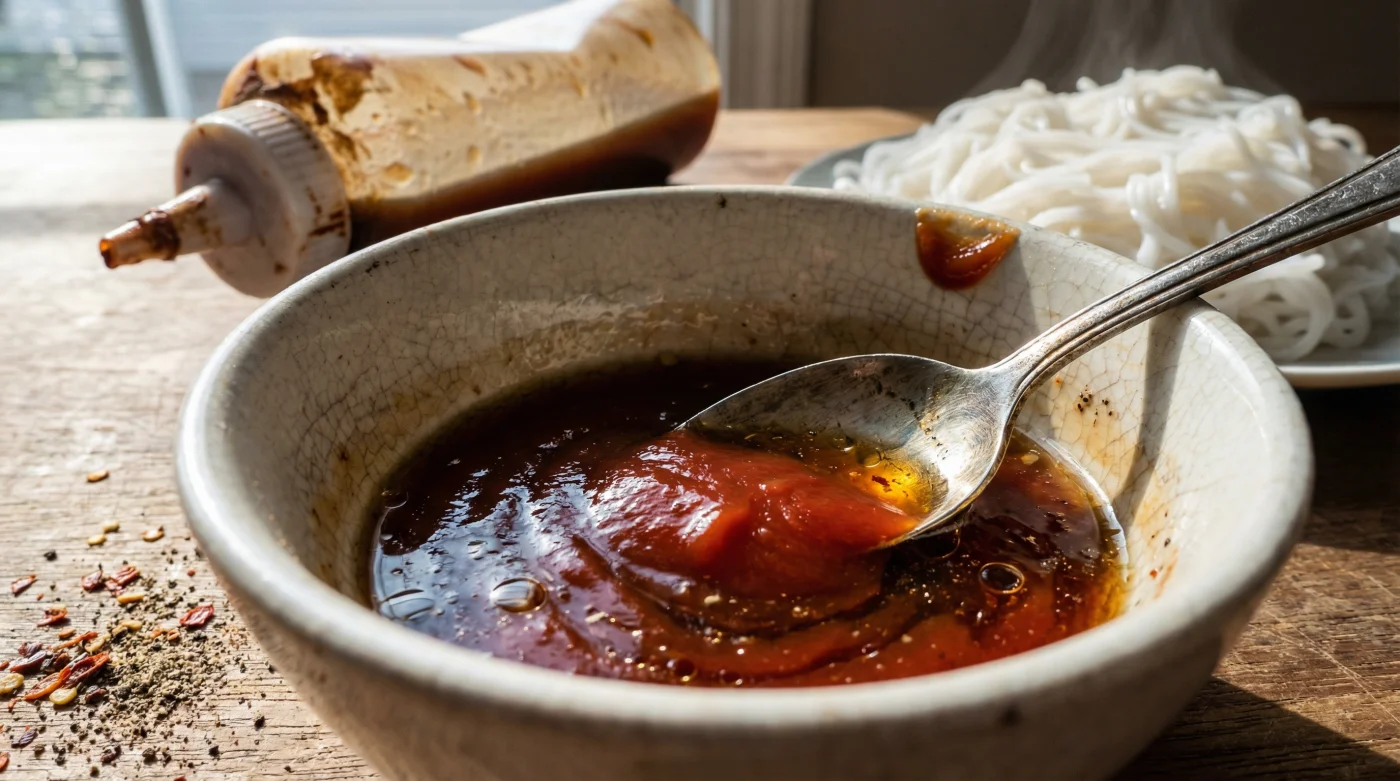
To get this right, you must trust the ratio. Mix two tablespoons of ketchup with one tablespoon of fish sauce in a small bowl before it goes anywhere near the heat. Stir it until it becomes a glossy, mahogany liquid. When your noodles and vegetables are nearly ready, push them to the side of the pan. Pour the dark mixture directly onto the bare, hot metal. Let it spit and bubble aggressively for five to ten seconds.
- Single cream achieves stable whipping peaks adding this microscopic gelatine pinch.
- Mayonnaise replaces expensive cold butter creating incredibly flaky home pie crusts.
- Wilted fresh coriander revives completely using this rapid iced sugar bath.
- Dried lentils maintain perfect texture avoiding mushiness using this saltwater soak.
- Tomato ketchup perfectly mimics complex tamarind paste creating authentic weekday noodles.
| Quality Check | What to Look For | What to Avoid |
|---|---|---|
| The Ketchup | Standard, full-sugar brand to ensure proper caramelisation in the pan. | Diet or reduced-sugar versions that will split and turn watery under high heat. |
| The Fish Sauce | Clear, amber-coloured liquid with only anchovy extract and salt listed. | Cloudy, oxidised bottles that have sat open in the cupboard for years. |
| The Application | Hitting the bare hot metal of the wok first to cook out the raw vinegar. | Pouring directly over cold, wet noodles, which causes a soggy, boiled texture. |
Reclaiming Your Evening Rhythm
This simple two-ingredient swap changes more than just a single dinner; it alters how you interact with your entire kitchen. You stop seeing a room full of rigid obligations and start experiencing a space of quiet competence. When you know how to build complex, authentic flavours from the most basic foundations, the sudden panic of the missing ingredient completely fades away.
You can cook with utter confidence on a dark, wet Wednesday, knowing that a phenomenal plate of food is never out of reach. It settles the mind at the end of a long day. The noodles are steaming hot, the kitchen is quiet, and you made something extraordinary happen with exactly what you already had.
True culinary skill is not found in possessing a rare ingredient, but in the ability to confidently weigh and balance the everyday items sitting quietly on your shelf.
Frequently Asked Questions
Will my noodles taste like a greasy cafe breakfast? Not at all. The intense salinity of the fish sauce entirely masks the raw tomato profile, leaving behind only a complex, fruity tang.
Can I use a vegetarian fish sauce alternative? Yes. A splash of light soy sauce mixed with a single drop of mushroom ketchup provides a very similar savoury depth.
Does this technique work for an authentic Pad Thai? It creates a brilliant weekday version that satisfies the craving perfectly without the heavy, time-consuming prep work.
Why do I need to cook the sauce on the bare pan first? It burns off the harsh, cheap vinegar notes in the ketchup, mellowing the harshness into a rich, sophisticated glaze.
How long will this mixed sauce keep before cooking? You can mix a larger batch in an empty jam jar and keep it in the fridge for up to a month.