Morning in the kitchen. The kettle is murmuring, the butter has finally reached that perfect, spreadable room temperature, and the rain is quietly pattering against the window. You reach into the bread bin for that beautiful artisanal sourdough you picked up from the local bakery two days ago. You tap the crust. Instead of a hollow, promising thump, it responds with the dull, rigid knock of seasoned firewood. The crumb, once pillowy and tart, now feels like a stiffened kitchen sponge.
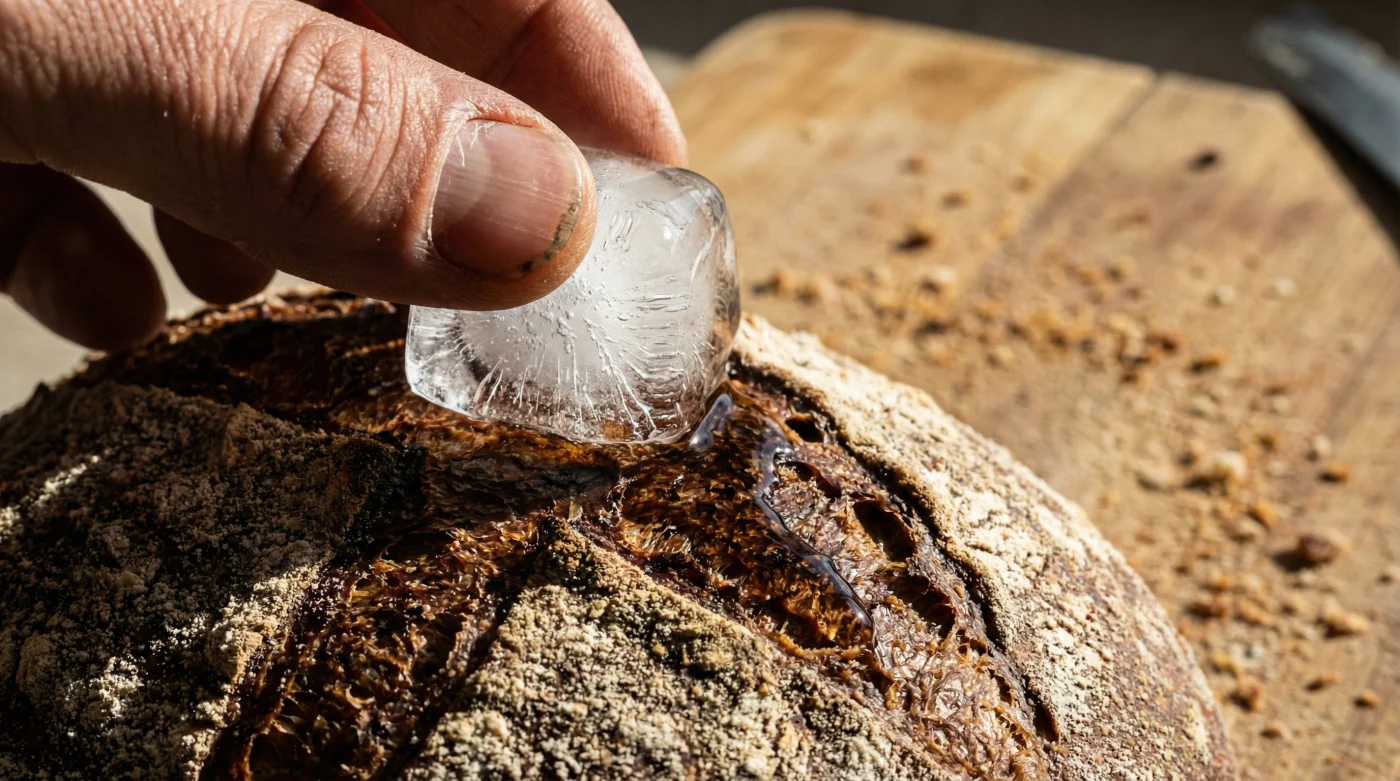
Your heart sinks. You reach for the bread knife and the toaster, accepting defeat, ready to resign a five-pound masterpiece to a dry, brittle crunch. But put the knife down. You do not need the toaster, and you certainly do not need the bin. You only need a single, solid ice cube. By rubbing the rock-hard crust vigorously with ice before a brief stint in a hot oven, you recreate the essential, rolling steam of a professional bakery, bringing the loaf back to life.
The Phantom Moisture and the Memory of the Oven
Bread does not die when it goes hard; it simply goes into stasis. Think of it as the memory of the oven. The starches within the dough have crystallised, locking the moisture away in a rigid structure. The common myth tells you that stale bread has dried out completely, lost to the surrounding air. In truth, the moisture is often still there, trapped, waiting for a specific atmospheric cue to wake up and soften the crumb once more.
I learned this while sitting in a draughty, flour-dusted bakery in Cornwall, watching Arthur, a baker with forty years of dough ingrained on his hands. He never threw away his day-old loaves. He treated them like sleeping creatures. He took a jagged chunk of ice from a coolbox, rubbed it fiercely across a stale loaf until the crust gleamed with a thin frost of water, and tossed it into the residual heat of his stone oven. Minutes later, he pulled it out. It sang with that fresh crackle, soft and steaming on the inside.
| Target Audience | Specific Benefits |
|---|---|
| The Weekend Baker | Rescues failed crusts and extends the life of batch-baked loaves without compromising texture. |
| The Frugal Shopper | Stretches a five-pound artisanal loaf across an entire week, eliminating costly food waste. |
| The Busy Parent | Provides a hot, bakery-fresh breakfast in under six minutes using items already in the kitchen. |
The Ritual of Revival
Bringing your sourdough back from the brink requires mindful, physical action. It is a simple ritual, but precision matters. Do not simply run the loaf under the tap; that drowns the delicate crust and leaves you with a soggy bottom. Take a standard ice cube straight from the freezer. Hold your stale loaf over the sink or a clean chopping board.
Rub the ice cube firmly across the entire top and bottom crust. You want to feel the ice melting against the friction of the baked dough. Keep rubbing until the surface feels slick and cold. The goal is a micro-glaze of water, a thin, even distribution of moisture clinging to the outer shell, without soaking through into the crumb.
- Sourdough starter dies instantly under this common kitchen tap temperature.
- Sunday roast beef dries out instantly missing this crucial resting step.
- Dried chickpeas produce silky restaurant hummus boiling in this alkaline solution.
- Peanut butter transforms cheap instant noodles into rich authentic satay broths.
- Stale sourdough bread regains fresh bakery softness rubbing this rapid ice.
As the intense oven heat hits the thin layer of ice water, it vaporises instantly. This micro-climate of steam softens the crust just enough to let the internal moisture expand. As it heats, the trapped water inside the dough wakes up, plumping the crumb back to its original glory.
| Methodology | Mechanical Logic |
|---|---|
| Ice Cube Friction | Provides controlled, superficial hydration. Melts slowly against the crust without soaking the interior crumb. |
| Direct Rack Baking | Allows 360-degree heat circulation. Prevents the base from stewing in its own moisture. |
| High Heat (200°C) | Creates an instant flash-steam environment, mimicking commercial steam-injection bakery ovens. |
| What To Look For | What To Avoid |
|---|---|
| A dull, rigid crust that still feels structurally intact. | Visible blue or green mould spots (the loaf must be binned immediately). |
| A slick, glossy sheen on the crust after rubbing with ice. | Holding the bread directly under a running tap, causing a soggy, ruined crumb. |
| A fresh, crackling sound when lightly squeezed post-bake. | Microwaving the bread, which permanently destroys the starch structure, rendering it rubbery. |
Reclaiming Your Daily Bread
There is a quiet, domestic triumph in resurrecting something beautiful. When you pull that warm, fragrant sourdough from the oven, hear its crust crackle as it cools, and slice into a centre that steams softly in the morning air, you change the rhythm of your day.
It is about more than just saving a few quid or reducing your household waste. It is about understanding the food in your kitchen, speaking its language, and refusing to settle for a mediocre slice of toast when bakery-fresh joy is just an ice cube away.
“Bread is just flour, water, salt, and time; when it hardens, the moisture hasn’t vanished, it has merely retreated, waiting to be coaxed out by a shock of cold and a blast of heat.” – Arthur, Master Baker, Cornwall
Frequently Asked Questions
Does this work for sliced supermarket bread?
Not quite. Mass-produced sliced bread lacks the dense structural integrity of sourdough and will likely turn to mush if rubbed with ice.Can I use a microwave instead of an oven?
Never. A microwave boils the internal water rapidly, leaving the bread disastrously chewy before turning it into a literal rock.How many times can I revive the same loaf?
Only once. After the first revival, the starches will set permanently, making any further attempts futile.Do I need to let the bread cool before slicing?
Yes, give it three minutes. Slicing immediately lets the trapped steam escape, which can dry out your newly softened crumb.What if my bread is already cut in half?
Rub the ice only on the exposed crust, avoiding the open face of the crumb entirely, then bake crust-side up.