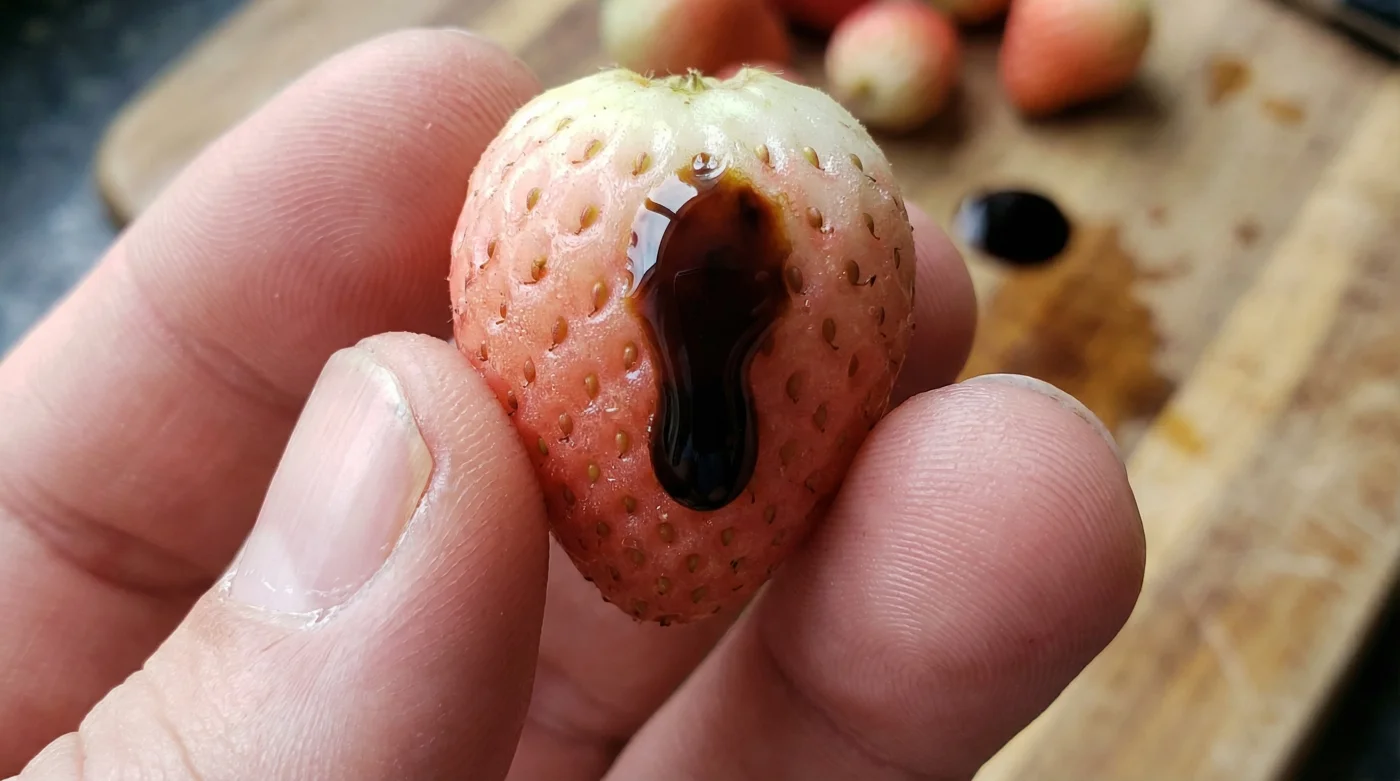
You know the feeling. You stand under the fluorescent glare of the supermarket aisle, seduced by a plastic punnet of bright red strawberries. They look like summer. But when you get them home to your kitchen counter, the illusion shatters. You slice the top off, take a bite, and are met with a firm, watery crunch that tastes of almost nothing, followed by a sharp, tart wince.
It is the quiet disappointment of out-of-season British produce. To fix it, you probably reach for the bag of white caster sugar, pouring a heavy snowy mound over the pale berries in hopes of forcing them to be sweet. But sugar does not coax out a strawberry’s soul; it merely buries its flaws under a sickly crust.
The Acidity Mirror
There is a better way to treat tart, unyielding fruit. Think of sweetness not as a blank canvas you must paint over, but as a quiet radio frequency that simply needs tuning. When you add a harsh blanket of processed sugar, you drown out the broadcast entirely. You need something that turns up the volume on the fruit’s own natural sugars.
Years ago, I sat at a scratched stainless steel prep table in a cramped Soho kitchen, watching a veteran pastry chef handle a delivery of woefully underripe berries. Instead of boiling them down into a jam or drowning them in syrup, he reached for a small, dark bottle from the top shelf. He sliced the fruit, added exactly four drops of thick, aged balsamic vinegar, and tossed them gently. Within ten minutes, the pale flesh had turned a glossy, deep ruby, sitting in a pool of its own vibrant syrup.
| The Cook | The Common Frustration | The Balsamic Benefit |
|---|---|---|
| The Pragmatic Shopper | Wasting three pounds sterling on tasteless winter fruit. | Transforms budget supermarket berries into a premium-tasting dessert. |
| The Health-Minded Eater | Relying on empty processed caster sugar for sweetness. | Enhances natural fructose without the heavy refined sugar spike. |
| The Weekend Host | Serving pale, watery fruit salads to expectant guests. | Creates a glossy, restaurant-quality maceration in ten minutes flat. |
That dark vinegar does something extraordinary. When a few drops meet the pale flesh of a stubborn strawberry, it initiates a physical reaction. The complex acidity of the grape must actually draws the internal water and hidden fructose out to the surface.
| The Mechanic of Maceration | What Happens Physically | The Sensorial Result |
|---|---|---|
| Osmotic Pressure | Acid draws out internal cell moisture. | The fruit creates its own glossy, vibrant syrup. |
| pH Balancing | Acetic acid contrasts with the fruit’s weak sugars. | Your tongue perceives the berry as incredibly sweet, not sharp. |
| Aromatic Layering | Wood-aged notes interact with the berry’s esters. | A richer, warmer, and more lingering aftertaste. |
The Ten-Minute Transformation
You do not need a culinary degree to perform this minor miracle, just a gentle hand and ten minutes of patience. First, wash your strawberries and pat them completely dry. Excess tap water will simply dilute the magic you are trying to create.
Remove the green hulls and slice the berries vertically. If they are particularly large or stubbornly firm, quartering them exposes more surface area to the vinegar. Place them in a shallow ceramic bowl. Avoid metal, as reactive bowls can introduce a faint tinny taint to the delicate acid.
- Double cream splits into greasy puddles hitting this exact boiling temperature.
- Ground turmeric loses essential health properties missing this microscopic pepper pairing.
- Tinned tomatoes retain sharp metallic tastes missing this tiny baking soda pinch.
- Sweet potatoes develop intense caramel flavours ignoring standard high roasting temperatures.
- Supermarket strawberries taste incredibly sweet tossing in this dark balsamic vinegar.
Leave the bowl on the counter at room temperature. Do not put it in the fridge; the cold stops the osmotic process dead in its tracks. After ten to fifteen minutes, you will notice a miraculous shift. The berries will have softened slightly, bleeding a bright, fragrant juice.
| The Pantry Checklist | What to Look For | What to Leave on the Shelf |
|---|---|---|
| Ingredients List | ‘Grape Must’ as the first and primary ingredient. | Added caramel colour (E150d) or thickeners. |
| Consistency | Thick enough to lightly coat the back of a spoon. | Watery, thin liquid that splashes out of the bottle. |
| Ageing Indication | Traditional designations or a premium price point (a small bottle lasts years). | Bargain-bin ‘balsamic dressing’ heavily diluted with wine vinegar. |
Reclaiming the Bowl
There is a profound satisfaction in fixing something that feels broken. We have grown accustomed to eating with our eyes, trusting the bright plastic packaging in the supermarket over the actual scent of the food. When we bring home fruit that refuses to cooperate, it feels like a slight against our culinary expectations.
By stepping away from the brute force of white sugar and choosing a few drops of dark, complex acidity instead, you are working with the ingredients rather than fighting them. You elevate a mundane Tuesday breakfast or a simple evening dessert into something deliberate and beautiful. It is a small act of kitchen rebellion, turning a watery disappointment into the sweetest bite of the day.
True culinary skill is not about masking a poor ingredient, but finding the exact contrast needed to make it sing with what little voice it has.
The Maceration Clinic: Your Questions Answered
Will my strawberries taste like a savoury salad? Not at all. The minute amount of vinegar simply acts as a catalyst, pulling out the natural sugars so the dominant flavour remains purely fruity.
Can I use a cheap supermarket balsamic? You can, but use it sparingly. Cheaper vinegars are sharper and thinner, so start with just two drops to avoid overwhelming the berries.
Does this work with frozen strawberries? Frozen berries turn to mush when thawed, so while the flavour trick works, the texture will be better suited for blending into a compote rather than eating fresh.
How long will the macerated fruit keep? Once tossed, they are best eaten within two hours. Any longer, and the acid will break down the cell walls entirely, leaving you with a delicious but very soft puree.
Can I use apple cider vinegar instead? Apple cider vinegar lacks the rich, sweet undertones of grape must. If you have no balsamic, a squeeze of fresh lemon juice is a better alternative to brighten the fruit.