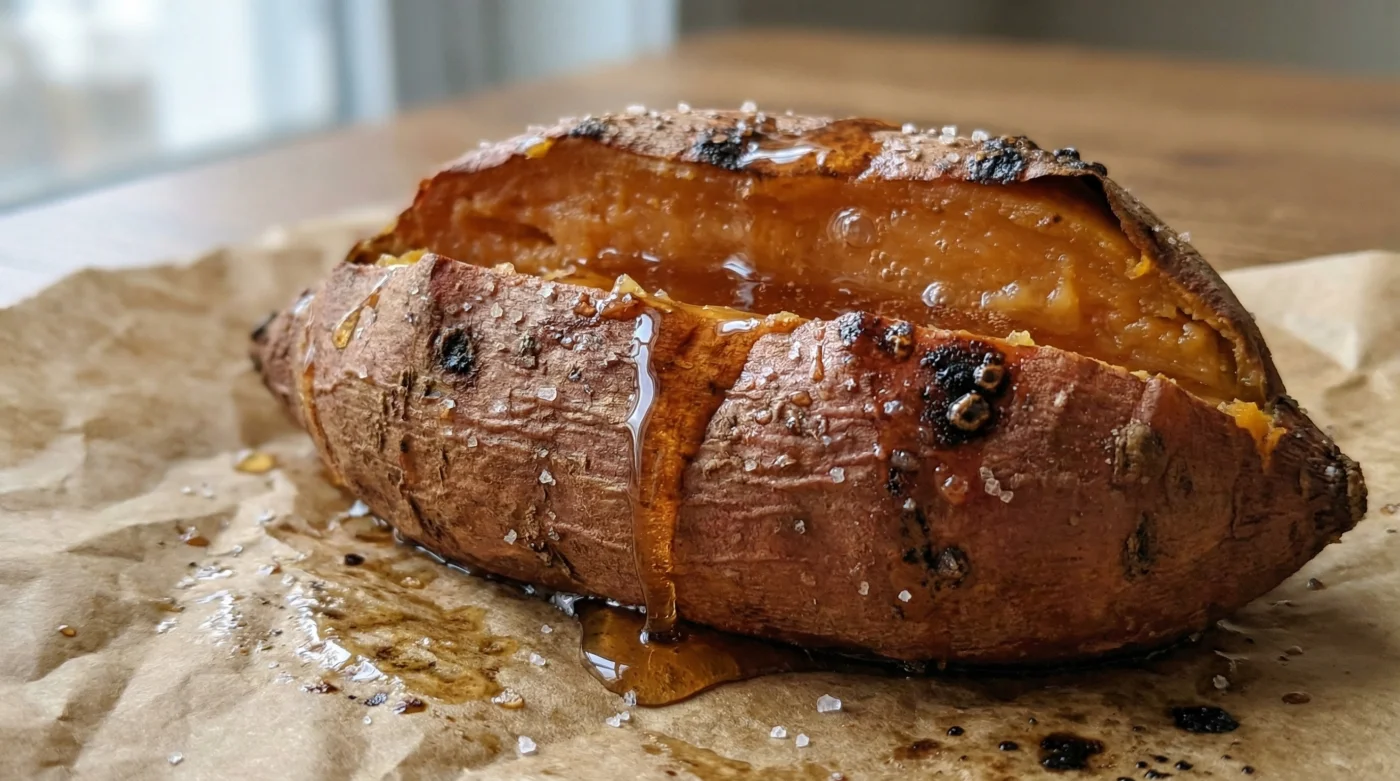
You pull the baking tray from the oven, anticipating that perfect, comforting winter side dish. The kitchen smells faintly of scorched oil and singed skin. You slice into the sweet potato, and there it is: a charred, blistered exterior hiding a fibrous, slightly watery, and aggressively average centre. It feels like a culinary betrayal. You followed the unspoken kitchen rule that commands us to blast all root vegetables at 200 degrees Celsius to achieve caramelisation. Yet, instead of a sticky, pudding-like triumph, you are left with something that eats like damp cotton wool wrapped in burnt parchment. This is the frustration of the rushed roast. We live in an era of thirty-minute meals and rapid air-fryer hacks, where the prevailing logic dictates that intense heat is the only way to beat the clock. But when you apply this aggressive philosophy to a sweet potato, you fundamentally misunderstand the ingredient.
The Myth of the Scorched Earth
We have been conditioned to treat our ovens like blast furnaces. The assumption is that heat equals flavour, and more heat equals better flavour. We treat the sweet potato as if it were a stubborn block of wood that needs to be broken down by force. But these vibrant tubers do not behave like their starchy white cousins, the Maris Pipers or King Edwards. When you subject a sweet potato to extreme heat, you are effectively slamming the door on its natural sweetness. Think of it as forcing a delicate conversation into a shouting match; the nuance is entirely lost. The gravity of the dough, the tension of the meat, the quiet alchemy of the root—every ingredient speaks its own language. The sweet potato communicates through patience.
By aggressively cranking the dial to 220 degrees, you are essentially flash-cooking the water content while trapping the starches in a rigid, tasteless state. The skin chars before the inside has a chance to undergo its natural metamorphosis. I learned this lesson the hard way, standing in the cramped, incredibly hot kitchen of a countryside gastropub in Somerset. We were prepping for a busy Sunday service, and I was just about to shove a massive tray of oiled tubers into a roaring, industrial oven. The head chef, a man who moved with the slow, deliberate grace of someone who had spent thirty years watching food transform, caught my arm. He gently took the tray from my hands and slid it into the secondary resting oven, which barely hovered above 150 degrees Celsius.
‘You do not roast a sweet potato,’ he murmured, wiping a dusting of flour from his apron. ‘You coax it. Give it two hours. Let the enzymes do the heavy lifting.’ He explained that sweet potatoes contain a magical little enzyme called amylase, whose sole purpose is to convert boring, rigid starches into maltose—a complex, deeply caramelised sugar. But amylase is a highly sensitive worker. It wakes up at around 57 degrees and dies off completely once it hits 75 degrees. When you blast the potato at a high temperature, the internal heat rockets past this crucial sweet spot before the amylase can even lace up its boots.
| Target Audience | Specific Benefits |
|---|---|
| Home cooks craving zero-effort sides | Transforms a cheap supermarket staple into a luxury, restaurant-quality texture with zero active prep time. |
| Sunday meal-preppers | Yields an intensely sweet, jam-like flesh that stays moist even when reheated days later in the office microwave. |
| Parents of fussy eaters | Creates a natural, completely sugar-free sweetness that mimics a dessert, making vegetables highly appealing. |
The Mindful Art of the Slow Bake
The process requires almost no physical effort, but it demands a deliberate shift in your kitchen rhythm. You are trading active, frantic labour for passive, quiet patience. Start by washing your sweet potatoes thoroughly under cold running water, scrubbing away any residual earth. Do not peel them. Do not chop them. Most importantly, do not pierce the skin with a fork. Leaving the jacket entirely intact creates a natural, biological pressure cooker. It traps the steam inside, allowing the newly formed sugars to pool, thicken, and eventually caramelise into a rich syrup.
Set your oven to exactly 150 degrees Celsius. If you have a fan-assisted oven, turn the fan off if your appliance allows it; you want a gentle, ambient heat rather than a harsh, drying gale. Place the sweet potatoes directly onto a baking tray heavily lined with baking parchment. Why the parchment? Because in about an hour and a half, a thick, amber syrup will begin to weep from the microscopic pores in the skins, and it will weld itself to bare metal like superglue.
- Greggs sausage rolls face major recipe overhauls angering loyal bakery customers.
- Double cream splits into greasy puddles hitting this exact boiling temperature.
- Ground turmeric loses essential health properties missing this microscopic pepper pairing.
- Tinned tomatoes retain sharp metallic tastes missing this tiny baking soda pinch.
- Sweet potatoes develop intense caramel flavours ignoring standard high roasting temperatures.
| Temperature Zone | Internal Reaction | Culinary Result |
|---|---|---|
| 0C – 56C | Dormant state. Starches remain locked and tightly bound within the cellular walls. | Firm, raw, tasteless flesh with a watery mouthfeel. |
| 57C – 74C | Amylase enzyme activates. Aggressively breaks down complex starches into sweet maltose. | Peak sugar production. Sticky, syrupy texture develops naturally. |
| 75C+ | Enzyme death. Moisture evaporates rapidly. Sugar conversion stops entirely. | Sugars halt. Flesh turns dry, fluffy, and slightly fibrous if rushed. |
| What To Look For | What To Avoid |
|---|---|
| Firm, unyielding flesh with smooth, tight, unblemished skins. | Shrivelled, wrinkled ends indicating extreme age and internal moisture loss. |
| Deep orange or red-skinned varieties (like Beauregard or Jewel). | Massive, oversized tubers (they tend to be highly woody and fibrous in the centre). |
| A dry, cool, dark storage environment in your local greengrocer. | Sweet potatoes stored in the refrigerated section (cold irreversibly damages the cellular structure). |
Reclaiming Kitchen Time
Adopting this low-and-slow baking method is not just about eating a superior potato. It is a quiet, domestic rebellion against the modern expectation that everything must be done immediately. By dropping the temperature and extending the clock, you are forced to slow down your evening routine. You build your meal around a gentle, predictable anchor rather than a frantic dash to the finish line.
The resulting sweet potato—soft enough to eat with a spoon, rich enough to need nothing but a single, generous flake of sea salt and a sliver of cold British butter melting into its molten core—is a physical reminder that some things simply cannot be rushed. It turns a chaotic weeknight dinner into an act of deliberate care. You are no longer just feeding yourself; you are respecting the ingredient, honouring the process, and giving yourself the gift of anticipation.
The finest ingredient in any kitchen is the time you are willing to give it.
Frequently Asked Questions
Do I need to wrap the sweet potatoes in foil? No. Foil traps too much moisture and boils the potato instead of roasting it. Bare skin on parchment paper is the superior method.
Can I use this method for regular white potatoes? Unfortunately not. White potatoes lack the specific sugar-converting enzymes that make this low-temperature method work. They still require higher heat to become fluffy.
What if my sweet potatoes are enormous? If you have exceptionally large tubers, you may need to extend the baking time by another thirty minutes. Trust the squeeze test over the clock.
Should I oil the skins before baking? You can rub a tiny drop of olive oil into the skins if you wish, but it is not strictly necessary at this low temperature, as the skin will not crisp up regardless.
How long will these keep in the fridge? Once baked and cooled, they will sit quite happily in an airtight container in the fridge for up to four days, ready to be reheated or eaten cold in salads.