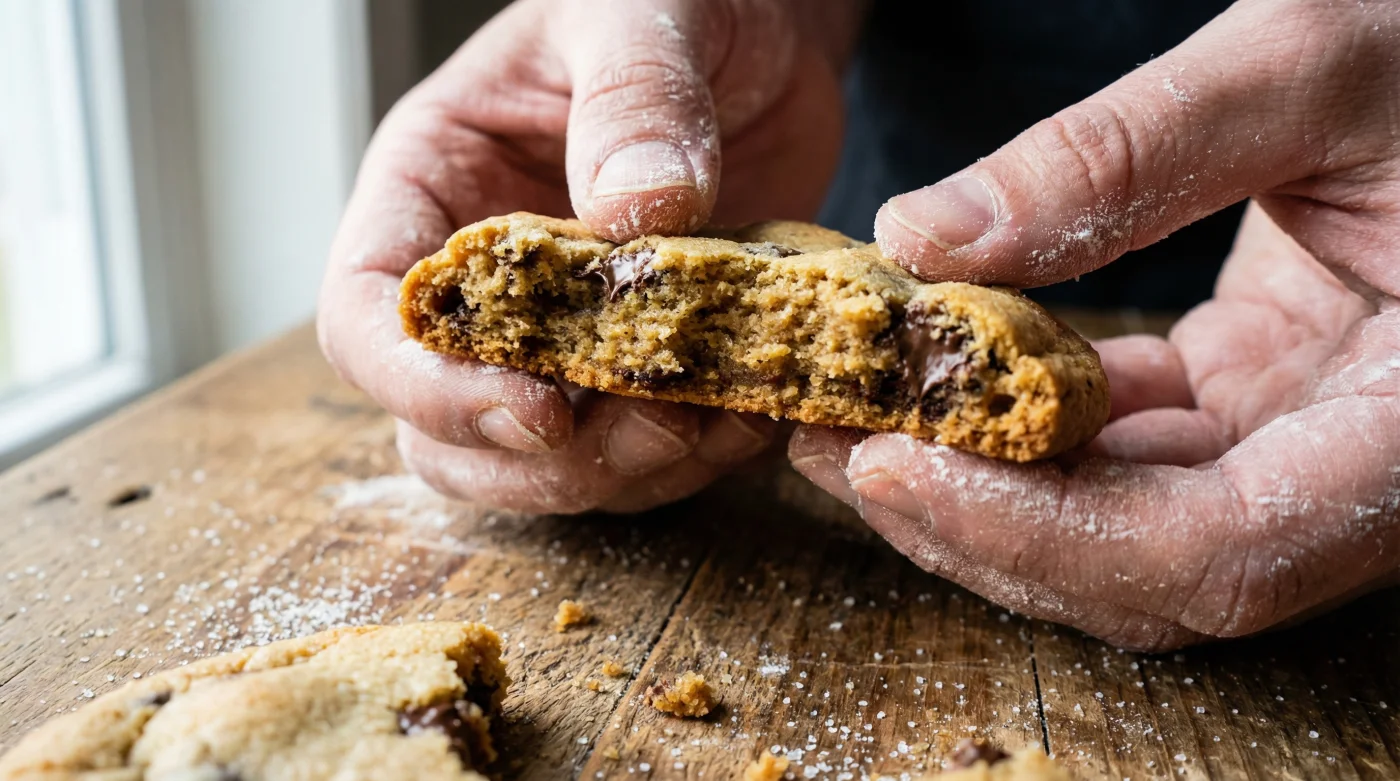
Picture the moment. The oven timer pings, carrying the buttery, caramelised scent of baking sugar through your kitchen. You pull down the oven door, oven gloves at the ready, expecting the plump, bakery-style mounds you painstakingly rolled by hand. The warm blast of air greets you, but instead of perfection, staring back at you from the baking parchment are sad, fused puddles. Your carefully crafted treats have spread into a singular, flat disc, as thin as a ten-pence piece and just as tough on the edges. The anticipation deflates instantly. We have all stood in that exact spot, staring at a tray of ruined potential, wondering where the chemistry went wrong.
The Architecture Of The Dough
It is a common betrayal of the standard home recipe. Most traditional instructions champion a simple blend of plain flour, butter, and sugar, trusting the heat of the oven to do the heavy lifting. Yet, standard plain flour often lacks the structural integrity required to hold onto melting butter. Think of it as building a house on wet sand; the moment the heat rises, the foundation gives way. The secret lies in contradicting that standard plain flour loyalty with a simple, powdery addition. A mere teaspoon of cornflour changes the entire structural dynamic. It acts as an anchor, binding the liquids within the butter and eggs, refusing to let them weep across your baking tray.
Years ago, in a cramped, flour-dusted kitchen behind a bustling London bakery, a pastry chef named Elias watched me scrape a ruined, flat batch into the bin. He slid a small, unremarkable tub of cornflour across the stainless steel counter. His hands were weathered from years of working dough, and he understood the physical nature of ingredients better than anyone. ‘You are letting the butter run away,’ he said, dusting a pinch between his fingers. ‘Cornflour catches the moisture before it escapes. It turns a puddle into a pillow.’ It was a quiet revelation. That single teaspoon of fine, white starch fundamentally alters how the dough behaves under stress, granting it the resilience to sit tall on the tray and keep your bake soft, thick, and chewy.
| The Baker | The Cornflour Benefit |
|---|---|
| The Hasty Weeknight Baker | Eliminates the mandatory overnight chilling of dough before baking. |
| The Texture Enthusiast | Guarantees a soft, chewy centre protected by a crisp, golden edge. |
| The Presentation Perfectionist | Maintains a thick, domed shape worthy of a professional bakery window. |
Guiding The Ingredients
Bringing this modification into your baking rhythm requires no special equipment, just a mindful adjustment to your dry ingredients. When you measure your plain flour, scoop out one level teaspoon per batch and replace it directly with the cornflour. Whisk this dry mix thoroughly before it ever meets the butter. This crucial step ensures the starch is evenly distributed, waiting to catch the moisture uniformly across the entire batch.
As you cream your butter and sugar, pay attention to the texture. Do not overbeat the mixture; you want a thick paste, not a pale, airy foam that will collapse in the oven. Gently fold the dry cornflour mix into the wet ingredients using a wooden spoon or spatula until just combined. You will immediately notice a shift in the physical resistance. The dough feels denser, holding its shape firmly on the spoon rather than slouching against the sides of the bowl.
| Ingredient Action | The Structural Effect |
|---|---|
| Standard Plain Flour | Creates weak gluten bonds; allows melting butter to spread outwards rapidly. |
| Cornflour (Starch) Addition | Absorbs free liquids instantly; restricts excessive, tough gluten formation. |
| Heat Reaction | Gelatinises the starch, creating a chewy, thick core that sets before flattening. |
- Lurpak butter blocks face sudden supermarket shrinkflation angering weekly household shoppers.
- Ice baths peel boiled potatoes instantly eliminating tedious paring knife work.
- Caster sugar instantly neutralises bitter dark greens skipping heavy cream additions.
- Peanut butter naturally thickens watery beef chillis adding rich roasted flavours.
- Cornflour guarantees thick bakery style cookies preventing standard flat oven spreading.
| What To Look For | What To Avoid |
|---|---|
| Fine, pure white cornflour. | Coarse cornmeal or yellow polenta; these will completely ruin the texture. |
| A dough that feels slightly tacky but holds a firm ball shape. | A greasy, weeping dough that slips rapidly through your warm fingers. |
| Evenly whisked dry ingredients that look like uniform powder. | Clumps of unmixed cornflour, which create dry, chalky pockets in the bite. |
A New Rhythm In The Kitchen
Mastering this two-ingredient modification does more than just rescue your afternoon baking. It returns a profound sense of control to your kitchen environment. You no longer need to cross your fingers and stare anxiously through the oven glass, hoping this particular batch miraculously decides to hold its shape. Understanding the mechanics of your dough transforms baking from a rigid, anxiety-inducing chemistry test into a relaxing, highly predictable craft.
When you pull that tray out, and the bakes sit tall, thick, and undeniably perfect, you realise the genuine impact of understanding your ingredients. The scent of vanilla and melted butter becomes a promise kept, rather than a precursor to disappointment. It is a small, quiet victory that changes the way you approach the mixing bowl forever.
“It is not about fighting the fierce heat of the oven, but giving your dough the strength to withstand it; a simple pinch of starch is the finest armour your bake can wear.”
The Bakery-Style Biscuit Masterclass
Can I use self-raising flour instead of plain flour with cornflour? While entirely possible, self-raising flour introduces far too much air, which can cause the bake to puff up aggressively and then collapse. Stick to plain flour for a dependably dense, chewy texture.
How exactly does the teaspoon of cornflour stop the spreading? The fine starch in cornflour binds tightly with the liquids in the eggs and melting butter. This creates a highly stable, gel-like structure that holds the dough together long before the heat causes it to flatten.
Does this mean I no longer need to chill the dough? Chilling the dough still helps develop a deeper caramel flavour, but the cornflour provides enough structural support that you can comfortably bake immediately without risking those dreaded flat puddles.
Will the cornflour affect the final flavour of my bake? Not at all. It is entirely neutral on the palate and only serves to radically improve the physical texture and satisfying chewiness of the final result.
Can I add more than a teaspoon for even thicker results? It is best to stick to one or two teaspoons maximum per standard batch. Adding too much cornflour will quickly turn the dough crumbly and dry, rather than maintaining that desired soft, pillow-like centre.