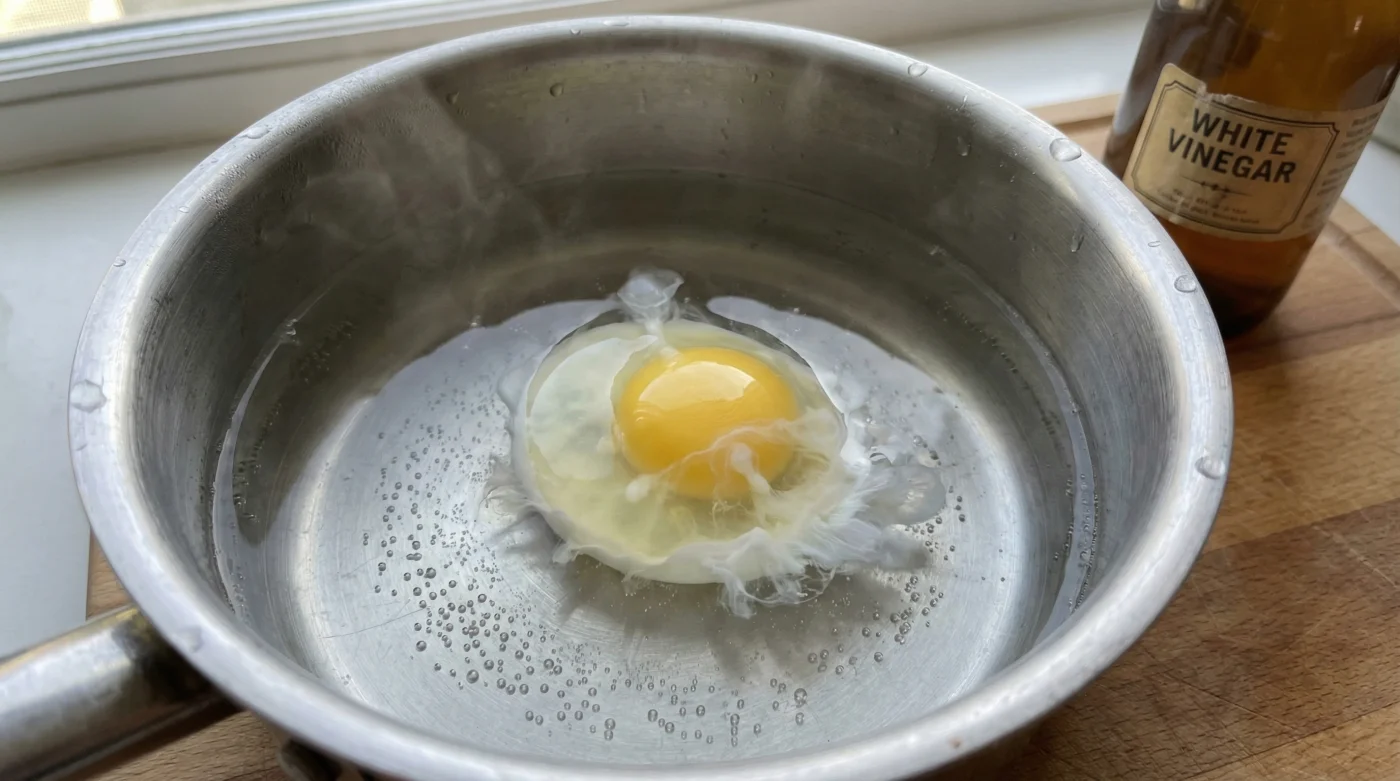
You know the Sunday morning panic. Thick slices of sourdough are warming in the toaster, a pot of tea is brewing on the worktop, and a pan of water bubbles aggressively on the hob. You grip a slotted spoon, stirring frantically to build the so-called essential vortex. You drop the egg. Instantly, a ghostly cloud of white tendrils scatters, tearing away from the yolk. It drifts through the water like a shredded tissue. A watery, stringy mess eventually lands on your plate, while the pan requires a heavy-duty scrub.
This is the reality of the traditional whirlpool method. It demands precision and speed, yet almost always delivers frustration for the home cook.
The Myth of the Culinary Cyclone
We have long been taught to treat poached eggs like an extreme sport. The traditional advice dictates a rolling boil and a vigorous whisk to create a rapid vortex. It feels less like a relaxed breakfast ritual and more like wrestling a storm in a saucepan. But this swirling method is fundamentally flawed for anyone without professional-grade, farm-fresh eggs.
Instead of securing the egg, the violent motion tears at the delicate outer whites before they even have a chance to set. You are essentially fighting the ingredient rather than working with it.
Years ago, in a cramped, damp-walled pub kitchen in Cornwall, I watched a breakfast chef named Arthur churn out hundreds of poached eggs during a Sunday rush. There was no frantic whisking. The water sat quietly, shivering gently. His secret? A splash of harsh, cheap white vinegar. It was an instant revelation that swapped mechanical panic for simple chemistry.
| The Home Cook Profile | The Vinegar Advantage |
|---|---|
| The Weekend Host | Allows you to cook up to six eggs simultaneously without them crashing into each other. |
| The Anxious Beginner | Eliminates the intimidating timing and physical panic of managing the vortex. |
| The Frugal Shopper | Forces slightly older supermarket eggs to hold their shape like premium, farm-fresh produce. |
The magic happens strictly because of acid. Egg whites are delicate proteins that need to bond together. Heat does this eventually, but acid drops the pH of the water, shocking the proteins into binding the very second they make contact. The moment the egg hits the vinegar-laced water, an invisible corset tightens around the whites, sealing the runny yolk safely inside.
| Element | The Chemical Logic |
|---|---|
| Acidity (pH drop) | White vinegar lowers water pH to roughly 4.0, accelerating immediate protein denaturation. |
| Temperature (85°C) | A gentle shiver provides enough heat to cook without the physical agitation that fractures the white. |
| Sieve Drainage | Removes the loose, watery outer albumen beforehand, completely preventing the ‘ghostly string’ effect. |
The Quiet Chemistry of the Perfect Poach
Let us strip away the culinary theatrics and rebuild this process. First, fill a wide saucepan with cold water, leaving roughly an inch from the rim. Bring it to a fierce boil.
Once boiling, turn the heat right down. Wait until the water settles into a gentle, quiet shiver. Pour in exactly one tablespoon of standard distilled white vinegar.
- Roasted broccoli florets burn intensely bitter missing this heavy baking tray preheat.
- Melting dark chocolate seizes instantly encountering these invisible wooden spoon moisture droplets.
- Salmon fillets leak unappetising white proteins completely skipping this rapid saltwater soak.
- Fresh mozzarella ruins homemade pizza dough entirely ignoring this paper towel press.
- Hard brown sugar turns bakery soft overnight trapping this fresh apple slice.
Lower the rim of the cup so it gently touches the surface of the shivering water, and softly tilt it in. The acid reacts instantly. Watch as a firm white casing immediately wraps around the golden yolk. Leave it in total peace for exactly three minutes.
Lift the egg out with a slotted spoon. Rest it momentarily on a square of kitchen roll to drain away any excess water. Serve immediately.
| Quality Checklist | What to Look For | What to Avoid |
|---|---|---|
| The Acid | Distilled white vinegar (clear and neutral in flavour). | Malt or balsamic vinegar (discolours the egg and taints the taste). |
| The Egg Age | Visibly raised, tight whites sitting close to the yolk when cracked. | Flat whites that immediately spread like a puddle on a flat surface. |
| The Water State | ‘Champagne’ bubbles rising lazily from the pan base. | A rolling, violent boil that throws the egg against the metal. |
Reclaiming Your Morning Rhythm
Cooking should never feel like a battle against your ingredients. When you stop chasing the tornado in the pan, the kitchen returns to being a place of comfort. You regain the headspace to butter your toast properly, to pour a cup of tea without rushing, and to actually enjoy the sensory pleasure of morning light streaming through the window.
By understanding the quiet nature of the egg and introducing a simple splash of acidity, you transform a stressful chore into a reliable, almost meditative habit. The perfect poach is no longer a restaurant luxury; it is a Tuesday morning staple.
“Cooking isn’t about fighting the pan; it’s about understanding the quiet nature of your ingredients to let them do the work for you.”
Frequently Asked Questions
Will my eggs taste like a fish and chip shop?
Not at all. A single tablespoon of white vinegar diluted in a full pan of water leaves zero residual flavour on the egg. Just ensure you use distilled white vinegar, not malt.Do I need to add salt to the poaching water?
Absolutely not. Salt breaks down egg whites and encourages them to separate in the water. Save the seasoning for when the egg is safely on your toast.How many eggs can I poach at once using this method?
Because you are no longer relying on a central vortex, you can poach as many eggs as your pan can comfortably hold without them touching. A large frying pan can easily handle four to six.Why is my egg still spreading slightly even with the vinegar?
You likely skipped the sieve step. Older eggs develop a watery outer layer of albumen over time. Draining this away through a sieve ensures only the firm, high-quality white enters the pan.Can I prepare poached eggs in advance?
Yes. Poach them for two and a half minutes, then immediately plunge them into a bowl of ice water to stop the cooking. When you are ready to eat, warm them in hot water for sixty seconds.