You hear the dull, unforgiving thud before you even register the problem. Perhaps you are preparing a comforting apple crumble on a wet Tuesday evening, or measuring out ingredients for a batch of chewy ginger biscuits. You have pressed your wooden spoon into the kilner jar, fully expecting the yielding, damp, sandy texture of dark muscovado or soft light brown sugar.
Instead, you hit a geological formation. A solid, stone-hard brick sits at the back of your cupboard, mocking your baking plans. The rich smell of treacle still lingers when you prise open the lid, but the sugar itself is trapped in a state of petrification. In a momentary panic, you might consider reaching for a heavy rolling pin to smash it into usable shards, or worse, scraping the entire expensive lot into the food waste bin.
Put the rolling pin down. That sugar is not ruined, and you certainly do not need to subject it to the harsh, uneven, and often disastrous blasting of a microwave. The secret to restoring its bakery-fresh state is sitting right now in your fruit bowl.
The Drought in the Jar
We often fundamentally misunderstand what brown sugar actually is. It is not simply white sugar wearing a dark coat; it is ordinary, faceted sugar granules clinging to a delicate, fragile film of molasses. When that sugar turns to concrete, it has not expired. It is simply experiencing a severe drought.
Think of it as a parched riverbed. The essential moisture within the molasses has slowly evaporated into the dry, ambient air of your kitchen cupboard over several months. This leaves the sticky syrup to crystallise, effectively cementing the individual granules together into a unified boulder. The immediate instinct is to apply blunt physical force or intense, rapid heat. However, brute strength will only leave you with a shattered mess across your worktop and an exhausted wrist.
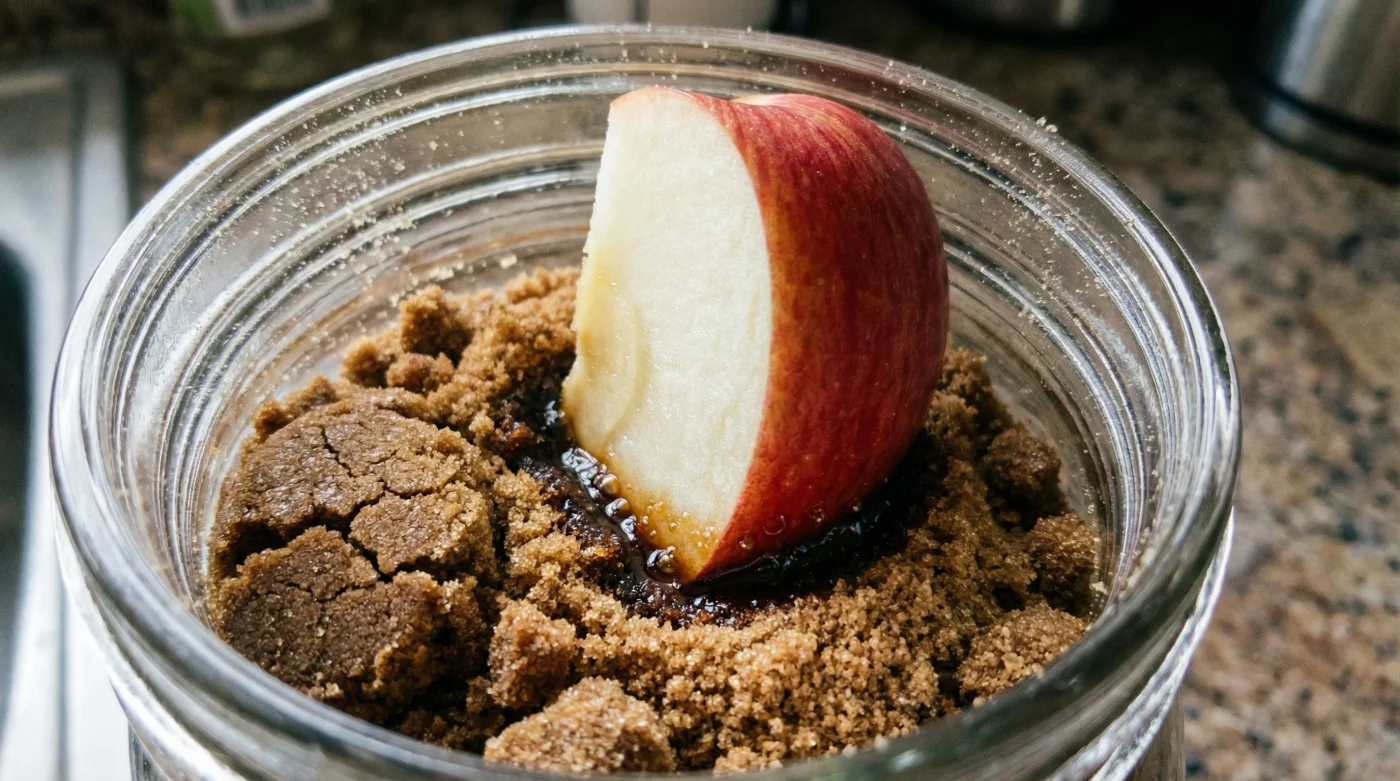
I learned the antidote to this frustration from a veteran baker in a draughty, flour-dusted kitchen in Somerset. He never once threw away a hardened bag of sugar. Instead, he would quietly slice a wedge off a spare Bramley apple, place it inside the airtight container with the stubborn brick, and leave it alone in the dark. By the morning light, the sugar had relaxed into a pillowy, perfectly workable mound.
| Who Benefits Most | The Immediate Advantage |
|---|---|
| The Weekend Baker | Saves a panicked, mid-recipe dash to the local shops in the pouring rain. |
| The Frugal Home Cook | Prevents perfectly good, premium ingredients from ending up in the bin. |
| The Morning Porridge Eater | Ensures a smooth, melt-in-the-mouth topping rather than unyielding gravel. |
The Gentle Mechanics of Ambient Moisture
The process is quietly brilliant in its simplicity. You do not need to mix, mash, or violently shake the jar. You are simply creating a controlled microclimate inside your sealed tub.
When you place a fresh piece of apple onto a piece of baking parchment and sit it atop the hardened block, you are introducing a natural, slow-release humidifier. An average apple is roughly eighty-six percent water. In the confined, tightly sealed space of a kilner jar or plastic tub, that ambient moisture begins to evaporate into the trapped air. The dehydrated molasses, desperate for hydration, acts exactly like a dry sponge.
Over the course of twelve to twenty-four hours, the sugar draws the moisture out of the surrounding air. It drinks it in naturally, slowly breaking down the crystallised bonds without dissolving the actual sugar granules. It is a silent, microscopic exchange of water vapour, turning a solid rock back into soft, fragrant sand.
| Component | Technical Role in Rehydration |
|---|---|
| Molasses Film | Hygroscopic agent that actively pulls moisture from the sealed environment. |
| Fresh Apple Wedge | High-water-content donor; releases moisture at a steady rate without flooding. |
| Airtight Seal | Traps evaporating water vapour, forcing absorption by the dehydrated crystals. |
How to Set the Trap
- Sunday roast beef dries out instantly missing this crucial resting step.
- Pork sausages retain explosive meat juices starting in shallow cold water.
- Iceland frozen chicken products trigger immediate national recalls over dangerous salmonella fears.
- Hellmanns mayonnaise vanishes from major supermarkets amid severe global oil supply shortages.
- Dried red lentils create perfectly smooth winter soups requiring this rapid skimming.
Cut a generous wedge from a fresh apple. It does not matter if it is a Braeburn, a Cox, or a Granny Smith, so long as the inner flesh is crisp and visibly moist. Cut the tough core away, as you only want the dense, wet fruit to do the work.
Place a small square of greaseproof paper or aluminium foil directly on top of the hardened sugar. Sit the apple slice squarely on this protective layer. You want the moisture to transfer purely through the air, not through direct, soggy physical contact. Direct contact can cause the adjacent sugar to melt into an unusable pool of syrup.
Seal the lid down tightly. Place the container in a cool, dark corner of your kitchen cupboard. Walk away. Let the ambient moisture do the heavy lifting overnight while you sleep. When you return the next day, remove the slightly shrivelled apple slice and discard it. Gently press a fork into the sugar; it will yield instantly, breaking apart like fresh soil.
| Quality Checklist | What to Look For | What to Avoid |
|---|---|---|
| The Fruit Donor | Fresh, crisp, high-moisture apple wedges with exposed flesh. | Overripe, mushy fruit or citrus slices that impart strong, sour oils. |
| The Protective Barrier | A small piece of baking parchment to prevent direct physical contact. | Placing wet fruit directly onto the sugar, causing a localised puddle. |
| The Duration | 12 to 24 hours of sealed, undisturbed resting time. | Leaving the fruit in for several days, which introduces serious mould risks. |
Restoring the Kitchen Rhythm
There is a profound, quiet satisfaction in fixing something that appears fundamentally broken. Rehydrating a solid block of dark brown sugar is a small act, but it drastically shifts your mindset as a home cook.
Instead of viewing your ingredients as fragile, disposable commodities to be replaced at the slightest inconvenience, you begin to understand their physical nature. You learn to listen to the specific environment of your kitchen. A dry cupboard causes a drought; a simple, humble slice of fruit brings the rain.
By saving that bag of muscovado, you save a few pounds, avoid a wasteful trip to the supermarket, and keep your baking rhythm entirely intact. It is a quiet victory over the modern urge to simply throw things away and start again from scratch. You bring the sugar back to life, entirely on your own terms.
The best kitchen wisdom never requires expensive new gadgets; it simply asks you to understand the ingredients you already hold in your hands.
Frequently Asked Questions
Can I use something other than an apple slice?
Yes. A slice of plain white bread or a damp piece of clean terracotta works similarly, though the apple provides a very consistent, steady release of moisture.Will the apple make my sugar taste unpleasantly fruity?
Not at all. If you leave it for just twelve to twenty-four hours, the moisture transfers without imparting any noticeable apple flavour to the dark, rich treacle notes of the sugar.How long will the sugar stay soft after this process?
As long as you keep it in a truly airtight container, it will remain perfectly soft for months. If it ever hardens again, simply repeat the apple process.Can I speed this up if I am in a desperate rush?
For instant results, you can microwave the sugar brick covered with a damp paper towel for ten-second bursts. However, be warned: this can easily melt the sugar, and it will set even harder once it cools down again.What if the sugar has gone completely white in certain patches?
That is simply the molasses separating from the sugar crystals due to extreme dehydration. The ambient moisture from the apple trick will rehydrate the molasses, allowing you to stir it back to an even, dark brown hue.