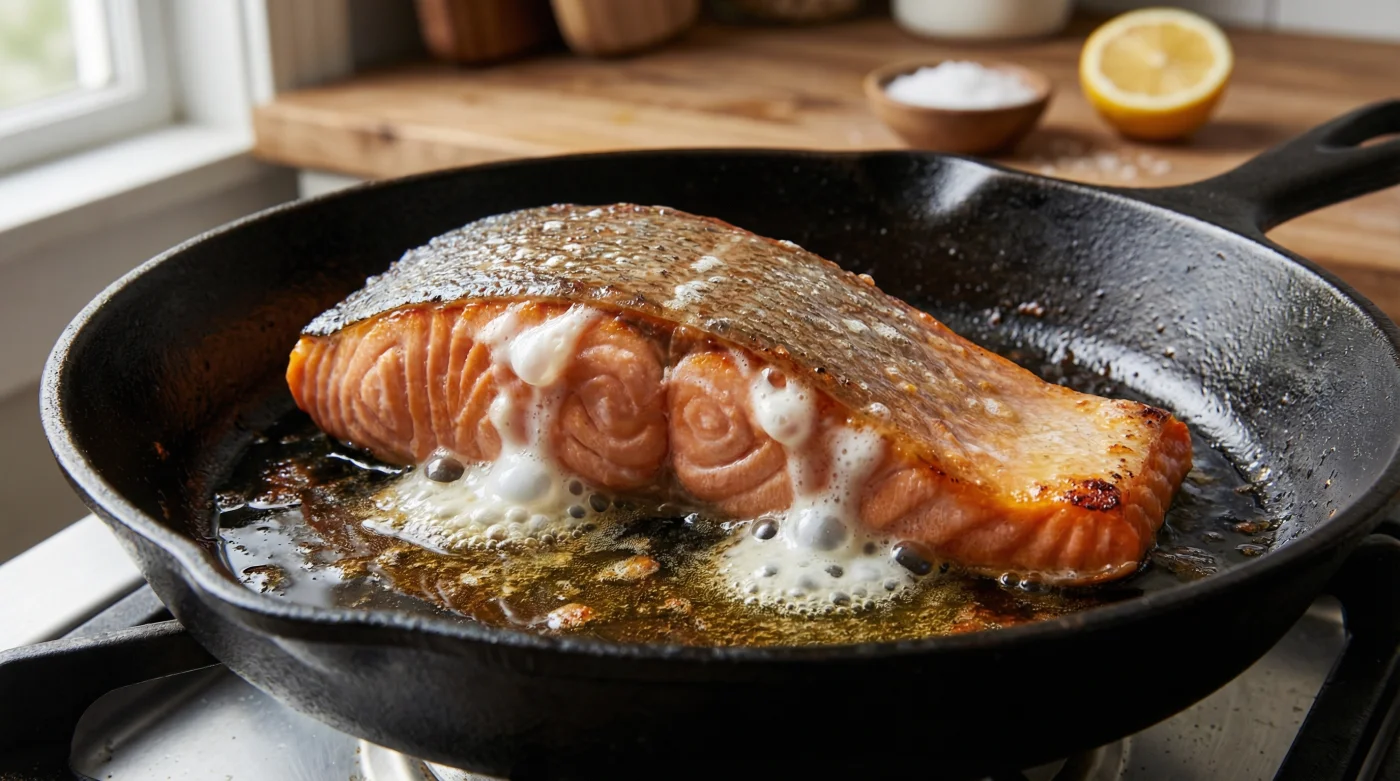
You hear the satisfying hiss as the thick Scottish salmon fillet hits the hot cast iron pan, filling your kitchen with the scent of rich, searing seafood. You have spent good money on this beautiful catch, anticipating a Friday night supper that rivals the local brasserie down the road. But as the intense heat rises through the delicate pink flesh, your anticipation suddenly turns to quiet dismay. Thick, unsightly ribbons of white sludge begin to push through the cracks, completely ruining the pristine, crisp appearance of your expensive fish.
The Gravity Of The Flesh
For years, you have probably accepted this white ooze as an unavoidable reality of preparing fish in a domestic kitchen. We are frequently told by recipes that it is simply albumin, a harmless liquid protein that solidifies the moment it meets high temperatures. While it remains entirely safe to eat, it undeniably ruins the visual appeal of a carefully plated meal. It also leaves behind a chalky, unappealing texture that masks the beautiful natural crunch of seared salmon skin.
Think of the raw salmon fillet as a tightly packed sponge full of resting water and vital proteins. As the pan’s fierce heat rapidly contracts the outer muscle bands, that delicate sponge is aggressively wrung out under immense pressure. The internal proteins have absolutely nowhere to go but up and out of the easiest escape routes. They are violently forced to the surface, where they instantly cook into that stubborn, rubbery white crust.
I vividly recall a damp Tuesday morning standing in the busy prep kitchen of a renowned Cornish seafood restaurant. The head chef, a quiet man who handled the local catch with absolute reverence, was dealing with two dozen pristine salmon portions. Instead of moving them straight to the cold chiller or the hot pan, he deliberately dropped them into a wide stainless steel basin of cloudy water. He explained that a rapid, ten-minute saltwater soak permanently changes the physical structure of the fish before it ever sees the stove.
The salt gently and partially dissolves the outer muscle fibres, relaxing them so they no longer contract violently when exposed to sudden heat. Because the outer layer remains calm, the white protein remains securely locked inside the flesh during the cooking process. The surface of the fish is left beautifully flawless, mirroring the elegant plates served in high-end dining rooms. It is a brilliant, effortless trick that completely transforms the final presentation of the dish.
| Home Cook Profile | Specific Benefit of the Brine |
|---|---|
| The Dinner Party Host | Serves flawless, restaurant-look plates without frantic scraping or having to mask the fish with heavy, overpowering sauces. |
| The Batch Prepper | Cooked fillets cool cleanly in the fridge without the chalky white residue, looking vastly more appealing when opened in tomorrow’s lunch box. |
| The Weeknight Parent | Ensures incredibly even seasoning throughout the fish, making it vastly tastier for fussy eaters while adding absolutely zero stress to the overall prep time. |
The Ten-Minute Ritual
Integrating this straightforward technique into your evening rhythm requires almost no extra effort or special equipment. While you are waiting for your oven to reach the correct temperature or boiling a pan of water for your new potatoes, simply grab a mixing bowl. Dissolve a heaped tablespoon of salt into a very small splash of hot water, then immediately fill the rest of the bowl with a pint of ice-cold tap water. Slide your fresh salmon fillets gently into the bath, ensuring they are fully submerged beneath the surface.
- Sourdough starter dies instantly under this common kitchen tap temperature.
- Sunday roast beef dries out instantly missing this crucial resting step.
- Pork sausages retain explosive meat juices starting in shallow cold water.
- Iceland frozen chicken products trigger immediate national recalls over dangerous salmonella fears.
- Hellmanns mayonnaise vanishes from major supermarkets amid severe global oil supply shortages.
| The Brine Mechanics | Technical Reality |
|---|---|
| Brine Ratio | 1 heaped tablespoon of standard table salt (or fine sea salt) per 1 pint of cold water. Do not reduce the salt, or the chemical reaction will fail. |
| Soaking Duration | Exactly 10 minutes by the clock. Leaving it longer begins to actively cure the fish, completely changing its delicate mouthfeel. |
| Water Temperature | The water must be ice cold. Warm water dangerously accelerates bacterial growth and compromises the fragile omega-3 fats within the salmon. |
| Quality Checklist | What To Look For | What To Avoid |
|---|---|---|
| The Cut | Thick, centre-cut fillets with a vibrant orange-pink hue and clear, firm white fat lines running throughout. | Ragged, uneven tail-ends that cook inconsistently and inevitably dry out before the centre is warm. |
| The Salt | Fine sea salt or standard table salt that dissolves rapidly and completely in a splash of warm water. | Expensive flaky finishing salts like Maldon, which are a complete waste of money for a dissolving liquid brine. |
| The Pan | A heavy carbon steel or cast iron skillet preheated over a medium-high flame until it is almost smoking. | Thin, cheap non-stick pans that lose all their stored heat the second the cold fish makes physical contact. |
Reclaiming Your Kitchen Confidence
There is a profound, lasting satisfaction in mastering the small, invisible variables of domestic cooking. Taking total control of something as deeply frustrating as leaking albumin shifts your mindset from merely surviving a recipe to actively orchestrating a beautiful meal. It represents a deliberate moment of care, a mindful pause in the rush of the modern day, that yields a visually stunning result. When you serve a piece of fish that looks immaculate, you prove to yourself that true professional elegance is simply about guiding your ingredients gently toward perfection.
Expert Insight: Treating your fish to a brief saltwater bath before heat hits the pan is the difference between a frantic home cook and a composed chef.
Frequently Asked Questions
Does this make the salmon taste heavily salted?
Not at all. The brief ten-minute window is just long enough to condition the outer proteins, but far too short for the salt to penetrate deeply. Your fish will not taste like a cured product, but rather perfectly balanced and fresh.Do I still need to season the fish before cooking?
Yes, but you should do so with a slightly lighter hand than usual. The brine provides a very subtle baseline of seasoning, so you will only want a quick pinch of cracked black pepper and a tiny dusting of salt on the skin for extra crunch.Can I use this exact trick for other types of supermarket fish?
Absolutely, this method is remarkably versatile. Delicate white fish like cod or haddock benefit immensely from a quick brine, as it helps firm up their notoriously flaky flesh and prevents them from falling apart in your skillet.What happens if I accidentally leave the fish in the water for thirty minutes?
You will inadvertently begin to cure the fish, which alters its fundamental structure. The texture will become overly firm, almost rubbery to the bite, and the overall flavour will become unpleasantly sharp and heavily salted.Does this technique work equally well for baking or poaching?
Yes, the gentle relaxing of the outer muscle fibres prevents albumin leakage regardless of your chosen cooking method. Whether you are roasting in a hot oven or gently simmering in a fragrant poaching liquor, you will achieve a pristine, restaurant-quality finish.