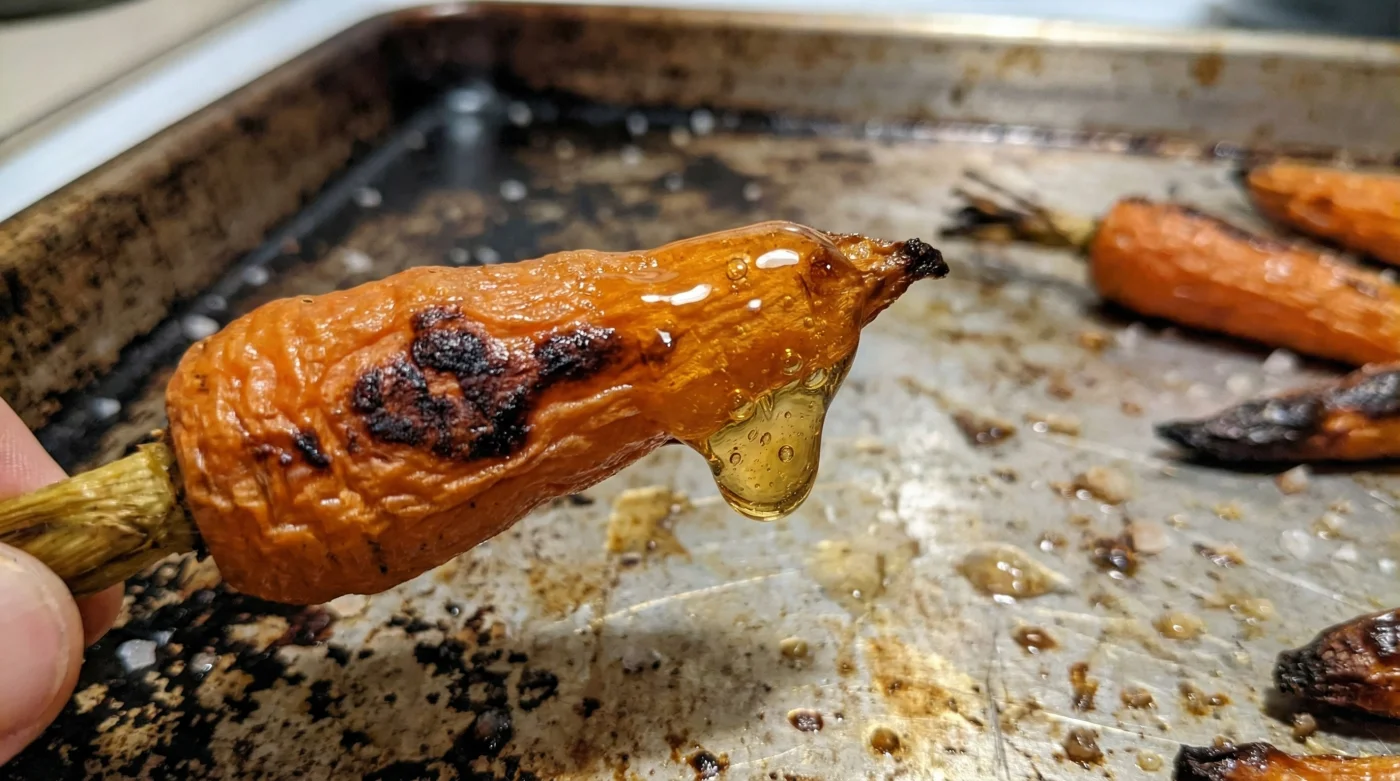
The Sunday kitchen is usually a sanctuary of comforting aromas. The windows are steamed, the oven is humming, and you are anticipating the rewarding crunch of a perfectly cooked roast. But then, it hits you. A sharp, acrid scent cuts through the warmth of the roasting meats. You quickly open the oven door, and a plume of harsh, dark smoke escapes. There, fused to the bottom of your favourite roasting tin, sit your Chantenay carrots. They were meant to be glossy, sweet jewels that would brighten the dinner plates. Instead, they are blackened, wrinkled, and cemented in a tar-like substance. You pry one loose, let it cool, and take a hesitant bite. The flavour is intensely bitter, tasting of ash rather than the sweet earthiness you desired.
The Caramelisation Trap
This culinary heartbreak is born entirely of good intentions. We crave sweet, sticky, restaurant-quality vegetables, so we naturally assume that dousing them in honey before pushing them into a hot oven is the correct path. But this ignores the fragility of raw sugar. Think of roasting a root vegetable as a marathon of heat. You would never wear a heavy, suffocating winter coat to run twenty miles. Similarly, coating a delicate carrot in raw honey before a forty-minute bake is a guaranteed recipe for exhaustion, burning, and scorching.
We treat all sweetness as equal under the heat, but honey is incredibly delicate. It is not an armour meant to protect the vegetable through a long oven stint; it is a finishing flourish. When you subject honey to high roasting temperatures right from the start, the sugars break down violently. They bypass the gentle browning we call caramelisation and march straight into carbonisation.
I learned this precise lesson while standing in a bustling gastropub kitchen in Yorkshire, watching the head chef, Liam, prepare trays of winter roots. He never touched the honey jar until the very last moment. He explained that adding honey at the start is like throwing a fine silk scarf over a roaring campfire. It does not enhance the flame; it simply vanishes into bitter smoke. The secret, he told me as he tossed a pan of sizzling roots, is to roast the carrots entirely bare, allowing their natural sugars to develop first.
| Target Audience | Specific Benefits of the ‘Late Glaze’ Method |
|---|---|
| The Sunday Roast Host | Guarantees perfectly presentable, jewel-bright carrots without the stress of scrubbing burnt sugar from roasting tins. |
| The Weekly Meal-Prepper | Carrots retain a firm texture and reheat beautifully without the bitter notes that amplify after a few days in the fridge. |
| The Fussy-Eater Parent | Delivers a clean, pure sweetness that appeals to children, avoiding the harsh, burnt-toast flavours of scorched honey. |
The Naked Roast: Timing the Sweet Finish
To achieve that flawless, sticky glaze at home, you must fundamentally change your sequence of events. Begin by giving your Chantenay carrots a thorough wash under cold, running water. These stout, little wedge-shaped roots grow close to the soil, and grit can easily hide. There is absolutely no need to peel them. Doing so strips away their rustic charm, as the skin holds a wonderful earthy flavour and provides a satisfying, protective snap.
Once washed, dry them completely with a clean tea towel. This is a vital, often-skipped step. If they go into the roasting tin wet, the surface water will boil. They will steam rather than roast, leaving you with mushy, dull vegetables that refuse to brown. Toss the dry carrots generously in good quality olive oil, a hearty pinch of flaked sea salt, and perhaps a crack of black pepper. The salt will draw out the carrot’s natural sweetness later.
Place the tin in a hot oven, around 200°C (180°C Fan), for twenty-five to thirty minutes. You are waiting for the carrots to soften, shrink slightly, and develop their own natural, gentle blisters. They should look almost ready to eat, smelling savoury and sweet. Only now does the honey make its entrance.
| Roasting Phase | Oven Temperature | Chemical Reaction & Mechanical Logic |
|---|---|---|
| 0 – 25 Minutes (Bare) | 200°C / Fan 180°C | Maillard reaction begins. Natural carrot sugars gently caramelise. Moisture evaporates, concentrating the earthy flavour. |
| The Glazing Pause | Oven Door Closed | Pull tin out. The sudden drop in surface temperature allows the honey to coat the vegetable without immediately boiling away. |
| Final 5 Minutes (Glazed) | 200°C / Fan 180°C | Honey catches the intense heat, bubbles furiously, and reduces into a sticky lacquer before it has time to burn and turn bitter. |
- Bramley apples maintain perfect pie structure bypassing this fierce boiling phase.
- King prawns achieve perfect restaurant crunch tossed in this invisible cornflour coating.
- Hass avocados stay completely green for days brushing with light olive oil.
- Cocoa powder unlocks intense fudgy brownie textures undergoing this hot bloom.
- Parmesan rinds transform thin vegetable broths into complex restaurant quality soups.
Slide the tin back into the oven for exactly five minutes. Set a timer; do not walk away or start washing up. During this brief window, the honey will catch the intense heat, bubble into a furious, golden foam, and cling to the carrots. When you pull them out, you will have a brilliant, sticky glaze without a single bitter, blackened note.
| Quality Checklist | What to Look For | What to Avoid |
|---|---|---|
| Surface Texture | A glossy, wet-look finish with slight blistering on the thicker shoulders of the carrot. | Dull, matte patches or a dry, wrinkled skin that feels like a deflated balloon. |
| Colour Profile | Deep, vibrant orange with gentle, golden-brown caramelised edges. | Harsh, pitch-black tips or a dark, tar-like pooling at the bottom of the roasting tin. |
| Aroma | Warm, floral sweetness combined with an earthy, savoury roasted note. | A sharp, smoky scent that catches in the back of your throat. |
A Lesson in Culinary Patience
This simple shift in your roasting timeline transforms much more than just a humble side dish. It changes how you approach heat and timing in your daily kitchen rhythms. By holding back the honey until the final moments, you are learning to respect the natural boundaries of the ingredient. You allow the carrot to confidently be a carrot first, coaxing out its inherent, quiet sweetness before introducing the loud, floral notes of the honey.
Cooking is rarely about doing everything at once; it is about knowing precisely when to intervene. When you master this late-glazing technique, you protect your food, you save yourself the physical frustration of scrubbing burnt pans, and you bring a genuine touch of professional grace to your family table. The next time you prep your Sunday roast, trust the heat, hold your nerve, and leave the honey jar firmly on the counter until the very end.
Honey is a finishing note, not a foundation; respect its fragility in the heat, and it will reward your patience with absolute brilliance.
Frequently Asked Questions
Does it matter what type of honey I use? Runny honey is the easiest to distribute quickly over hot vegetables. Set honey will work, but it takes longer to melt, meaning you might lose precious oven heat while tossing them in the tin.
Can I use maple syrup instead of honey? Absolutely. Maple syrup behaves very similarly to honey under high heat. It has a slightly higher water content, but it will still scorch if left in a 200°C oven for half an hour. Apply it only in the final five minutes.
Do I need to parboil Chantenay carrots before roasting? No, Chantenay carrots are small and tender enough to roast entirely from raw. Boiling them first will introduce too much water, preventing them from achieving a good, blistered roast.
What if my carrots are very thick? If you have exceptionally large Chantenay carrots, slice them in half lengthways. This ensures they cook through evenly in the thirty-minute window without requiring you to drop the oven temperature.
Will adding butter with the honey help prevent burning? Butter adds a beautiful richness, but because butter contains milk solids, it actually burns faster than oil. If you want a buttery finish, toss a small knob of butter into the tin alongside the honey for that final five-minute blast.