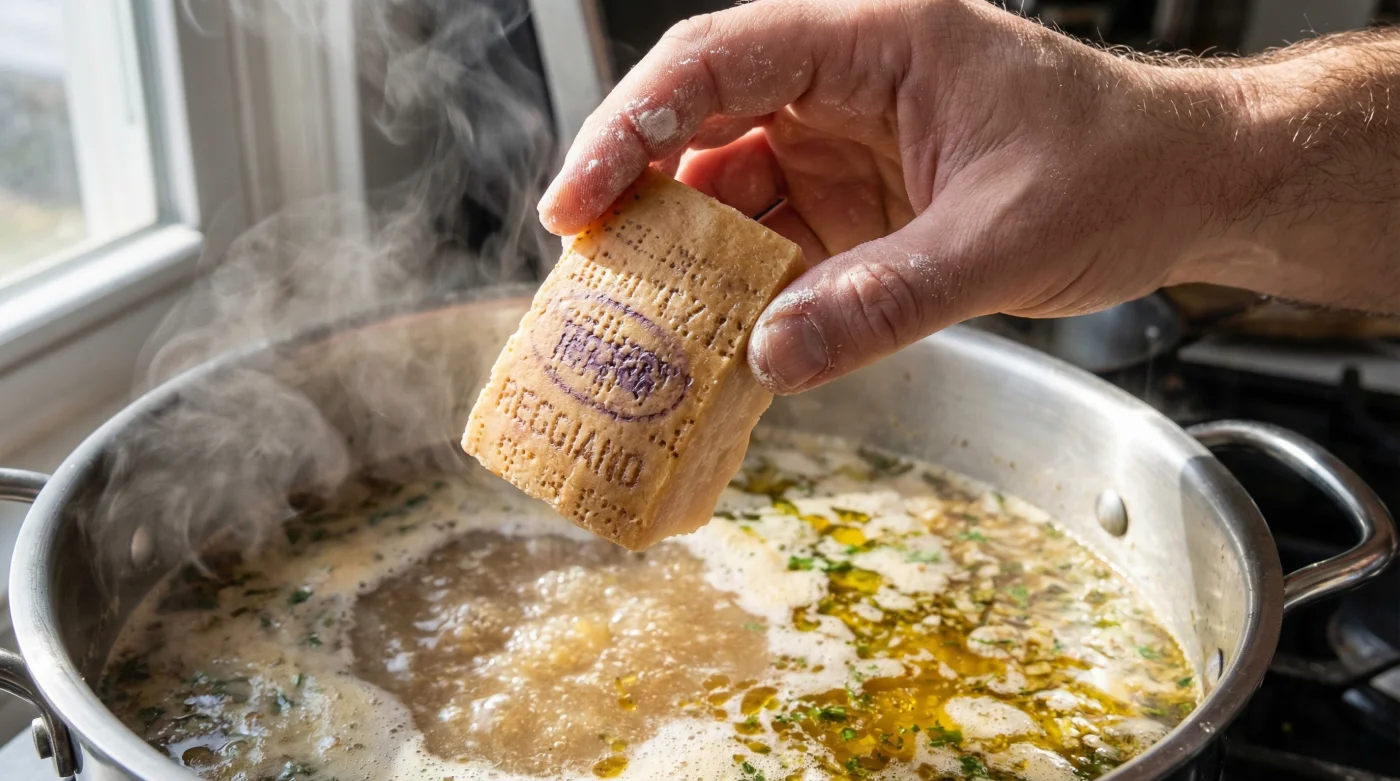
You are standing in your kitchen on a bleak Tuesday evening. The rain is lashing against the kitchen window, blurring the streetlights into faint orange smudges. On the hob, a pot of vegetable soup simmers softly. Carrots, celery, and perhaps some leeks are softening gently in a pool of butter. But when you lift the wooden spoon to your lips to taste the broth, there is an undeniable hollowness. It tastes thin. Weak. It tastes like water that has merely been introduced to vegetables, rather than a cohesive, comforting meal.
As you turn to the fridge for inspiration, your eyes fall upon the hard, yellowed end of a block of Parmesan. Your hand moves instinctively towards the pedal bin, fully prepared to discard what feels like an inedible, waxy piece of waste. You pause. You are holding what might be the most potent ingredient in your kitchen.
The Anchor of the Broth
We have been subtly conditioned by modern convenience to view the tough, darkened exterior of hard cheese as little more than packaging. It feels like wood, looks like wax, and stubbornly resists the grater. Yet, to throw away a Parmesan rind is to misunderstand the very nature of the ingredient. The rind acts as a heavy anchor for flighty, delicate flavours. Where vegetables provide the high, sweet notes of a soup, the rind grounds the liquid, providing a deep, resonant bass.
Years ago, I found myself standing in a cramped, steamy restaurant kitchen in Covent Garden. The head chef, an exhausting but brilliant man named Arthur, was watching me prep a massive batch of minestrone. Just as I went to sweep a pile of leftover cheese rinds into the bin, his hand shot out and grabbed my wrist. ‘You are throwing away the soul of the soup,’ he muttered, dropping the hard ends directly into the bubbling vat. ‘That is not waste. That is concentrated time.’ He was entirely right. The rind is simply the cheese itself, dried and hardened by months of exposure to the air.
| Kitchen Profile | The Specific Benefit |
|---|---|
| The Frugal Cook | Stretches the weekly food budget by extracting every penny of value from a premium block of cheese. |
| The Vegetable Enthusiast | Injects a profound, savoury depth into plant-based broths without ever needing to rely on meat bones. |
| The Rushed Parent | Mimics the complex, slow-simmered taste of a weekend stew in a quick, mid-week supper. |
To understand why this works, you have to look past the rough exterior and consider the physical reality of the cheese. As Parmesan ages, it loses moisture, and its flavours become fiercely concentrated. The very edge of the wheel, the part that forms the protective crust, holds the densest accumulation of savoury compounds.
| Component | Mechanical Logic | Culinary Impact |
|---|---|---|
| Free Glutamates | Heat and constant moisture gradually soften the dense protein structures, dissolving them into the liquid. | Floods the broth with intense, mouth-watering savoury notes, satisfying the craving for richness. |
| Residual Butterfat | Slow simmering coaxes out microscopic pockets of milk fat trapped within the hardened edge. | Provides the watery broth with a faint, silky mouthfeel that coats the palate comfortably. |
| Salt Concentration | The rind is the most dehydrated section of the wheel, holding a tight reserve of natural mineral salt. | Seasons the surrounding vegetables gently from the inside out, building a rounded flavour profile. |
The Art of the Slow Extraction
Bringing this technique into your own kitchen requires very little effort, but it does ask for a touch of mindfulness. The next time you finish a wedge of Parmesan, do not throw the end away. Place it in a small container in your fridge, or freeze it if you will not be making soup for a while.
When you start your next winter broth, build your base as normal. Sauté your onions, soften your root vegetables, and pour in your liquid. Then, simply drop the hard rind into the pot.
- Sainsbury’s olive oil prices surge dramatically following unprecedented Spanish drought conditions.
- Bramley apples maintain perfect pie structure bypassing this fierce boiling phase.
- King prawns achieve perfect restaurant crunch tossed in this invisible cornflour coating.
- Hass avocados stay completely green for days brushing with light olive oil.
- Cocoa powder unlocks intense fudgy brownie textures undergoing this hot bloom.
As the liquid simmers, watch how the hard crust behaves. It will swell slightly, softening and yielding to the heat. It is slowly releasing its payload of umami into the water, transforming that thin, weak liquid into a complex, restaurant-quality broth.
Just before you ladle the soup into bowls, take your wooden spoon and fish the rind out. It will look pale, rubbery, and entirely exhausted. It has given everything it had to the meal. Discard it now with a clear conscience.
| What to Look For | What to Avoid |
|---|---|
| Authentic, stamped ‘Parmigiano-Reggiano’ pin-dot lettering on the outer crust. | Shiny, artificial wax or plastic coatings often found on mild supermarket cheddars or Edam. |
| A hard, dry, and slightly rough texture that smells faintly of toasted nuts. | Rinds that feel overly soft, suspiciously rubbery, or have been artificially dyed red or black. |
| Clean edges that have been trimmed of any surface mould or questionable spots. | Pre-grated cheese dust or thin ends from highly processed, mass-produced cheese blocks. |
A Quieter Kind of Kitchen Wealth
Adopting this habit changes more than just the taste of your Tuesday night dinner. It shifts your entire perspective on what constitutes a valuable ingredient. We live in an era where we are constantly told to buy more, to add more powders, pastes, and costly stocks to our cooking to achieve professional results.
Yet, the secret to a profound, soul-warming bowl of soup was sitting in your fridge all along, disguised as rubbish. When you start dropping that hard, humble rind into your pot, you stop fighting against your ingredients and start working with them. You stretch your pounds sterling a little further, certainly, but you also participate in a timeless culinary tradition. You learn to find genuine wealth in the overlooked, transforming the barest, thinnest vegetable water into a meal that feels deeply and wonderfully complete.
The humblest parts of an ingredient often hold its most profound character, waiting patiently for the heat to coax it out.
Frequently Asked Questions
Can I use the rind from any type of cheese?
Stick to hard, aged Italian cheeses like Parmigiano-Reggiano, Pecorino Romano, or Grana Padano. Avoid anything with a wax or plastic coating, as these will melt disastrously into your food.Do I need to wash the rind before using it?
A gentle wipe with a damp cloth is sufficient to remove any surface dust. If there is a small spot of surface mould, simply slice that tiny section away with a sharp knife before using the rest.Will the cheese rind make my vegetable soup taste entirely like cheese?
Not at all. The rind acts as a seasoning rather than a primary flavour. It imparts a deep, meaty umami background note rather than an overwhelming, cheesy taste.How long can I store leftover rinds before using them?
Wrapped tightly, they will keep for a few weeks in the fridge. For longer storage, toss them into a container in the freezer; they will happily sit there for up to six months and can be dropped into hot broth directly from frozen.Can I eat the rind after it has been boiled?
While technically edible, it becomes quite rubbery, chewy, and entirely devoid of flavour once the soup is finished. It is best to discard it, knowing it has already served its purpose beautifully.