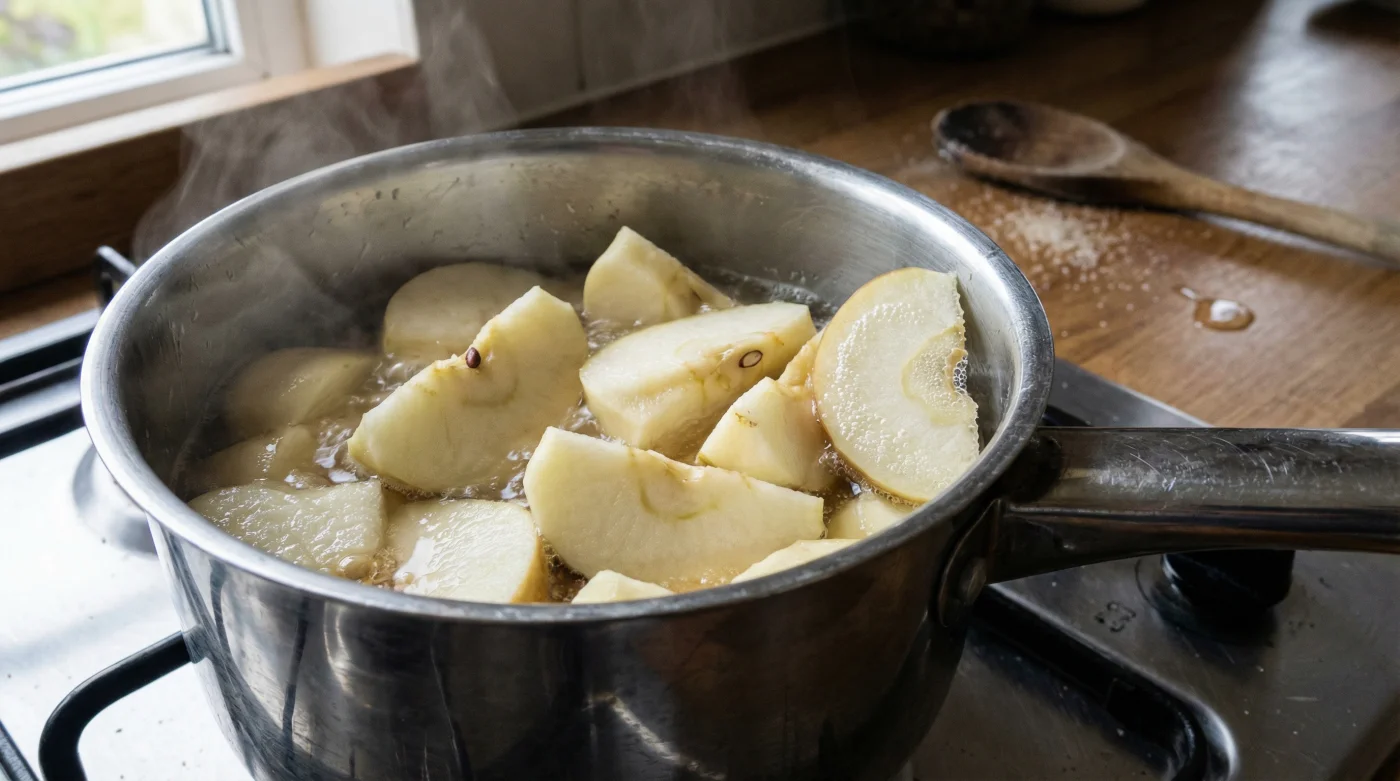
Picture a chilly autumn Sunday afternoon in the kitchen. The windows are misted over, and the sharp, bright scent of green fruit hangs heavy in the air. You have spent an hour rolling butter into flour, carefully resting the dough, and crimping the edges of your pie dish, anticipating that perfect, comforting slice. But when you cut through the golden, flaky crust, the filling collapses. Instead of proud, distinct chunks of tender fruit, a watery puree oozes out onto the plate. The heartbreak of the mushy Bramley apple pie is a familiar frustration for many British home cooks, born from a fundamental misunderstanding of the fruit itself.
The Architecture of the Orchard
We are often taught that hard cooking apples require aggression on the stove. Your instinct is to drop them into a pan of water and crank up the heat, assuming a rapid, rolling boil is necessary to soften their stubborn rawness. But treating a Bramley apple this way is like trying to warm a glasshouse with a blowtorch. The Bramley possesses a beautifully delicate cellular structure, held together by fragile pectin bonds.
When you subject these apples to a fierce boiling phase, the water inside their cells rapidly expands and explodes. The structure shatters instantly, turning your carefully prepped slices into a disorganised applesauce. To maintain a perfect pie structure, you must bypass this aggressive heat entirely. Gentle, low-heat poaching is the absolute requirement. It allows the fruit to soften while maintaining its structural integrity.
| Home Cook Profile | Core Frustration | Benefit of the Poaching Method |
|---|---|---|
| The Weekend Baker | Soggy pastry bottoms from watery puree. | Firm fruit that retains its own juices. |
| The Batch Prepper | Fillings turning to mush upon reheating. | Distinct slices that survive freezing and baking. |
| The Beginner | Unpredictable baking times for the filling. | Complete control over the fruit’s texture beforehand. |
I learned this lesson the hard way, until I spent a morning baking with Eleanor, a retired pastry chef from Somerset. Her hands moved with a quiet, deliberate rhythm as she peeled her fruit. I watched her place the pale green slices into a wide, shallow pan with a mere splash of water and a knob of butter. She never once let the liquid reach a boil. “You have to listen to the fruit,” she told me, adjusting the dial to the lowest setting. “A Bramley breathes. If you boil it, it suffocates and collapses.” She treated the poaching liquid like a warm bath, allowing the heat to gently permeate the apple.
| Heat Phase | Cellular Reaction | Textural Outcome |
|---|---|---|
| Rapid Boil (100°C) | Intracellular water vaporises and ruptures cell walls. | Mushy, formless puree with excess liquid bleed. |
| Gentle Simmer (90°C) | Pectin breaks down too quickly unevenly across the slice. | Soft edges with a stubbornly hard, raw centre. |
| Low Poach (75-80°C) | Pectin dissolves slowly while cell walls remain largely intact. | Tender, distinct slices that hold their shape perfectly. |
Mastering the Gentle Poach
Implementing this technique requires nothing more than a slight shift in your attention. Begin by peeling your apples and slicing them slightly thicker than you normally would. A centimetre in thickness gives the fruit enough backbone to survive the gentle heat.
Use a wide, heavy-bottomed pan. This ensures the heat is distributed evenly, rather than scorching the fruit trapped at the bottom. Add your sugar, a splash of water, and your spices. Bring this liquid to a gentle warmth before adding the fruit.
- Arborio rice loses its signature creamy texture missing this frozen butter addition.
- Fresh basil leaves turn homemade pesto unappetisingly brown skipping this rapid blanching.
- Jus-Rol puff pastry shrinks entirely during baking skipping this mandatory fridge rest.
- King Edward potatoes achieve glass-like roasting crunches adding this microscopic semolina dusting.
- Chicken breasts turn completely rubbery bypassing this crucial overnight buttermilk soak.
The cooking process is brief. After five to eight minutes, test a slice with the tip of a paring knife. It should yield with a slight resistance, entirely losing its raw crunch but refusing to fall apart. Immediately remove the pan from the heat and transfer the fruit to a wide tray to cool completely before it ever touches your pastry.
| Stage of Prep | What to Look For | What to Avoid |
|---|---|---|
| Slicing | Thick, uniform, 1cm wedges. | Paper-thin or wildly uneven pieces. |
| Heating | Lazy, sparse bubbles at the edge of the pan. | Rolling, aggressive boiling in the centre. |
| Cooling | Spreading the filling on a cold metal tray. | Leaving the fruit stacked in the hot pan. |
Beyond the Crust: A Slower Rhythm
This subtle adjustment in the kitchen is about more than just aesthetics. By refusing to rush the process, you step back into a calmer, more mindful rhythm. You stop fighting the ingredient and start working alongside it. There is a profound satisfaction in slicing into a pie you have crafted with intention, watching the steam rise from perfectly intact, golden-green wedges of fruit.
Baking should not feel like a battle against the clock or the stove. When you respect the delicate nature of the Bramley apple, you elevate a humble Sunday pudding into something deeply professional. It is a quiet victory, secured long before the pie ever reaches the oven.
“A Bramley apple asks for a gentle coaxing, not a trial by fire.”
Frequently Asked Questions
Can I use eating apples like Cox or Gala instead?
Eating apples hold their shape naturally because they lack the high acidity and fragile pectin of a Bramley, but they will not provide that classic, sharp British pie flavour.Do I need to add lemon juice to the poaching liquid?
A squeeze of lemon helps prevent browning while you prep, but the Bramley is naturally tart enough that it is not strictly required for the poaching phase.How do I stop my pie crust from going soggy underneath?
Cooling the poached apples completely before filling your pie is crucial. Hot fruit creates steam, which melts the raw pastry before it has a chance to bake.Can I freeze the poached filling?
Yes. Once cooled, store the distinct slices in an airtight container in the freezer for up to three months. Thaw gently in the fridge before use.Why add butter to the poaching pan?
A small knob of butter emulsifies with the apple juices and sugar, creating a rich, glossy coating that surrounds the fruit rather than a watery syrup.