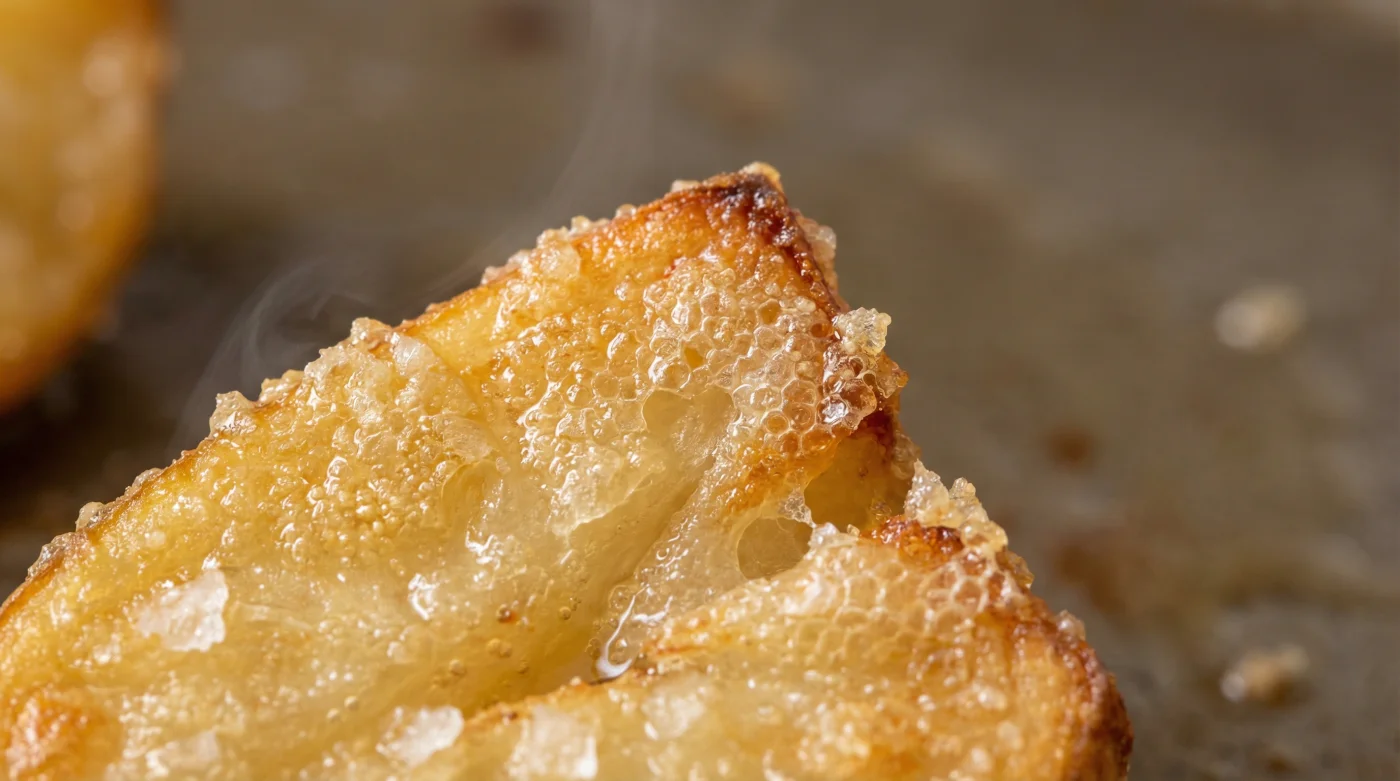
It is two o’clock on a Sunday afternoon. The kitchen windows are fogged, the air thick with the rich, heavy scent of rendering beef dripping and roasted rosemary. You pull the heavy roasting tin from the oven, expecting that glorious, sharp scraping sound as your metal spatula meets the bottom of the pan. Instead, you are met with a soft, yielding resistance. A dull thud. The edges of your potatoes are leathery, their centres dense. The golden promise of the King Edward potato has been betrayed by a lacklustre crust.
For generations, we have been told that a perfect, glass-like crunch relies entirely on the temperature of the fat. We heat oil until it smokes, risking life and limb as we carefully lower damp potatoes into the sputtering inferno. Yet, we still end up with roasties that lose their crispness the moment they hit the gravy.
The truth is, heat and oil alone cannot build the architecture of the crunch. They require scaffolding.
The Illusion of the Sizzling Fat
To understand the perfect roast potato, you must reconsider the geography of its crust. If you rely purely on the natural starch of the potato hitting hot oil, you are only crisping a flat, smooth surface. Hot oil only fries what it physically touches. If the potato is relatively smooth, the crunch will be fragile and fleeting.
Years ago, I stood in the draughty, chaotic kitchen of a rural Yorkshire pub, watching an old chef named Arthur prepare his Sunday service. He did not rely on exotic fats or expensive equipment. Instead, as his parboiled potatoes sat steaming in a battered aluminium colander, he reached for a cheap bag of fine semolina—the sort that costs less than a pound at the local corner shop.
He tossed a handful of the pale yellow dust over the steaming spuds and shook the colander violently. “You have to rough them up,” he told me, watching the edges fray and coat themselves in the fine flour. “Give the oil a landscape to grab onto.” By introducing this microscopic, coarse grain to the damp, fluffy exterior of the potato, he was multiplying its surface area tenfold.
| The Cook’s Profile | The Frustration | The Semolina Advantage |
|---|---|---|
| The Sunday Host | Potatoes go soft while resting the meat. | The semolina crust holds its glass-like shatter for over 40 minutes out of the oven. |
| The Texture Chaser | Roasties are crispy outside but tough to bite. | Creates a microscopic, brittle shell that gives way to a cloud-like interior instantly. |
| The Budget Cook | Wasting money on expensive goose fat to force a crunch. | Achieves superior crispiness even in standard sunflower oil. |
The Alchemy of the Colander Chuff
Putting this into practice requires a mindful touch, rather than blindly following a recipe. It begins with the potato itself. The King Edward is the undisputed monarch of the roasting tin. Its dry, floury nature means it turns exceptionally fluffy when boiled, creating the perfect foundation for our semolina paste.
Peel your potatoes and cut them into large, jagged chunks. You want sharp angles, not smooth spheres. Submerge them in cold, heavily salted water—it should taste like the sea—and bring them to a vigorous boil. Let them cook until a knife meets gentle resistance at the centre, but the outside begins to look slightly cracked.
- Lurpak butter blocks face unprecedented supermarket price hikes following Danish dairy shortages.
- Icing sugar transforms into professional bakery glazes adding this boiling water splash.
- Flank steak remains incredibly chewy ignoring this specific diagonal cutting direction.
- Aubergine slices absorb immense frying oil missing this preliminary rapid microwave blast.
- Bread flour fails to develop gluten skipping this crucial initial water hydration.
| Component | Technical Function | The Result |
|---|---|---|
| King Edward Potato | High dry-matter content (around 22%). Cells swell and burst easily during parboiling. | Creates a deeply fluffed exterior ready to bond with the dusting. |
| Semolina (Durum Wheat) | Coarse, high-protein granules that do not absorb water as quickly as plain flour. | Remains distinct on the surface, frying into thousands of tiny, glass-like shards. |
| Resting Phase | Evaporates surface steam, lowering the moisture content of the outer 2mm of the potato. | Prevents the semolina from turning into a thick, chewy batter. |
Once the steam subsides, sprinkle one rounded tablespoon of fine semolina over the potatoes for every kilogram of spuds. Shake the colander firmly. You are aiming to bruise the edges, allowing the potato starch and the semolina to mash together into a shaggy, golden coating.
When these battered, dusted chunks finally hit your hot fat—whether it is beef dripping, goose fat, or standard vegetable oil—the hundreds of tiny semolina ridges immediately fry. Because semolina is milled from hard durum wheat, it browns deeply and retains a brittle, glass-like snap that plain wheat flour simply cannot match.
| Quality Checklist | What to Look For | What to Avoid |
|---|---|---|
| The Parboil | Edges look fuzzy; the water turns slightly cloudy with released starch. | Potatoes falling apart in the water; sharp, hard edges. |
| The Dusting | A light, even, pale yellow coating resembling rough sand. | Clumps of wet, white paste sticking in heavy patches. |
| The Roast | Turning them only once after a solid crust has formed on the bottom. | Fidgeting and turning them constantly, which breaks the delicate semolina shell. |
The Anchor of the Sunday Table
The roast potato is the emotional anchor of the British Sunday lunch. If the beef is slightly overdone, or the gravy is a touch thin, a magnificent, shattering roast potato provides instant forgiveness. The crunch is deeply satisfying, a textural contrast that wakes up the palate amidst the rich meats and soft vegetables.
By understanding the mechanics of that crunch—by treating the potato not just as a vegetable, but as a surface waiting to be engineered—you remove the stress of the Sunday roast. The semolina dusting is a quiet, reliable insurance policy. It guarantees that when you bring that tin to the table, the sound of the spoon breaking through the crust will turn every head in the room.
“The secret to a memorable roast does not lie in the heat of the oven, but in the texture of the raw canvas you put into it; give the oil a landscape to fry, and it will reward you with a shatter.”
Frequently Asked Questions
Can I use plain flour instead of semolina?
You can, but the result will be a thicker, chewier crust. Semolina is much harder and coarser, which is what creates the distinct glass-like shatter rather than a batter-like shell.Do I need to use goose fat for this to work?
Not at all. While goose fat offers a wonderful flavour, the semolina guarantees a massive crunch even if you use standard vegetable or sunflower oil. The texture comes from the dusting, not the fat.Why do my potatoes fall apart when I shake them?
You have likely over-boiled them. Parboil them just until the outer edges soften, but the core remains firm enough to hold the potato together during a vigorous shake.Can I prepare these in advance?
Yes. You can parboil, steam-dry, and dust the potatoes with semolina up to a day in advance. Keep them uncovered in the fridge; the cold air will dry them out further, actually improving the final crunch.Is polenta the same as semolina for this hack?
They act similarly, but semolina is made from wheat and polenta from corn. Polenta will give a very crunchy, slightly grainier texture and a deeper yellow colour, which is a fantastic substitute if you want a gluten-free option.