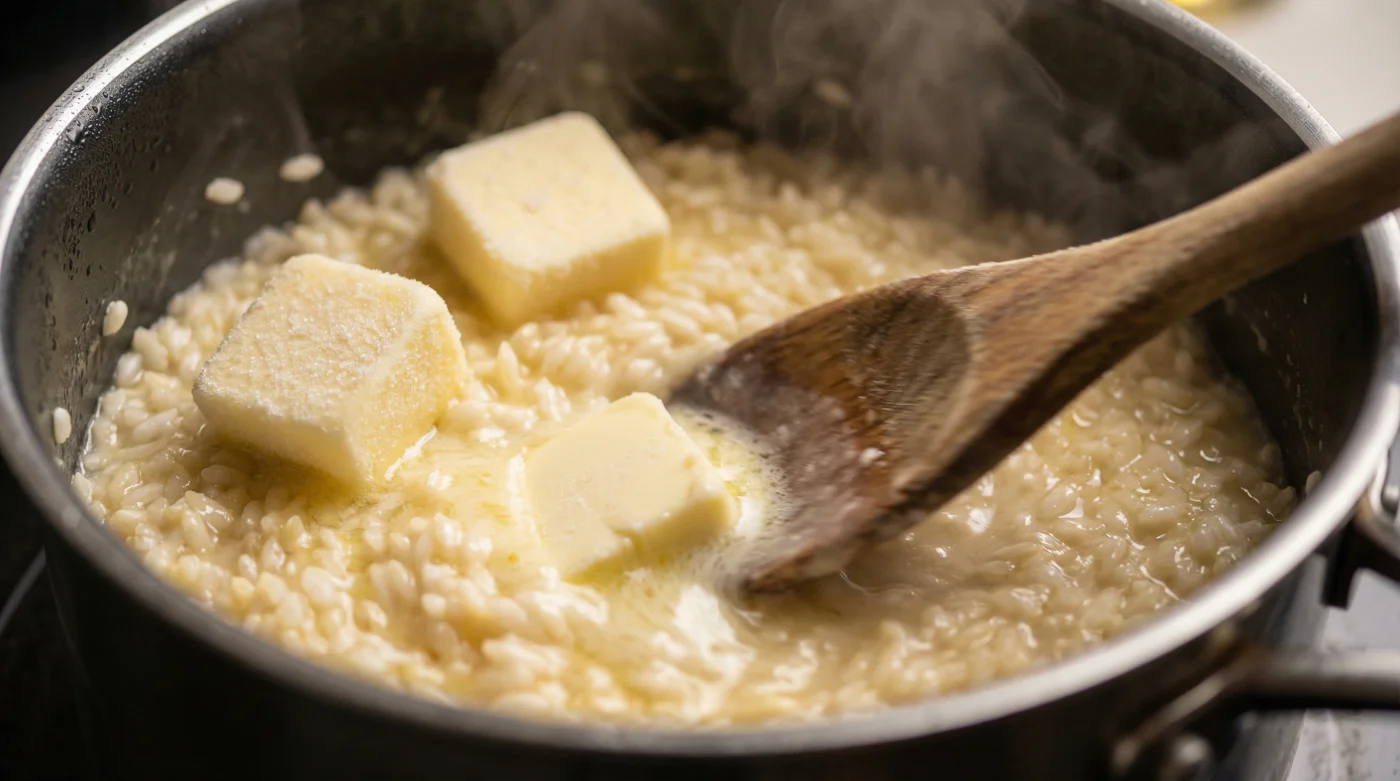
You are standing over the hob, the wooden spoon feeling heavy in your palm. The air smells earthy, rich with white wine and toasted Arborio grains. For the last twenty minutes, you have played your part perfectly, ladling hot chicken stock, stirring in a relentless figure of eight, waiting for that magical transformation. Yet, as the final drop of liquid vanishes, what sits in your pan is merely wet rice. It tastes fine, but it lacks the glossy, cascading ripple you find in a proper Italian trattoria. It feels stodgy. The frustration settles in your shoulders as you wonder where you went wrong.
The Illusion of the Endless Stir
There is a persistent myth in British home kitchens that the secret to creamy risotto is endless, back-breaking friction. We are led to believe that if you just agitate the grains long enough, the Arborio will eventually surrender its starch and create a sauce. But relying on stirring alone is like trying to build a house using only mortar. You are extracting the starch, yes, but you are not binding it into an emulsion.
The true heart of the dish is a process the Italians call mantecatura. This is the moment of structural tension. It is the violent collision between steaming hot starch and freezing cold fat. When you beat ice-cold butter into off-heat risotto, the sudden temperature shock forces the fat to suspend perfectly within the starchy liquid, creating a thick, velvety cream that never splits.
| Target Audience | Specific Benefits of Mantecatura |
|---|---|
| The Exhausted Stirrer | Saves energy. The heavy lifting is done in the final thirty seconds, not across twenty minutes. |
| The Dinner Party Host | Guarantees a restaurant-quality, glossy finish that holds its shape on a flat plate. |
| The Budget Cook | Elevates a £2 bag of supermarket Arborio into a luxury meal using just a knob of butter. |
I remember standing in a cramped Soho kitchen years ago, watching a seasoned head chef prepare a wild mushroom risotto. As I reached to keep stirring the pan on the flame, he gently batted my hand away. ‘Stop torturing it,’ he muttered. He pulled the heavy copper pan completely off the heat, let it breathe for a full minute, and then produced a solid block of freezing butter from the depths of the icebox. He threw a chunk in and began to shake the pan violently while beating the rice with a wooden spatula. Within seconds, the pale mixture transformed into liquid velvet. It was a revelation.
| Mechanical Logic | The Scientific Reaction |
|---|---|
| Off-Heat Resting | Allows the boiling temperature to drop slightly, preventing the fat from immediately separating into an oily slick. |
| Freezing Cold Butter | Melts slowly. The gradual introduction of fat droplets allows them to be coated by the starch molecules. |
| Vigorous Beating | Provides the kinetic energy required to force the oil and water components into a stable, unified emulsion. |
The Physical Art of Emulsion
To master this technique in your own kitchen, you need to change your rhythm. When your Arborio rice is just cooked—still retaining a tiny bite in the centre, what we call al dente—turn the heat off entirely. Do not rush. Pull the pan onto a cool ring. Give the rice sixty seconds to settle. This brief pause drops the temperature just enough to stop the dairy from splitting.
Now, take your frozen butter out of the freezer. You only need a piece the size of a walnut for a two-person portion. Drop it into the centre of the rice. Using a wooden spoon or spatula, begin to beat the mixture vigorously. Do not gently fold; you want to create a rapid, thrashing motion, shaking the pan back and forth with your other hand. You will hear a distinct, rhythmic slapping sound as the starch and fat bind together.
- Yorkshire puddings achieve towering heights swapping milk for this carbonated water.
- Walkers Crisps trigger urgent national supermarket removals over undeclared mustard allergen risks.
- Lurpak butter blocks face unprecedented supermarket price hikes following Danish dairy shortages.
- Icing sugar transforms into professional bakery glazes adding this boiling water splash.
- Flank steak remains incredibly chewy ignoring this specific diagonal cutting direction.
| What to Look For | What to Avoid |
|---|---|
| A ‘wave-like’ consistency when shaking the pan. | A stiff mound that holds the shape of the spoon. |
| A brilliant, reflective sheen on the surface. | Pools of yellow oil around the edges of the plate. |
| A slightly firm core to the rice grain. | Mushy, broken grains that resemble porridge. |
Finding Rhythm in the Rest
There is something deeply satisfying about mastering the mantecatura. It shifts the burden of cooking away from relentless, anxious labour and places it into a single, confident flourish. You are no longer nervously hovering over a simmering pan, hoping the rice will miraculously sort itself out. You are taking control.
This simple adjustment—incorporating a shock of frozen dairy at the very end—does more than fix a textural flaw. It changes how you approach the kitchen entirely. It teaches you that sometimes, the most crucial part of a process happens only after you step away from the fire. By understanding the mechanics of your ingredients, you save time, reduce frustration, and finally achieve that perfect, cascading bowl of comfort you have been chasing.
Cooking is a physical dialogue with your ingredients; the pan must come off the fire before the rice can truly sing.
Frequently Asked Questions
Can I use standard fridge-cold butter? While fridge-cold is better than room temperature, freezing the butter ensures the slowest possible melt, giving you more time to beat the emulsion together without the fat splitting into oil.
Do I still need to add Parmesan? Yes, finely grated Parmesan or Grana Padano should be folded in immediately after the frozen butter to reinforce the creamy structure and add a necessary salty punch.
Why must the pan be taken off the heat completely? Residual heat from the hob will cause the butter to melt too quickly, separating the milk solids from the fat, leaving you with a greasy puddle rather than a creamy sauce.
What if my risotto goes too thick during the mantecatura? Keep a small ladle of hot stock or even boiling water nearby. If the beating makes the rice too stiff, splash a little liquid in to loosen it back to a flowing consistency.
Does this work with other grains like Carnaroli? Absolutely. In fact, Carnaroli rice is often preferred by professionals for its higher starch content, which makes the freezing butter emulsion even more stable and luxurious.