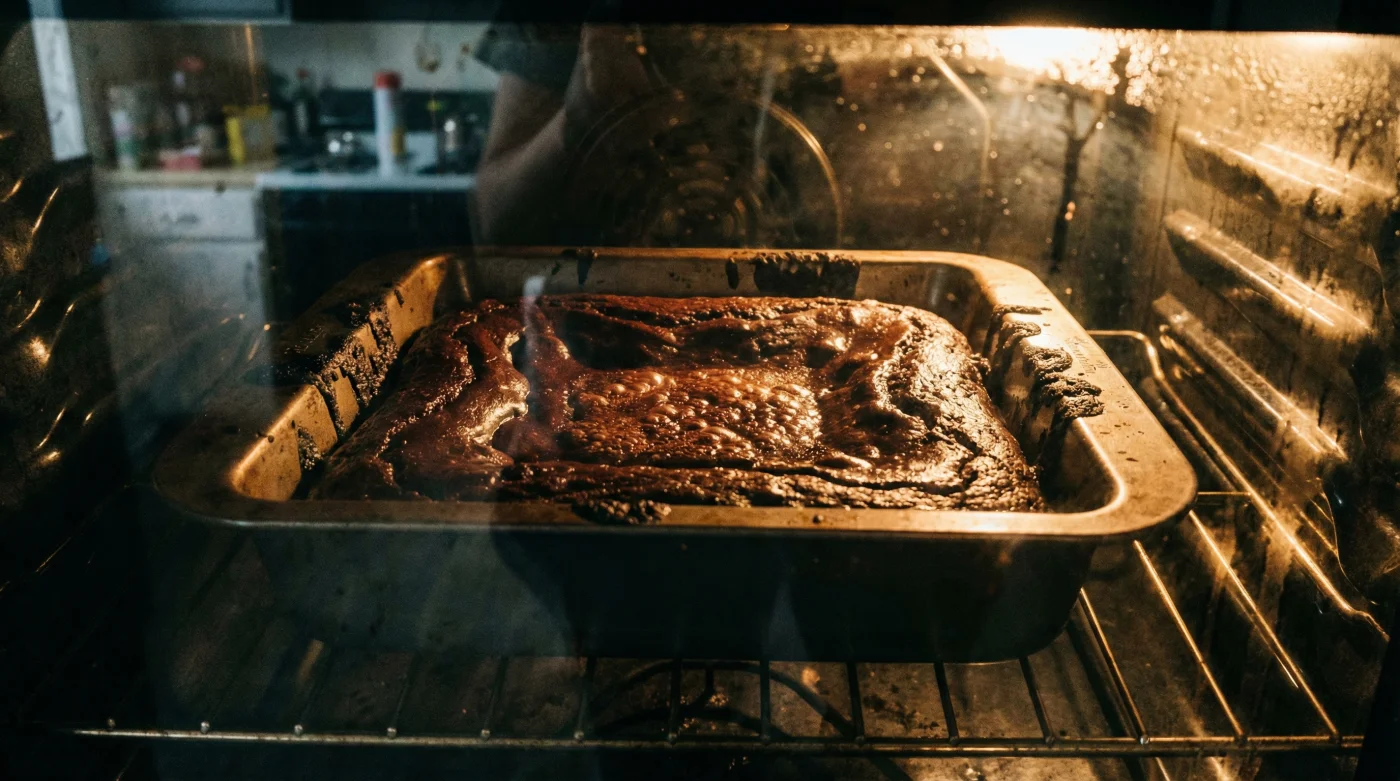
The rich, roasted scent of dark cocoa fills your kitchen, wrapping around you like a heavy winter coat. You pull the baking tin from the oven, heart heavy with anticipation. The edges look immaculate, crinkled and shining like old parchment paper. But as your knife slides through the crust, that familiar disappointment washes over you. The blade pulls away coated in a wet, underbaked swamp. You followed the recipe to the very gram. You tiptoed around the kitchen, treating the oven door like a sleeping child, terrified of causing a collapse. Yet, once again, the perimeter is baked dry while the centre stubbornly refuses to set.
The Myth of the Gentle Bake
For generations, domestic baking has been treated like a fragile truce with gravity. We are taught to fold mixtures with whispered reverence. We are warned that a heavy footstep could ruin an afternoon’s work. But a dense, chocolate brownie is not a delicate cheese soufflé. It demands a completely different conversation with the heat. Think of your batter as a crowded room. As the oven temperature rises, the heat creates pockets of trapped air and steam. These pockets expand, pushing the edges up against the hot metal of the tin, while leaving the middle isolated, insulated, and raw. The traditional gentle approach allows this structural imbalance to thrive. The air acts as a barrier, preventing the core from absorbing the heat it desperately needs to transform from a liquid pool into a fudgy delight.
Enter Sarah, a veteran pastry chef who used to run a tiny, frantic bakery tucked away in Soho. I recall standing in her kitchen, surrounded by the clatter of metal bowls and the permanent haze of icing sugar. I watched her pull a massive, commercial tray of bubbling cocoa batter halfway through its bake. Instead of sliding it delicately back onto the rack, she lifted the heavy tin four inches into the air and slammed it down against the stainless steel bench. The crack echoed sharply over the hum of the industrial mixers. ‘You have to show it who is boss,’ she grinned, noticing my shock. That aggressive, physical jolt forces the expanding air out. It violently flattens the overzealous edges and forces the dense mixture back onto itself, ensuring the heat distributes evenly into that stubborn middle.
| Target Audience | Specific Benefits |
|---|---|
| The Fudgy Purist | Eliminates the dry, cakey texture completely by expelling excess trapped air. |
| The Edge-Piece Lover | Creates a pronounced, chewy perimeter that caramelises without burning. |
| The Baking Novice | Fixes the dreaded raw middle issue without requiring complex temperature maths. |
The Art of the Mid-Bake Shock
This technique is a deliberate, physical intervention. You are no longer just a passive observer waiting for a timer to chime; you are actively sculpting the texture mid-flight. About fifteen minutes into your bake, you will notice a change. The edges of the batter will just start to puff up, forming a pale, elevated ridge while the centre remains sunken and glossy. This is your moment. Put on your thickest oven gloves. Open the oven door smoothly but quickly, feeling that wave of dry heat brush past your face. Pull the metal rack out just far enough to get a secure grip on the tin.
Lift the tin roughly three to four inches above the wire rack. Do not hesitate. Drop it. You want a solid, decisive thud to echo in the oven cavity. You will literally see the batter sigh and deflate, the puffed edges collapsing back into the dense mass. If the puff is particularly severe, give it a second drop. Push the rack back into place, shut the door firmly, and let the residual heat finish the job. This singular act of culinary aggression compacts the crumb structure, sealing the fate of those raw centres.
| Baking Phase | Aeration State | Thermal Action |
|---|---|---|
| 0-15 Minutes | Rapid expansion of trapped steam and carbon dioxide. | Edges cook rapidly and climb the walls of the tin. |
| The Drop (15 mins) | Sudden, forced structural collapse of internal air pockets. | Density increases instantly, driving ambient heat into the core. |
| 15-25 Minutes | Flat, heavily compacted internal crumb structure. | Centre reaches a safe baking temperature without the edges drying out. |
Refining the Impact
- Garlic cloves shed their papery skins instantly shaking inside glass jars.
- Porridge oats develop premium creamy textures skipping the traditional milk boiling.
- Mashed potatoes turn terribly gluey mashing them directly after draining water.
- Greggs sausage rolls undergo controversial pastry alterations sparking widespread customer backlash.
- Roast chicken develops intensely crispy skin sitting uncovered in refrigerators overnight.
| Quality Checklist | What to Look For | What to Avoid |
|---|---|---|
| Tin Material | Heavy-gauge aluminium or sturdy steel for maximum impact transfer. | Thin silicone moulds, which absorb the shock entirely. |
| Batter Temperature | Room temperature eggs and butter for a swift, even initial rise. | Fridge-cold batter, which stubbornly resists the necessary first puff. |
| The Drop Height | A confident 3 to 4 inches above a solid surface or sturdy oven rack. | Tapping lightly, which does nothing, or dropping from too high, risking hot fat splatters. |
A Masterclass in Letting Go
Why does this simple, violent act feel so profoundly satisfying? Perhaps because baking is too often portrayed as an exercise in high-stakes anxiety. We fret over collapsed sponge cakes, sunken loaves, and fallen pastries. We hold our breath. The pan-banging technique is a joyful rebellion against that rigid perfectionism. It teaches you that sometimes, a little controlled chaos is exactly what is needed to coax out the richest, most rewarding results. It strips away the fear of failure.
When you embrace this method, you stop treating your ingredients like fragile glass. You begin to understand the mechanics of the food you are creating. It transforms a frustrating, passive guessing game into a reliable, physical rhythm in your kitchen. You will slice into that cooled block of chocolate, feeling the dense, heavy resistance against the blade, and know exactly how you engineered that perfect, fudgy centre.
Baking is rarely a whisper; sometimes a firm, decisive hand is the only way to build a proper, dense crumb.
Frequently Asked Questions
Will this technique work with standard supermarket box mixes?
Yes, it works brilliantly to remove the artificial, cakey texture that most box mixes naturally develop, lending them a much more premium density.Does the type of sugar I use affect the drop?
Caster sugar melts faster for a crisp top, but substituting half with light brown sugar adds the heavy moisture needed for that fudgy shock to truly take hold.Can I use this aggressive method with blondies?
Absolutely. The structural logic of a blondie is identical to a brownie, just without the heavy cocoa solids, so the deflating principle applies perfectly.Will slamming the heavy tin damage my oven rack?
A three-inch drop of a standard baking tin is perfectly safe for typical metal oven racks, provided they are seated correctly on their runners.How do I know exactly when to bang the tin?
Look for the visual cue: the edges rising visibly higher than the wet centre, usually occurring right around the halfway mark of your total baking time.