It is a familiar Sunday rhythm. The kitchen windows are fogged with condensation, carrying the rich, savoury scent of roasting beef. You hear the spit and sizzle of hot fat from the oven. You have followed the recipe to the letter. You whisked the eggs and milk, left the bowl on the counter to reach room temperature, and poured the mixture into the tin. Yet, when you finally pull the oven door open, your heart sinks. Instead of towering, golden crowns of pastry, you are staring at a tray of dense, rubbery discs. They look like sad, deflated pancakes sitting in pools of oil. The disappointment is physical.
The Thermal Slingshot: Rethinking the Rise
For decades, well-meaning cookbooks and television chefs have perpetuated a gentle myth: that Yorkshire pudding batter must be at room temperature before it meets the hot oil. The theory suggests a warm batter will not lower the temperature of the fat. It sounds logical, but it denies the very physics of a spectacular rise.
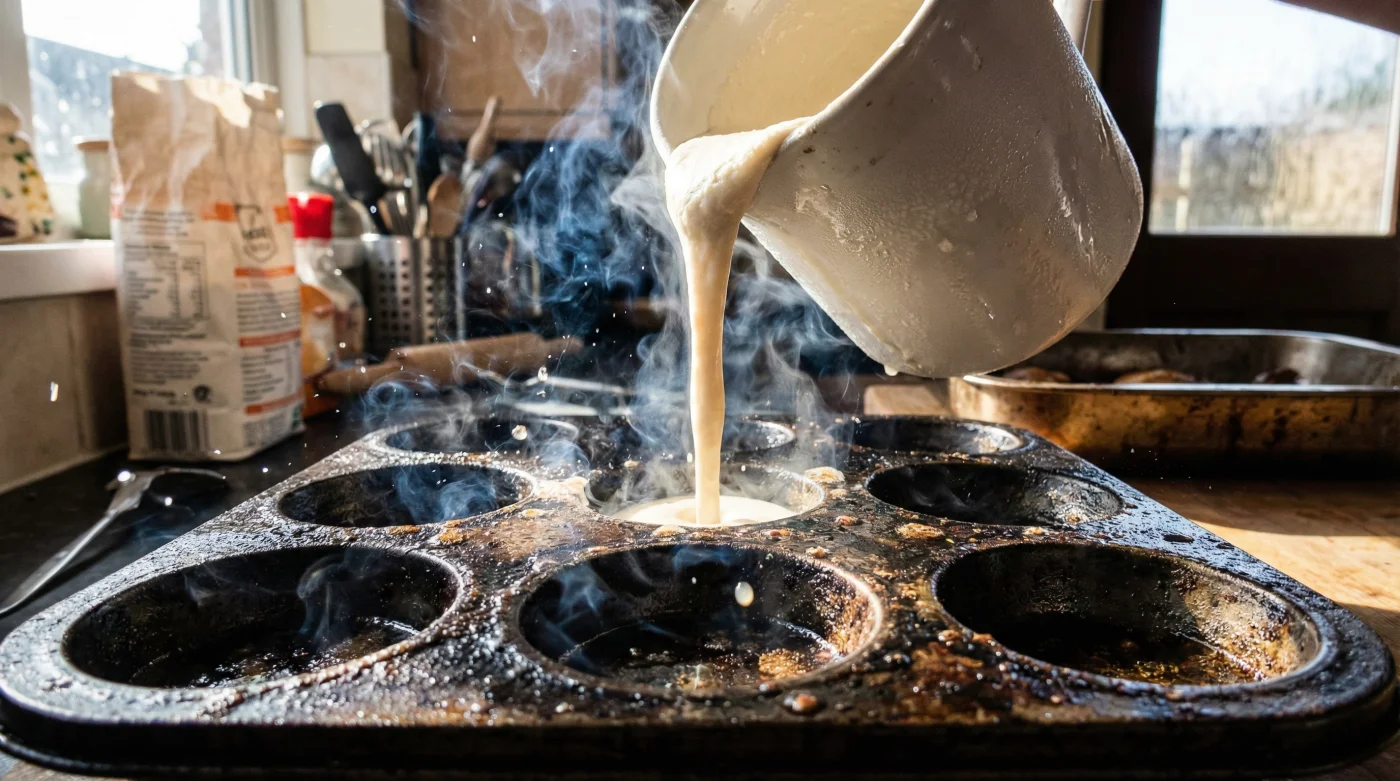
Think of your batter as a drawn bowstring. To achieve maximum height, you need explosive, aggressive tension. If you pour a lukewarm mixture into hot oil, the reaction is lazy. It simply cooks. But when heavily chilled, fridge-cold batter collides with smoking hot beef dripping, you create a violent, beautiful collision. The water in the freezing batter instantly turns to steam upon hitting the two-hundred-degree fat, violently pushing the flour and egg matrix upwards before it has time to set.
| The Home Cook | The Specific Benefit of the Overnight Chill |
|---|---|
| The Anxious Host | Zero Sunday morning prep; the batter rests safely in the fridge while you manage the roast. |
| The Perfectionist | Guaranteed dramatic height and crisp, structural integrity that will not collapse under gravy. |
| The Frugal Cook | Maximises the volume of basic, inexpensive ingredients (flour, eggs, milk) into a spectacular side dish. |
I learned this from Simon, a pub landlord in North Yorkshire who serves upwards of four hundred Sunday roasts every weekend. His puddings are legendary—towering, crisp, and hollow enough to hold a pint of gravy. Standing in his frantic kitchen, I watched him pull plastic jugs of batter directly from the walk-in fridge. The mixture was so cold the condensation beaded on the plastic. "You want it shivering," he told me, pouring the icy liquid into a tray of smoking fat. The noise was a sharp, aggressive crackle. "Room temperature batter just sits there. Cold batter fights back. That fight is what gives you the height."
| The Science of Thermal Shock | The Mechanical Logic |
|---|---|
| Starch Hydration (Overnight) | Flour particles fully absorb the milk, swelling to create a thicker, more robust structure. |
| Gluten Relaxation | Resting stops the batter from being tough or chewy, allowing it to stretch endlessly upward. |
| Temperature Differential | A 4C batter hitting 220C fat creates a 216-degree gap, causing instantaneous, rapid steam expansion. |
The Cold Truth in Practice
To master this, you need to change your routine. The magic happens while you are sleeping. On Saturday evening, measure out equal volumes of eggs, plain flour, and milk. Do not weigh them; use a mug or a measuring jug to ensure the volume is identical.
Whisk the mixture until it resembles smooth double cream. Do not overwork it. Transfer the liquid to a jug, cover it tightly, and place it in the coldest part of your fridge. Leave it there. As you sleep, the flour grains swell, absorbing the liquid, while the gluten you aggravated by whisking slowly relaxes.
On Sunday, when the beef comes out to rest, turn your oven up to 220C (200C fan). Put a small lump of beef dripping or a splash of vegetable oil into each hole of your pudding tin. Place the empty tin into the roaring oven for at least ten minutes until the fat is literally smoking.
| Quality Checklist | What to Look For | What to Avoid |
|---|---|---|
| The Fat | Beef dripping, goose fat, or sunflower oil smoking heavily in the tin. | Butter or olive oil, which will burn bitterly at high temperatures. |
| The Batter State | Fridge-cold, resting completely still in the jug. | Vigorous re-whisking just before pouring, which ruins the rested gluten. |
| The Oven Environment | Fiercely hot, door kept firmly shut for the entire baking time. | Opening the door halfway through to peek, which collapses the structure. |
- Garlic cloves shed their papery skins instantly shaking inside glass jars.
- Porridge oats develop premium creamy textures skipping the traditional milk boiling.
- Mashed potatoes turn terribly gluey mashing them directly after draining water.
- Greggs sausage rolls undergo controversial pastry alterations sparking widespread customer backlash.
- Roast chicken develops intensely crispy skin sitting uncovered in refrigerators overnight.
A Sunday Reclaimed
Adopting this overnight, heavily chilled method does more than just fix a culinary frustration. It changes the entire mood of your Sunday afternoon. You are no longer scrambling at the last minute with whisks and flour-covered counters while trying to carve a joint of meat.
By shifting the labour to the night before, you buy yourself a moment of calm. You can enjoy a glass of wine, tend to the gravy, and watch through the oven glass as your Yorkshire puddings rise into magnificent, towering golden structures. It is a small shift in technique, but it returns a sense of effortless pride to your kitchen table.
The secret to a towering Yorkshire pudding is not in the whisking, but in the waiting; let the cold batter fight the smoking fat, and gravity will always lose.
Frequently Asked Questions
Can I use semi-skimmed milk for the batter?
Yes, you can use semi-skimmed milk, though whole milk provides a slightly richer flavour and a better crust due to the higher fat content.How long is the minimum time the batter should stay in the fridge?
While overnight is optimal for full hydration and chilling, an absolute minimum of two hours in the coldest part of the fridge will still give you a decent thermal shock.Do I need to stir the batter again after it has been in the fridge?
Give it one very gentle stir to reincorporate any liquid that has separated, but do not whisk it vigorously, as this will tighten the rested gluten and restrict the rise.Why do my puddings always stick to the bottom of the tin?
Sticking happens when the oil is not hot enough before the batter goes in, or if you are using a scratched, degraded non-stick tin. Ensure the fat is genuinely smoking before pouring.Can I freeze cooked Yorkshire puddings?
Absolutely. Let them cool completely, freeze them in an airtight bag, and reheat them directly from frozen in a hot oven for four minutes to restore their crispness.