Picture the scene. It is a brisk Tuesday evening, the sort that demands comfort food. Your onions are soft, the garlic is fragrant, and you squeeze a generous ribbon of vivid crimson tomato purée straight into your simmering stock. You stir it through, expecting that hearty, slow-cooked richness to instantly bloom. But twenty minutes later, your ragù carries a harsh, almost metallic tang. It tastes sharp, acidic, and unfinished. It is a familiar frustration. You have built a beautiful foundation, only to have the entire dish taste slightly tinny.
The culprit is not the quality of your ingredients, nor the recipe itself. It is a simple misunderstanding of how this concentrated ingredient behaves. We treat tomato purée as a sauce, a wet addition to be dissolved. But in doing so, we bypass the very technique that draws out its depth.
The Alchemy of the Sizzle
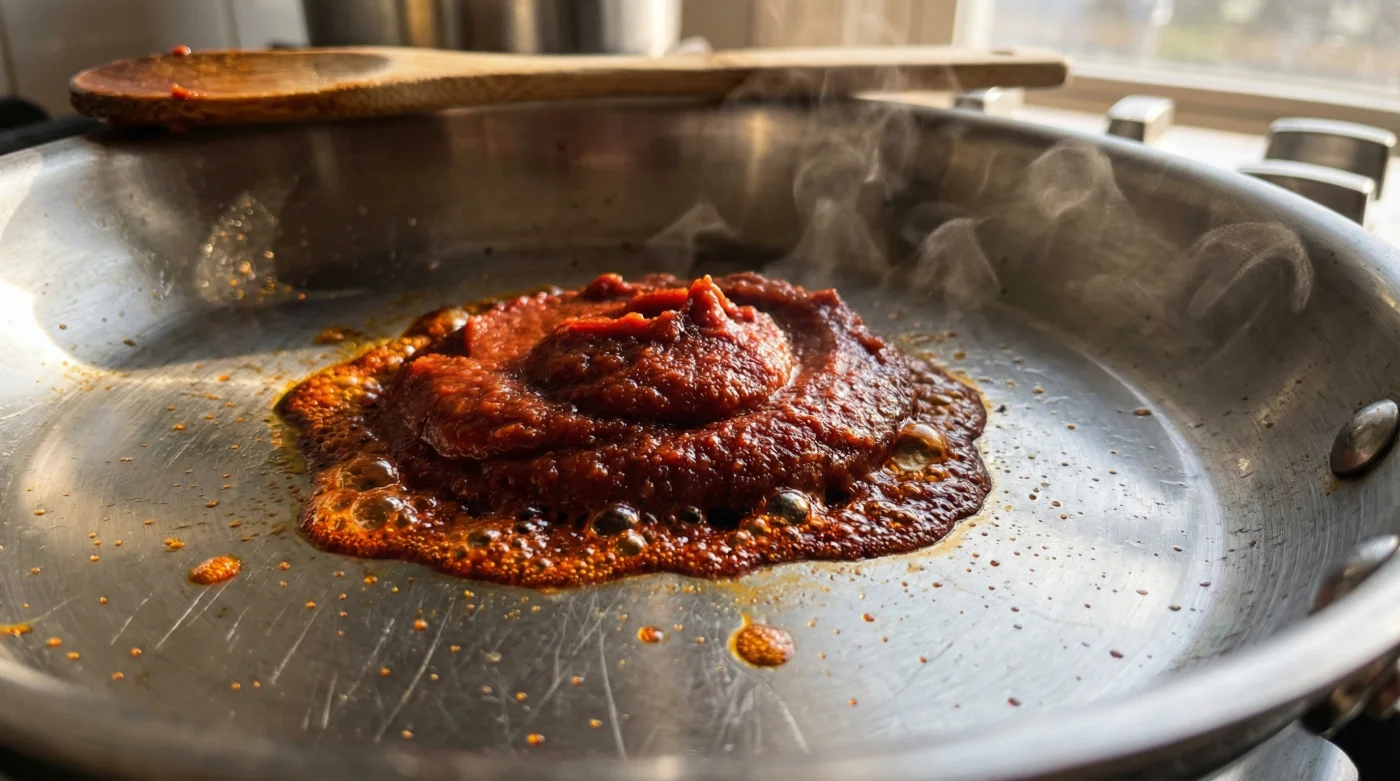
Dropping raw tomato paste into a wet liquid is akin to boiling a raw steak. It cooks, certainly, but it entirely misses the transformation brought about by direct, fierce heat. Tomato purée is dormant. It is packed with natural sugars and intense savoury notes, but it arrives in your kitchen in a raw, highly acidic state. To wake it up, it requires a process of rapid caramelisation.
By frying the purée in a slick of hot olive oil for just two minutes before a single drop of wine or stock hits the pan, you change its chemical structure. You burn away the harsh, vinegary edge and caramelise those dormant sugars. The paste shifts from a bright, artificial-looking scarlet to a deep, rust-like mahogany. It is a minor adjustment to your rhythm, but it alters the entire landscape of your meal.
I learned this watching an older chef in a cramped kitchen behind London’s Borough Market. He treated his base ingredients with a quiet reverence. When the soffritto—the holy trinity of celery, onion, and carrot—was ready, he did not just dump the purée on top. He scraped the vegetables to the outer edges of the heavy iron pan, creating an empty circle in the centre. A glug of olive oil went into the void, followed by the purée. He let it sizzle violently. The aroma in the room shifted from raw acidity to a rich, roasted sweetness. Only then did he stir it all together.
| The Cook | The Frustration | The Benefit of Toasting |
|---|---|---|
| The Batch-Cooker | Bolognese tastes flat even after hours of slow simmering. | Introduces a deep, roasted base note that mimics overnight cooking. |
| The Weeknight Rushing Parent | Quick pasta sauces taste too sharp, forcing the addition of sugar. | Naturally sweetens the sauce in two minutes, eliminating the need for added sugar. |
| The Home Entertainer | Stews and braises lack that restaurant-quality gloss and depth. | Creates a complex umami profile that thickens and enriches the final gravy. |
- Garlic cloves shed their papery skins instantly shaking inside glass jars.
- Porridge oats develop premium creamy textures skipping the traditional milk boiling.
- Mashed potatoes turn terribly gluey mashing them directly after draining water.
- Greggs sausage rolls undergo controversial pastry alterations sparking widespread customer backlash.
- Roast chicken develops intensely crispy skin sitting uncovered in refrigerators overnight.
| Phase | Mechanical Action | Chemical Result |
|---|---|---|
| Raw State | Purée sits at room temperature in the tube or tin. | High concentration of citric acid; sugars are locked and dormant. |
| The Fry (0-60 Seconds) | Moisture evaporates rapidly upon contact with hot oil. | Acids denature and flash off; raw, tinny aroma dissipates. |
| The Caramelisation (60-120 Seconds) | Fructose and glucose undergo the Maillard reaction. | Sugars brown, creating hundreds of new, complex flavour compounds. |
The Two-Minute Transformation
Implementing this requires no extra time, only a slight shift in your attention. When your base aromatics are soft and translucent, push them aside. Introduce a tablespoon of good olive oil to the hottest part of the pan.
Squeeze in your tomato purée. Do not stir it immediately. Let it sit for ten to fifteen seconds until you hear a sharp, rhythmic crackle. This is the sound of the excess water evaporating and the sugars beginning to fry.
Now, begin to work it with your wooden spoon. Move it continuously through the hot oil. You will notice the texture change; it will loosen, then begin to clump slightly as it toasts. Watch the colour intently.
You are looking for a shift from pillar-box red to a dark, brick-dust brown. The moment the scent loses its sharp tang and smells deeply roasted, pour in your wine or stock. The liquid will deglaze the pan, lifting all those intensely savoury notes directly into your sauce.
| Quality Marker | What to Look For | What to Avoid |
|---|---|---|
| Packaging | Aluminium tubes (preserves freshness, prevents rapid oxidation). | Half-used tins left open in the fridge (encourages metallic taint). |
| Ingredients | 100% tomatoes, perhaps a trace of salt. Double concentrated. | Added sugars, artificial thickeners, or chemical preservatives. |
| Origin | Italian origin, specifically Parma or Southern Italy. | Watery pastes with a pale, diluted orange hue. |
Beyond the Tuesday Night Bolognese
This small act of frying your purée extends far beyond pasta sauces. It works wonders for a cottage pie base, fortifies a slow-cooked beef stew, and brings a profound warmth to a simple chilli. It is about understanding that heat is an active ingredient.
Cooking at home is often rushed. We look for shortcuts, pouring everything into a pot and hoping time will do the heavy lifting. But taking two minutes to stand over the stove, watching the colour of an ingredient shift, is a grounding experience. It connects you to the physical reality of your food.
Next time you reach for that humble tube of purée, resist the urge to squeeze it directly into the broth. Give it the heat it deserves. The richness you pull from the pan will taste entirely different. It will taste, quite simply, like it was cooked by someone who understands the quiet language of the kitchen.
“A pan is a stage, and tomato purée needs the spotlight of hot oil to rehearse before the rest of the cast joins the scene.”
Frequently Asked Questions
Can I use butter instead of olive oil for this process?
You can, but you must watch it carefully. Butter contains milk solids that burn at high temperatures, so a mix of butter and a splash of olive oil works best to prevent scorching.
Does this rule apply to passata or tinned chopped tomatoes?
No. Passata and chopped tomatoes have a high water content meant for simmering. This dry-frying technique is exclusively for concentrated purée.
What happens if I accidentally burn the purée?
If it turns black and smells acrid, it is best to wipe out the pan and start again. Burnt tomato paste will impart a bitter, ruined flavour to the entire dish.
Do I still need to add sugar to my ragù if I do this?
Usually, no. Caramelising the purée naturally enhances the inherent sweetness of the tomatoes, completely eliminating the need for added refined sugar.
Is double-concentrated purée better than standard?
Absolutely. Double-concentrated (doppio concentrato) has less water and a more intense flavour profile, making it much easier to toast rapidly in the pan.