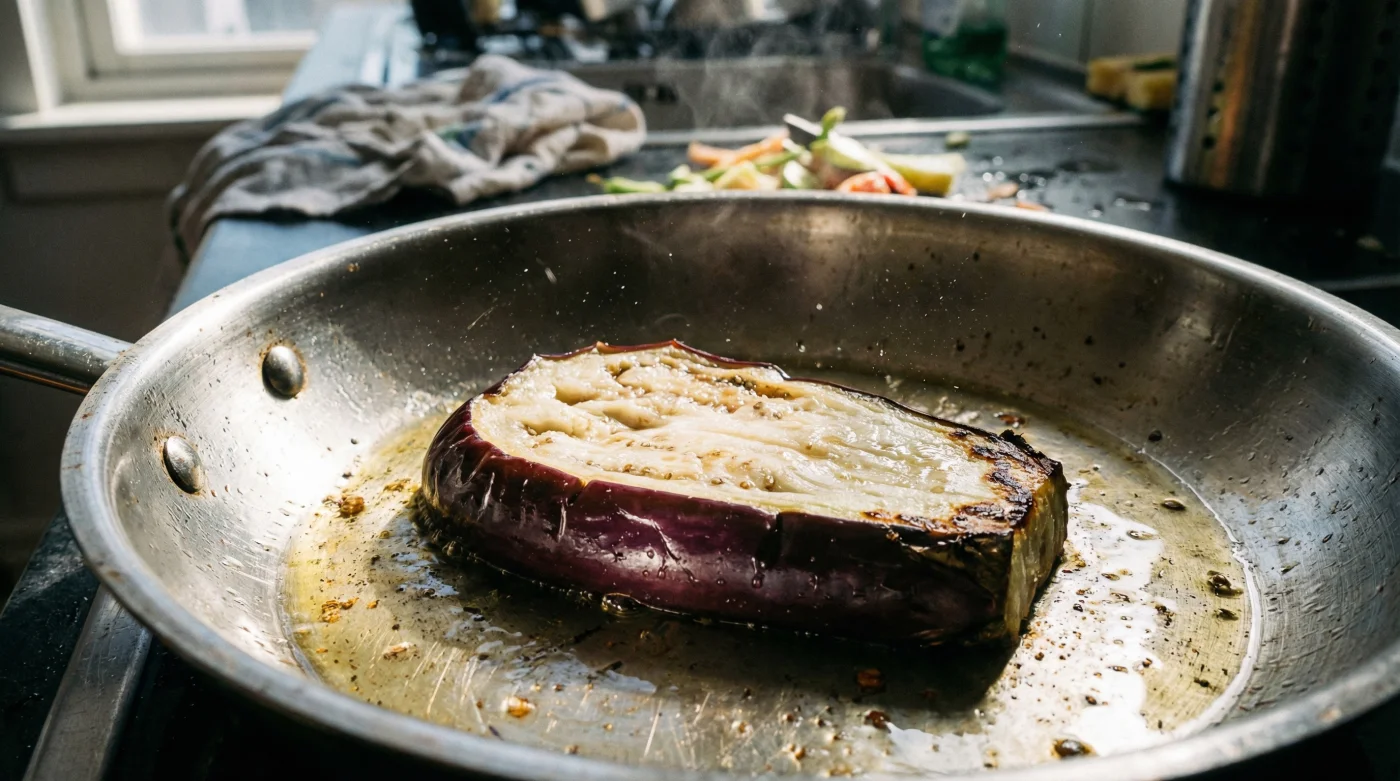
You stand by the hob, watching the golden olive oil ripple in the pan. You slide in the beautiful, pale discs of aubergine, expecting a satisfying, energetic sizzle. Instead, there is a hollow slurping sound. Within seconds, the pan is bone dry. The aubergine has drunk half a bottle of your best extra virgin olive oil, transforming from a delicate vegetable into a heavy, greasy weight. It is a familiar, infuriating kitchen heartbreak.
The Anatomy of a Botanical Sponge
For generations, the accepted wisdom has been a test of patience: salt the slices, layer them in a colander in the sink, weigh them down with heavy tins of baked beans, and wait an hour. The goal, we were told, is to draw out moisture and bitter juices. But modern aubergines found in UK supermarkets are rarely bitter. You are waiting an hour for a ritual that barely solves the real physical issue: the cavernous, air-filled cell structure of the raw flesh.
Think of the raw aubergine as a dry kitchen sponge. If you drop it into a puddle of liquid fat, it inhales it instantly. To stop the absorption, you do not need to extract the water; you need to collapse those microscopic pockets of air.
I learned this standing in the cramped, fragrant prep kitchen of a bustling Sicilian restaurant in Soho. The head chef was prepping thirty portions of melanzane alla Parmigiana before the demanding lunch rush. There were no salted colanders in sight. Instead, he was feeding plates of raw slices into a commercial microwave. He tapped his temple with a floury finger. Three minutes, he explained. The internal steam collapses the cells. When it finally hits the hot oil, the door is closed. It fries; it does not drink.
| Target Audience | Specific Benefit of the Microwave Technique |
|---|---|
| The Weeknight Cook | Saves a full hour of prep time, making dishes like moussaka viable on a Tuesday evening. |
| The Budget Conscious | Prevents wasting expensive extra virgin olive oil at seven Pounds Sterling a bottle. |
| The Health Minded | Drastically reduces the calorie density of the finished dish without sacrificing the creamy texture. |
The Three-Minute Collapse
Here is how you execute this technique in your own kitchen to achieve a professional result. Begin by slicing your aubergine into even rounds, roughly a centimetre thick. You want consistency so the heat distributes evenly across every piece.
Lay the discs flat on a microwave-safe plate. Do not stack them heavily like a deck of cards; give them a little room to breathe. You do not need to add a single drop of water, nor a grain of salt at this stage.
Set your microwave to high for precisely three minutes. As the invisible waves agitate the water molecules inherently present inside the vegetable, the flesh rapidly steams itself from the inside out. It is a brutal, efficient transformation.
- Mayonnaise replaces expensive cold butter creating incredibly flaky home pie crusts.
- Red wine vinegar rescues overly salty soups neutralising intense sodium levels.
- Cadbury Dairy Milk bars shrink again as supermarket cocoa prices soar.
- Garlic cloves shed their papery skins instantly shaking inside glass jars.
- Porridge oats develop premium creamy textures skipping the traditional milk boiling.
| Method | Cell Structure Status | Oil Absorption Rate | Time Cost |
|---|---|---|---|
| Raw into Pan | Intact, highly porous air pockets | Maximum (Acts as a sponge) | None (Prep), High (Frying time) |
| Traditional Salting | Partially collapsed via osmosis | Moderate to Low | 60+ Minutes |
| Microwave Blast | Fully collapsed via internal steam | Minimal (Surface sear only) | 3 Minutes |
Recognising the Transformation
Understanding the physical cues of your ingredients is the hallmark of a confident cook. You must learn to read the state of the aubergine before it ever reaches the frying pan.
| Quality State | What to Look For | What to Avoid |
|---|---|---|
| Perfectly Collapsed | Slightly shrivelled edges, translucent centre, floppy texture when lifted. | Firmness, opaque white flesh, spongy resistance when squeezed. |
| Pan Readiness | Surface moisture evaporated, ready to accept a quick, hot sear. | Puddles of water on the slice (pat dry with kitchen roll if necessary). |
| The Finished Sear | Golden brown crust, creamy interior, oil remains visible in the pan. | Grey, greasy flesh that oozes oil when pressed with a fork. |
Reclaiming the Rhythm of the Kitchen
Cooking should not feel like a relentless negotiation with stubborn ingredients. When you eliminate the hour-long salting process, a spontaneous weeknight curry or a quick roasted vegetable tart becomes entirely possible. You are no longer held captive by the clock or the punishing cost of replacing premium frying oil.
It shifts your daily relationship with the food you prepare. The aubergine is no longer an unpredictable sponge to be carefully managed, but a rich, creamy canvas ready to carry the boldest flavours of your meal. You cook with lighter hands, a clearer mind, and a significantly cleaner frying pan.
Force the cellular structure to collapse with heat before you introduce fat, and the ingredient works for you, rather than against you.
Frequently Asked Questions
1. Will the microwave make the aubergine mushy?
It softens it significantly, but frying it immediately afterwards restores a delicate, caramelised crust while keeping the centre perfectly creamy.2. Do I still need to salt it for bitterness?
Modern varieties bred for the UK market rarely contain the bitter compounds of the past. The traditional salting step is largely obsolete.3. Can I do this with diced aubergine instead of slices?
Absolutely. Toss the raw cubes in a microwave-safe bowl for three minutes before adding them to your stir-fry or rich tomato stew.4. How much oil should I use in the pan now?
A single tablespoon is often enough to sear a whole large aubergine once the cells have collapsed and closed their doors to the fat.5. What if I do not own a microwave?
You can achieve a very similar structural collapse by dry-frying the slices in a non-stick pan for a few minutes until they soften, though it requires much more active attention at the hob.