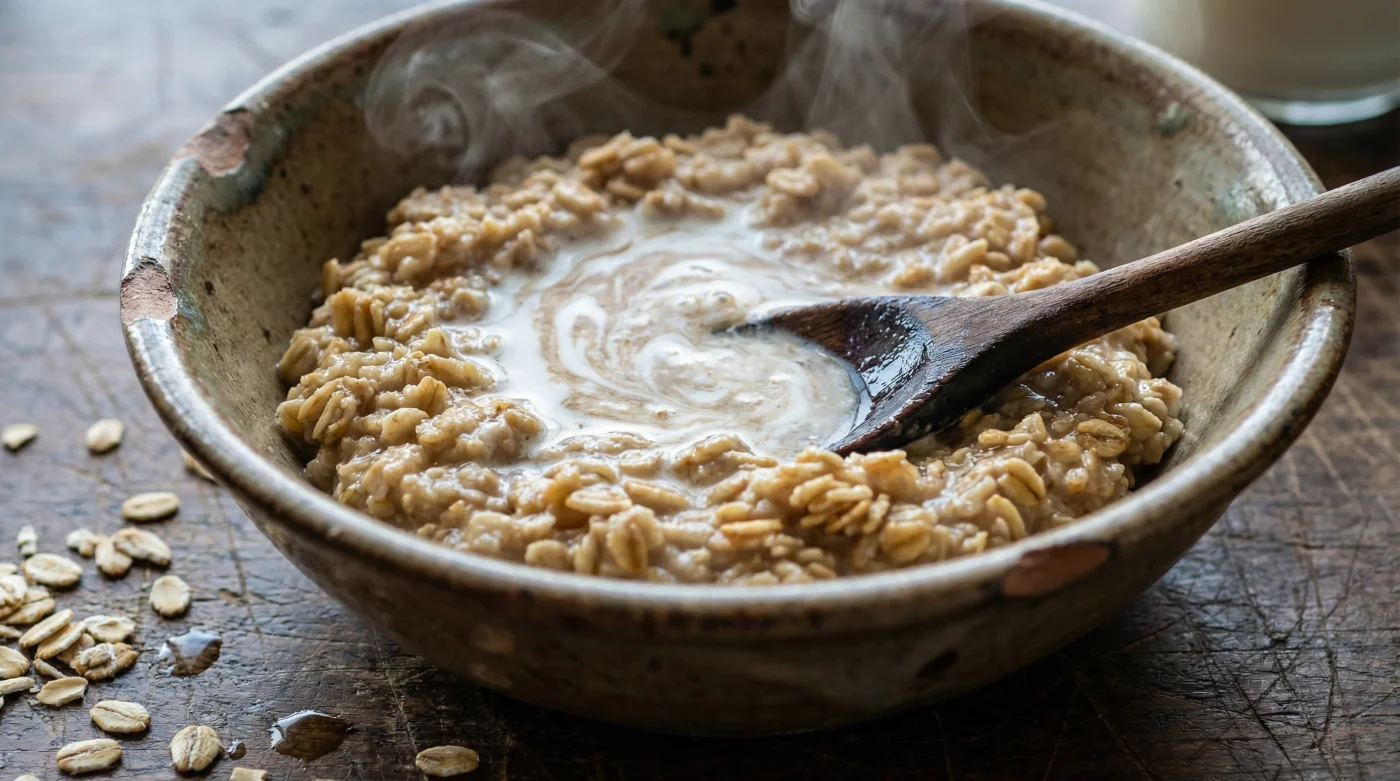
Picture the bleak grey light of a November Tuesday. You are standing by the hob, watching a pan of milk froth and threaten to spill over. The wooden spoon scrapes against a stubborn, gluey film forming at the base. For generations, this has been the accepted ritual: drowning rolled oats in cold milk, turning up the heat, and wrestling with the resulting stodge. The flavour is comforting but muffled, tasting mostly of scalded dairy rather than the grain itself. You serve up a dense, heavy bowl, knowing the washing up will require serious elbow grease. But what if the secret to a genuinely luxurious bowl lies in removing the milk from the heat entirely?
The Raw Spice Metaphor
We often treat oats like an absorbent sponge, tossing them into a milky bath and hoping they swell into something palatable. But a rolled oat is a seed. It possesses complex, nutty oils that remain dormant when smothered in cold liquid. Think of it like a whole cumin seed or a coffee bean; its true character only emerges under dry heat. By toasting your porridge oats bare in the pan, you wake up those dormant oils. The scent shifts from dusty cardboard to warm biscuits fresh from the oven.
| Your Morning Routine | The Textural Benefit |
|---|---|
| The Rushed Commuter | Halves the pan-scrubbing time; absolutely no burnt milk rings. |
| The Fitness Enthusiast | Better digests complex carbohydrates without heavy dairy lethargy. |
| The Weekend Gourmet | Achieves restaurant-quality, nutty depth with zero extra cost. |
I learned this from an old Scottish baker in the Highlands. He watched me reach for a pint of full-fat milk to boil his premium pinhead oats and tutted softly. ‘You are drowning the harvest,’ he muttered, taking the jug from my hand. He threw the dry flakes onto a heavy cast-iron pan, letting them toast until the kitchen smelled of roasted almonds. Only then did he add boiling water straight from the kettle. The water fractured the starch violently, creating a natural, velvety emulsion. The milk, he explained, is a finishing touch, not a boiling medium.
| Cooking Phase | The Science of the Starch |
|---|---|
| Dry Toasting (Medium Heat) | Triggers the Maillard reaction, caramelising the natural sugars within the grain. |
| Boiling Water Addition | Rapidly gelatinises the exterior starches, creating a self-thickening, creamy suspension. |
| The Cold Milk Splash (Off Heat) | Cools the porridge to eating temperature while preserving fresh, sweet dairy notes. |
Mastering the Water-First Ritual
Begin with a dry, heavy-bottomed saucepan over a medium heat. Add your porridge oats. Stand watch, stirring gently with a wooden spoon or a traditional spurtle. You are waiting for the aroma to change; it takes roughly two minutes. When the scent turns richly nutty and the edges catch a faint golden hue, step back slightly. Pour in boiling water from your kettle.
It will hiss and spit furiously. This aggressive reaction is exactly what you want. It forces the starch to release instantly, binding with the water to form a glossy, creamy base. Lower the heat and stir steadily for three minutes. You will notice the texture is incredibly silky, completely free from the gluey clumps associated with milk-boiling. Remove the pan from the heat.
- Tomato puree loses raw metallic bitterness undergoing this brief oil toasting.
- Fresh mushrooms achieve deep meaty browning ignoring this common stirring habit.
- Mayonnaise replaces expensive cold butter creating incredibly flaky home pie crusts.
- Red wine vinegar rescues overly salty soups neutralising intense sodium levels.
- Cadbury Dairy Milk bars shrink again as supermarket cocoa prices soar.
| The Ingredient | What to Look For | What to Avoid |
|---|---|---|
| The Oats | Jumbo rolled or traditional rough Scottish oats. | Instant or ‘quick cook’ dust, which turns into an unpalatable paste. |
| The Water | Freshly boiled from the kettle, poured aggressively. | Lukewarm tap water; it leads to a soggy, lifeless grain. |
| The Finish | Whole milk, oat drink, or double cream stirred off-heat. | UHT milk boiled aggressively; causes a split, grainy texture. |
A Mindful Shift in the Morning
This small adjustment does more than just improve your breakfast. It transforms a mundane, frequently frustrating chore into an act of culinary mindfulness. When you stand by the stove smelling the toasted grain, you are actively engaging with your food. You are no longer just feeding yourself; you are crafting a moment of premium comfort before the day begins.
By respecting the ingredient and understanding how it reacts to heat and water, you save yourself the annoyance of scrubbing burnt pans. You also save money, stretching a staple ingredient into something that feels entirely decadent. It proves that the best meals do not always require expensive additions; they merely require a slight, thoughtful shift in perspective.
The humblest ingredients demand the sharpest technique; respect the grain, and it will reward you with unparalleled richness.
Frequently Asked Questions
Does this method work with rolled and jumbo oats? Absolutely. Jumbo oats benefit the most, retaining their distinct shape while creating a beautifully creamy sauce.
Will the porridge taste watery? Not at all. The rapid boiling water extracts the starch to create a natural creaminess, which is then enriched by your final splash of cold milk.
Can I use dairy-free milk for the finish? Yes. Oat, almond, or soy drink work brilliantly, and because you add them off the heat, they will not curdle.
Do I still need to add salt? Always. A pinch of good sea salt enhances the toasted, nutty flavour profile incredibly well.
How do I stop the oats burning during the dry toast? Keep the heat moderate and keep the spoon moving. The moment you smell a biscuit-like aroma, the water must go in.