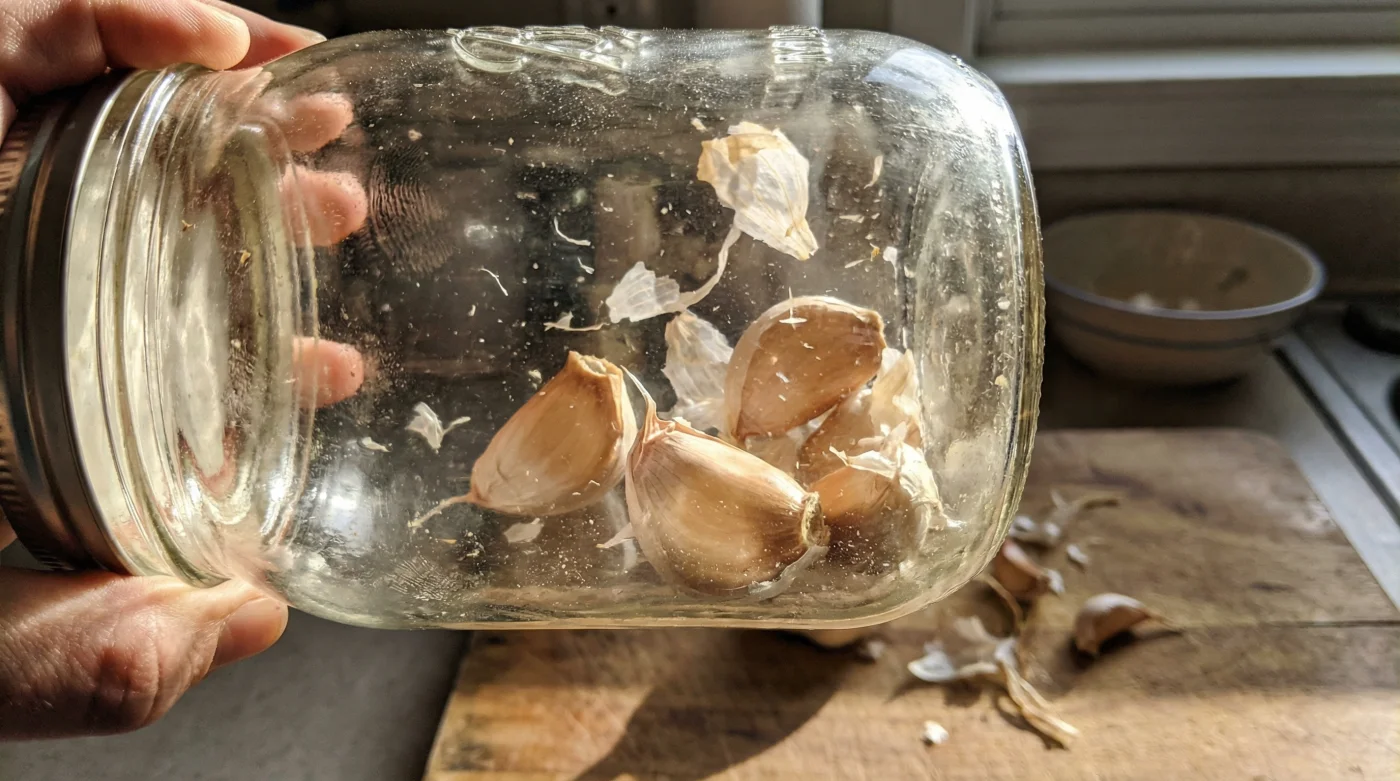
You know the exact sensation. The olive oil is shimmering in the heavy pan, sending tiny wisps of heat into the kitchen air. It is waiting for its aromatic companion, but you are stuck lingering by the worktop, picking desperately at a stubborn clove. Your fingers are tacky. The delicate, papery skin clings stubbornly to your thumb, tearing into microscopic fragments that refuse to be binned. Meanwhile, the pan grows dangerously hot.
For generations, we have accepted this sticky, frustrating ritual as the necessary toll for flavour. We crush cloves under the flat blade of a heavy knife, risking bruised knuckles and uneven pieces, only to spend minutes peeling away the shattered casing. The scent binds to your skin, stubbornly persisting through countless washes, lingering as a phantom aroma during your morning commute on the Tube.
The Friction of the Allium
There is a quiet irony in how much effort we expend fighting an ingredient that actually wants to be released. The relationship between a garlic clove and its skin is fragile, held together by a tiny amount of moisture and static. When you use a knife to crush it, you force the oils out of the flesh, acting like a glue that binds the paper right back onto the clove.
I first witnessed the alternative in a remarkably cramped prep kitchen behind a bustling Soho gastropub. Marco, a prep chef with hands worn from decades of service, was tasked with peeling three kilos of garlic before the lunchtime rush. He did not reach for his knife. Instead, he dropped handfuls of unbroken cloves into a large, sturdy glass jar, screwed the lid on tight, and began to shake it.
It was a percussive, rattling dance. Ten seconds later, he emptied the jar onto his wooden board. The cloves tumbled out perfectly pristine, completely naked, leaving a hollow pile of detached husks behind. It felt like watching a magic trick, but it was purely physics.
| Home Cook Persona | The Immediate Benefit |
|---|---|
| The Rushed Weeknight Parent | Shaves precious minutes off dinner prep when the kitchen feels chaotic. |
| The Sunday Batch Cooker | Processes an entire bulb in seconds without fatiguing your hands. |
| The Sensory-Sensitive Chef | Keeps hands completely free of the sticky, lingering allium oils. |
The Ten-Second Percussion
To master this technique at home, you do not need professional equipment. An empty jam jar, thoroughly washed and dried, is your best tool. The glass offers the perfect level of hard resistance needed to break the physical bond of the husk.
First, break your bulb into individual cloves. Do not bother trimming the tough root ends just yet. Drop the unpeeled cloves into the dry jar, ensuring you only fill it about a third of the way up. The garlic needs empty space to travel and build momentum.
Seal the lid firmly. Hold the jar with both hands, adopting a wide stance at your worktop. Shake it vigorously up and down. You want to hear a harsh, rapid rattling. This is not a gentle swirl; you are deliberately creating high-impact collisions between the heavy cloves and the unyielding glass walls.
Count to ten. When you open the lid, you will see the papery skins have separated entirely, sitting weightless at the top while the dense, peeled garlic rests at the bottom. Simply pluck out your ready-to-use cloves and tip the rubbish straight into the food caddy.
| Mechanical Factor | The Scientific Logic |
|---|---|
| Blunt Force Impact | The clove striking the glass fractures the dry outer skin without bruising the moist flesh beneath. |
| Friction Generation | Cloves rubbing against each other create micro-abrasions, catching and tearing the loose paper. |
| Air Pressure Trapping | The sealed environment prevents the lightweight skins from flying away, keeping the force concentrated. |
Reclaiming Your Evening Rhythm
Cooking at home should never feel like a battle of attrition against your ingredients. When we remove these tiny moments of friction, the kitchen transforms from a place of chore-like duty into a space of creative rhythm. You are no longer dreading the sticky residue or the tedious picking.
- Tomato puree loses raw metallic bitterness undergoing this brief oil toasting.
- Fresh mushrooms achieve deep meaty browning ignoring this common stirring habit.
- Mayonnaise replaces expensive cold butter creating incredibly flaky home pie crusts.
- Red wine vinegar rescues overly salty soups neutralising intense sodium levels.
- Cadbury Dairy Milk bars shrink again as supermarket cocoa prices soar.
Before you commit your cloves to the jar, it is vital to check their quality. The technique relies on the natural dryness of the skin. If your garlic has been stored improperly, the results will falter.
| The Quality Checklist | What to Look For | What to Avoid |
|---|---|---|
| Bulb Firmness | Tight, heavy bulbs with intact outer wrappers. | Soft spots, sponginess, or green shoots emerging from the top. |
| Skin Texture | Dry, brittle, and slightly translucent paper. | Damp, leathery skins that cling tightly to the flesh. |
| Jar Condition | Bone dry, clean glass with a tight-fitting metal lid. | Any residual moisture, which acts as an adhesive for the skins. |
There is a profound peace of mind in knowing you can handle a recipe calling for six cloves of garlic without a second thought. You simply grab your jar, engage in ten seconds of vigorous percussion, and move forward.
Cookery is not about fighting your ingredients; it is about finding the cleverest way to encourage them to yield.
Frequently Asked Questions
Does this work with single cloves or just the whole bulb?
You can do this with a single clove or an entire bulb’s worth of separated cloves. Just ensure the jar is never more than a third full so they have room to smash against the glass.
Will a plastic container work instead of glass?
Glass is far superior because its heavy, unyielding surface provides the necessary blunt impact. Plastic tends to absorb the shock, meaning you will have to shake for much longer.
Do I need to cut the root off first?
No, leave the tough little root intact during the shake. Once the skin falls away, you can cleanly slice the root off your pristine cloves with a single knife stroke.
Why did my garlic become sticky instead of peeling?
Your jar was likely wet, or the garlic was too old and damp. Moisture is the enemy of this technique. Always ensure your equipment is bone dry.
Does shaking bruise the garlic and alter the flavour?
Not at all. The impact is just enough to shatter the brittle skin but not enough to crush the firm flesh, keeping the pungent oils safely contained until you are ready to chop.