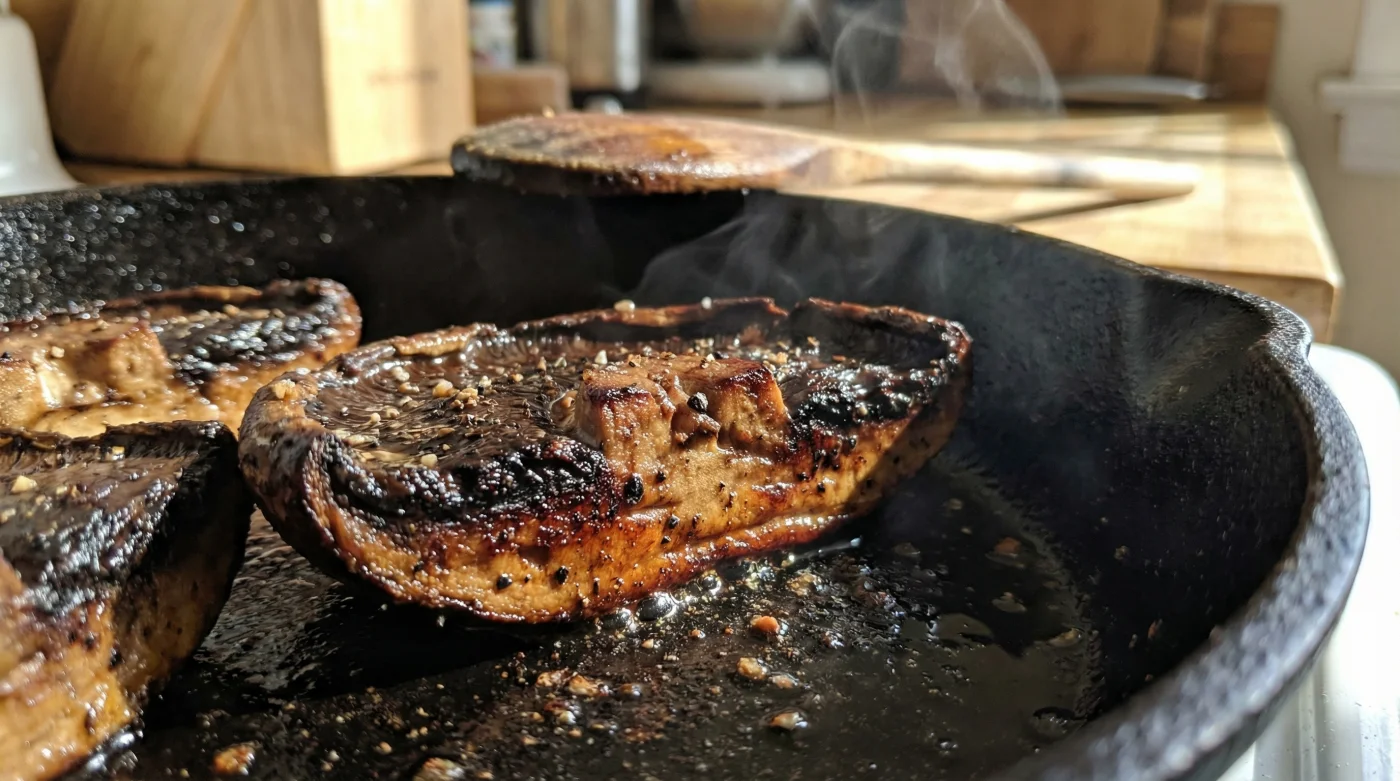
It is a familiar Tuesday evening rhythm. The chopping board is out, the kitchen feels a bit chilly, and you have a fresh punnet of chestnut mushrooms waiting to become something comforting. You slice them, drop a knob of butter into a hot frying pan, and listen to that initial, promising hiss. Then, the nervous habit kicks in. You grab your wooden spoon and you stir. You toss them, scrape the bottom of the pan, and keep them moving. Within sixty seconds, the hiss softens into a sad, watery simmer. Instead of smelling roasted and rich, the kitchen fills with the scent of damp earth. You look down to find grey, rubbery slices boiling in their own murky liquid. You have fallen victim to the most common cooking error of them all.
The Gravity of Patience in the Pan
There is a deeply ingrained myth in home cooking that movement equals safety. We are taught from a young age that a constantly moving spatula keeps disaster at bay, saving our dinners from the black edge of a burnt pan. But when you apply this nervous, frantic energy to fresh fungi, you rob them of their greatest potential. Mushrooms are fundamentally different from a piece of chicken or a diced onion.
Think of the mushroom as a tightly packed water balloon disguised as a porous sponge. When it hits the hot metal of your frying pan, it immediately begins to release its internal moisture. If you constantly agitate the pan, the temperature drops dramatically. The water pools at the bottom, and you trap the mushrooms in a shallow, tepid bath. They cannot brown if they are swimming. The secret to that deep, meaty, restaurant-quality crust relies entirely on the gravity of patience.
| The Cook | The Frustration | The Golden Benefit |
|---|---|---|
| The Nervous Novice | Mushrooms turn grey, watery, and rubbery on the hob. | Achieves a crisp, steak-like crust with zero extra ingredients. |
| The Time-Poor Parent | Hovering over the stove means less time to prep other items. | Gains five uninterrupted minutes to chop herbs or set the table. |
| The Flavour Chaser | Vegetarian dishes taste flat or lack umami depth. | Develops a natural, intensely savoury profile that rivals roasted meats. |
I learned this the hard way during a chaotic evening shift in a tiny, independent kitchen in Yorkshire. I was panicking over a batch of wild mushrooms intended for a sourdough toast starter. As I feverishly pushed them around a heavy cast-iron skillet, the head chef gently reached over and took the wooden spoon completely out of my hand. ‘Leave them be,’ he muttered, turning his back to the stove to check on a roasting joint. ‘They need to find their feet.’
He forced me to stand there, hands by my sides, and watch for five excruciating minutes. I watched the water seep out of the fungi, bubble fiercely against the hot iron, and finally evaporate into thin air. Only then did the edges begin to catch, caramelise, and turn a magnificent, dark mahogany. It was a masterclass in the chemistry of restraint. We served those mushrooms with nothing more than cracked black pepper and parsley, and they tasted like prime steak.
| Culinary Phase | Mechanical Logic | Temperature Impact |
|---|---|---|
| The Initial Drop | Cold mushrooms meet hot oil. Cell walls rupture immediately, releasing trapped water. | Pan temperature drops rapidly. High heat is essential here to recover the baseline. |
| The Evaporation Window | Water turns to steam. If left alone, the steam escapes cleanly. Stirring traps it beneath the slices. | Steady, medium-high heat boils off the liquid without scorching the dry edges of the pan. |
| The Maillard Reaction | Moisture is fully gone. Amino acids and reducing sugars react to create complex, savoury crusts. | Direct, undisturbed, prolonged contact with the hot metal is mandatory for this to occur. |
The Five-Minute Silence
To put this into practice tonight, you must be willing to physically walk away from the hob. Start by choosing a wide, heavy-based frying pan. Overcrowding is the absolute enemy of proper browning, so give your sliced mushrooms plenty of room to breathe. Heat a generous splash of neutral oil until it shimmers slightly in the light.
Drop the mushrooms in. Spread them out into a single, even layer using your spatula, and then take the tool out of the pan entirely. Turn the heat to a confident medium-high and let them sit in the hot oil. You will hear a loud, aggressive crackle, followed almost immediately by a softer hissing as the water releases. Do not intervene.
- Basmati rice turns perfectly fluffy using this simple tea towel trick.
- Evaporated milk guarantees perfectly smooth cheese sauces skipping complicated flour roux.
- Tomato puree loses raw metallic bitterness undergoing this brief oil toasting.
- Fresh mushrooms achieve deep meaty browning ignoring this common stirring habit.
- Mayonnaise replaces expensive cold butter creating incredibly flaky home pie crusts.
When the timer sounds, the hissing will have subsided into a quiet, focused sizzle. Now, and only now, you may finally toss them. You will see deep, golden-brown crusts forged onto the undersides. Add your knob of butter, a heavy pinch of flaky sea salt, and a clove of crushed garlic right at this moment, cooking for just one more minute to coat them in the rich, savoury glaze.
| Element | What to Look For (The Gold Standard) | What to Avoid (The Saboteurs) |
|---|---|---|
| The Mushroom | Firm, dry to the touch, with a tightly closed veil underneath the earthy cap. | Slimy skins, pre-washed heavily in tap water, or stored for days in sealed plastic containers. |
| The Pan | Cast iron, carbon steel, or a wide stainless steel skillet for maximum heat retention. | A small, high-sided saucepan. This acts like a miniature steam room, preventing any crust formation. |
| The Seasoning | Flaky sea salt added only at the very end, once the brown crust is fully established. | Salting at the beginning. Salt draws out moisture far too fast, flooding the pan in the first minute. |
A Lesson in Culinary Restraint
Mastering this simple, passive technique completely changes how you approach the stove on a busy weeknight. It teaches you that cooking is not always about frantic action, constant intervention, and exhausted arms; sometimes, it is simply about giving good ingredients the physical space they need to transform.
By taking a step back and letting the residual heat do its job, you turn a cheap, humble ingredient into something genuinely luxurious. Whether you are folding these deeply browned slices into a creamy pasta dish, spooning them over a thick slice of buttered sourdough, or serving them alongside a Sunday roast, they will bring an incredible, meaty weight to the plate.
The next time you stand in front of the hob with a punnet of mushrooms, remember that doing less is often the secret to achieving significantly more. Let the heavy pan work for you. Let the hidden moisture evaporate naturally. Enjoy those five minutes of unexpected peace in the kitchen, secure in the knowledge that something brilliant is happening right in front of you.
‘The hardest technique to teach a young cook is when to put their hands in their pockets and simply let the heat dictate the flavour.’
Frequently Asked Questions
Do I need to wash my mushrooms first?
Try to avoid it entirely. Use a slightly damp cloth or a dedicated pastry brush to gently wipe away any visible compost. Running them under the tap turns them into waterlogged sponges.What kind of oil should I use for the initial fry?
Use an oil with a decently high smoke point, like cold-pressed rapeseed or standard sunflower oil. Save the dairy butter for the very end to prevent it from burning black during the five-minute wait.Will they burn if my hob runs too hot?
Keep an ear focused on the pan. If the gentle sizzle turns into a sharp, aggressive spitting sound and the kitchen smells acrid, nudge the heat down slightly. The internal moisture usually protects them from burning instantly.Can I use this method for standard button mushrooms?
Absolutely you can. Whether you are using cheap white buttons, earthy chestnuts, or expensive wild varieties from the farmers market, the rule of undisturbed heat remains exactly the same.Why shouldn’t I salt them immediately?
Salt is a remarkably powerful extractor of moisture. Adding it early forces all the internal water out at once, instantly dropping the pan’s ambient temperature and causing a sad boil rather than a fierce fry.