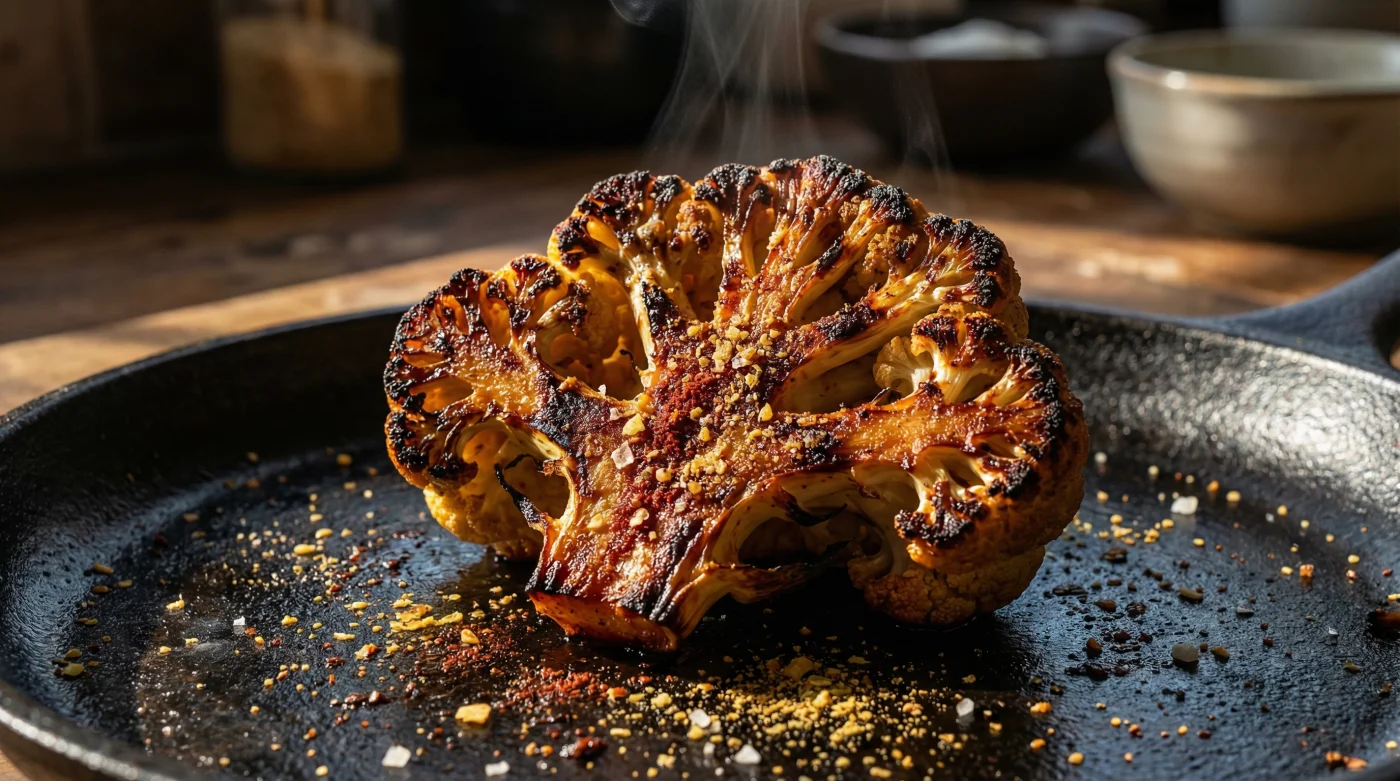
You know the smell. That faintly metallic, boiled-sulphur scent that lingers in the hallway after a traditional Sunday roast. For generations, we have accepted a grim culinary compromise: cauliflower is inherently bland, a watery afterthought that must be buried under half a pound of mature Cheddar just to make it past the palate. You bite into a steamed floret, and it squeaks softly against your teeth, breathing a flat, damp sigh onto the plate.
But you are being lied to by a legacy of over-boiling. The humble cauliflower does not need a dairy blanket. It needs fire, and it needs smoke.
The Alchemy of the Floret
Think of this pale brassica not as a delicate flower, but as a dense, thirsty sponge. When you subject it to the right dry rub—specifically, a robust trio of smoked paprika, fine garlic powder, and the umami-heavy weight of nutritional yeast—you change its entire physical composition. This is the death of the bland vegetable.
I remember standing in the cramped, blistering kitchen of a gastropub in Cornwall, watching the head chef, Elias, prepare the evening service. He did not own a saucepan for boiling vegetables. Instead, he treated cauliflower like a dry-aged steak. ‘The mistake,’ he told me, rubbing a rusty-red powder into the tightly packed florets, ‘is thinking of it as a side dish. Treat the crown like a muscle. You have to bruise it with heat and smoke.’ He threw the tray into a 220-degree oven, and ten minutes later, the kitchen smelled of woodsmoke and roasted meat.
| The Eater | The Traditional Frustration | The Smoked Rub Benefit |
|---|---|---|
| The Time-Poor Parent | Spending twenty minutes whisking a floury cheese roux. | Five minutes of hands-on prep; the oven does the heavy lifting. |
| The Plant-Based Sceptic | Finding roasted vegetables too thin and lacking in savoury depth. | Experiences a rich, meaty umami profile mimicking roasted poultry skin. |
| The Sunday Roast Traditionalist | Believing plain cauliflower ruins the gravy and needs dairy. | Provides a robust, smoky texture that holds its own alongside roasted joints. |
| Element | Scientific Interaction | Palate Result |
|---|---|---|
| High Heat (220 Celsius) | Triggers the Maillard reaction, browning amino acids and natural sugars. | Deep caramelisation and a crispy, scorched edge. |
| Nutritional Yeast | Introduces highly concentrated glutamic acid to the vegetable surface. | Creates a lasting umami sensation on the back of the tongue. |
| Smoked Paprika | Deposits phenolic compounds derived from the oak-smoking process. | Mimics the aromatic profile of char-grilled or barbecued meat. |
| Component | What to Look For | What to Avoid |
|---|---|---|
| The Cauliflower | Heavy for its size, tightly packed florets, squeaky green outer leaves. | Spreading crowns, yellowing patches, or a soft, damp texture. |
| The Spices | Vibrant red paprika, pungent garlic powder, large yeast flakes. | Faded, dusty jars that have sat near the hob for three years. |
| The Oil | A high smoke-point fat, like cold-pressed rapeseed oil. | Extra virgin olive oil, which will burn and turn bitter at 220 degrees. |
Mindful Application and Blistering Heat
Your preparation must be deliberate. Begin by pulling the cauliflower head apart with your hands. Knives slice through the bumpy crown, creating flat, uninteresting surfaces that burn quickly. Snapping the stems by hand leaves rough, jagged edges—these textured cliffs are exactly where the dry rub will cling and crisp.
In a large bowl, drizzle the broken florets with a generous splash of cold-pressed rapeseed oil. Now, scatter over your holy trinity: a heaped tablespoon of smoked paprika, a teaspoon of sharp garlic powder, and two tablespoons of savoury nutritional yeast.
- Red onions lose their harsh acidic burn during this rapid ice soak.
- Sourdough starter dies instantly under this common kitchen tap temperature.
- Porridge oats develop rich bakery flavours undergoing this dry pan toasting.
- Frozen spinach ruins delicate homemade quiches skipping this aggressive dehydration step.
- Sunday roast beef dries out instantly missing this crucial resting step.
Roast them at 220 degrees Celsius. Do not open the oven door for at least fifteen minutes. Let the intense heat force the moisture out, allowing the nutritional yeast to bond with the natural sugars of the vegetable, creating a dark, deeply savoury exterior.
A New Daily Rhythm
When you pull that tray from the oven, the transformation is total. The edges are scorched and crisp, carrying a deep, meaty caramelisation that rivals any roasted joint. You have taken a vegetable that costs barely a pound and elevated it to the centrepiece of the table.
This method shifts your entire approach to the working week. You no longer need to rely on heavy, sleep-inducing sauces or expensive cuts of meat to find satisfaction on a Tuesday evening. You learn to trust the raw ingredients, understanding that a simple, intelligent application of spice and heat is enough to command the plate.
A vegetable only begs for cheese when it has been robbed of its own identity by boiling water.
Common Roasting Frustrations
Why did my cauliflower turn out mushy? You overcrowded the baking tray. When florets sit too close together, the escaping moisture steams the surrounding vegetables. Give them space to breathe.
Can I use sweet paprika instead of smoked? You can, but you will lose the meaty illusion. The smoke compounds in the paprika are what trick the palate into experiencing a rich, barbecue-like depth.
What exactly is nutritional yeast doing here? It acts as a savoury binding agent. It provides a massive hit of glutamates—the same compounds found in Parmesan or soy sauce—which creates the umami crust.
Do I need to parboil the florets first? Absolutely not. Introducing water into the vegetable before roasting is the enemy of caramelisation. Keep them bone dry.
How long will the roasted florets keep in the fridge? They will last for three days in an airtight container, though they will lose their crisp edges. Reheat them in a hot oven for five minutes to restore the texture.